


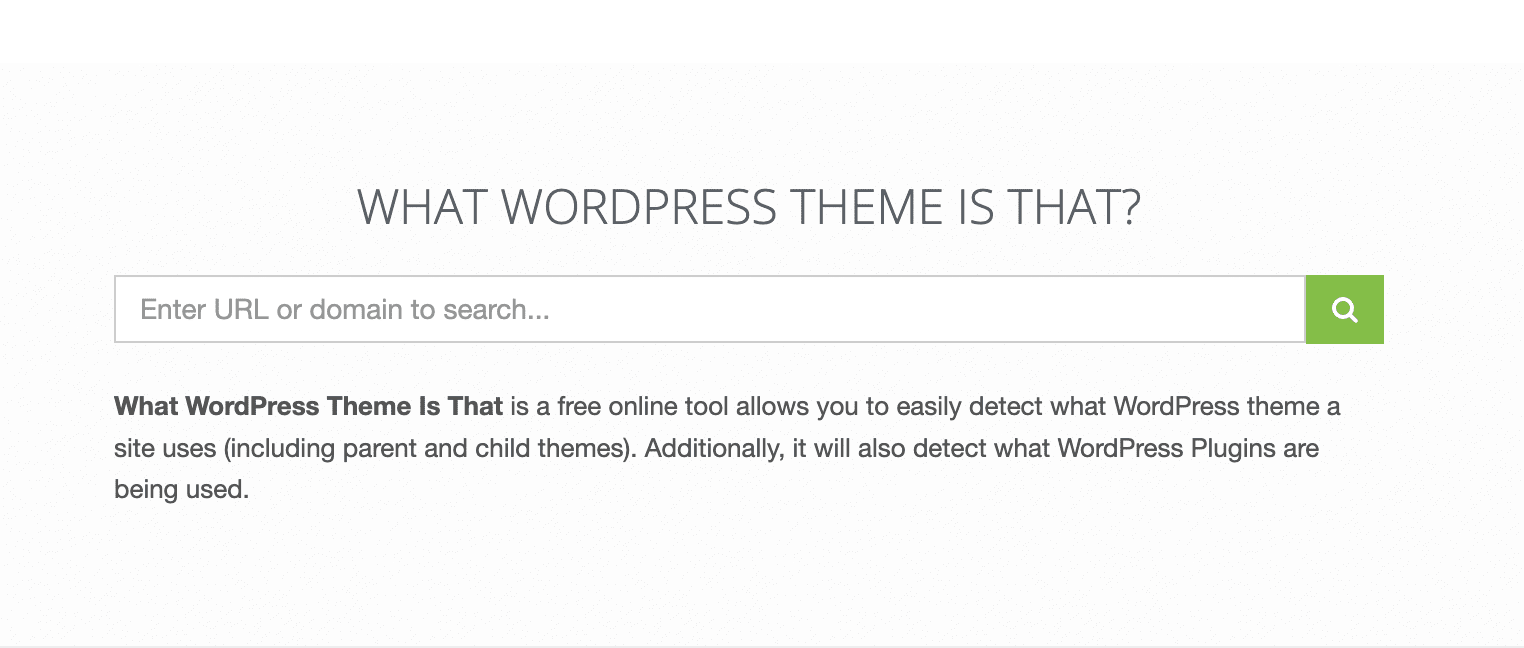
WhatWPThemeIsThat is a free online tool that tells you which WordPress theme and plugins any WordPress site is running. Paste the site's URL at whatwpthemeisthat.com, hit Check Site, and you get the theme's name, version, and author, plus a list of detected plugins — no source-code digging required.
I've used this tool for years, and it's still the fastest answer to the question every WordPress user eventually asks: "what theme is that site using?" Here's how it works, what to do when it can't detect a theme, and the alternatives worth knowing in 2026.
Why you'd want to identify a theme in the first place
WordPress themes decide far more than colors. The same WordPress install can be a magazine, a WooCommerce store, a portfolio, or a business site depending on the theme — and when you spot a site whose layout you love, the theme's name is the difference between rebuilding it for weeks and setting it up in an afternoon.
The old way was brutal: open the page source, scroll through stylesheets and script tags looking for `/wp-content/themes/…`, and hope the developer didn't rename anything. Half the time you'd finish with nothing but wasted minutes. Detector tools automate exactly that lookup, in seconds.
How to detect a theme with WhatWPThemeIsThat
The tool does one job and does it in under a minute:
1. Open whatwpthemeisthat.com.
2. Paste the URL of the WordPress site you're curious about into the search box.
3. Click Check Site.
4. Read the results: you'll see the theme's name, version, and author, and further down the page, a list of the plugins the site is running.
That's the whole process. The results page also links to the theme's home page, so you can go straight from "I like this" to "I can install this."
What the results actually tell you
A typical scan returns three layers of information:
- Theme details — the theme's name, current version, author, and a link to where it's sold or downloaded. If the site runs a child theme, the tool identifies both the child and its parent, which matters because the parent is where most of the design logic lives.
- Plugin detection — a list of plugins it can spot from the site's publicly loaded scripts and stylesheets. This is quietly the most useful part: you learn which contact form, page builder, or SEO plugin powers a site you admire.
- Provider pages — the site keeps stats pages for theme and plugin providers, useful if you're researching which products are popular across many sites.
One honest limitation, and it's a big one: the tool can only see what the site publicly exposes. If the site's admin has hidden the theme name — or the "theme" is actually a page builder layout — detection comes back empty.
When detection fails: the manual method that still works
Some sites block every detector. Security plugins routinely strip theme metadata, hide the `/wp-content/` paths, or serve a maintenance face to unknown bots. When a detector comes back empty, I fall back to the source, which takes 30 seconds:
1. Open the site in Chrome or Firefox, right-click anywhere, and choose View Page Source.
2. Press Ctrl+F (Cmd+F on Mac) and search for `wp-content/themes`.
3. Every hit looks like `/wp-content/themes/THEME-NAME/…` — the folder name usually matches the theme (e.g. `astra`, `generatepress`, `flatsome`).
4. Search again for `wp-content/plugins` to see plugin folders the same way.
If neither search finds anything, the site may not be WordPress at all — plenty of "blog-looking" sites in 2026 run on Wix, Squarespace, Webflow, or fully custom code. Our custom code vs page builders explainer covers how to tell them apart and why some teams deliberately obscure their stack. And hiding your theme is a legitimate move — hardening a WordPress site often includes exactly this kind of information removal, since every disclosed detail is reconnaissance for an attacker.
WhatWPThemeIsThat alternatives in 2026
The tool's own page hasn't changed much in years — it works, but it's a veteran. If you want a second opinion or a different results layout, these are the detectors I'd try:
| Tool | Free? | Notes |
|---|---|---|
| WhatWPThemeIsThat | Yes | Theme name/version/author + plugins; parent-child detection |
| WPThemeDetector | Yes | Theme + plugin details, commercial theme listings |
| ScanWP | Yes | Quick paste-and-detect; averages a few seconds per scan |
| IsItWP | Yes | From the Awesome Motive team; broader site analysis |
Results vary slightly between tools — one may catch a child theme another misses, or detect a plugin the others skip. When I really need an answer, I run the URL through two of them and finish with the manual source check above.
Is using a theme detector legal?
Yes. Everything these tools report is publicly served to every visitor's browser — the same information in the page source you could read yourself. They don't hack, bypass, or expose anything private. Using the information to choose a theme for your own site is exactly what the tools are for. (Copying a site's design wholesale, on the other hand, is a copyright question the tool can't solve for you.)
Frequently asked questions
What does WhatWPThemeIsThat do?
It's a free web tool that identifies the WordPress theme a given site uses — name, version, author, and download link — and lists the plugins it can detect on that site. You paste a URL and click Check Site; there's no account, and the scan takes seconds.
Is WhatWPThemeIsThat free?
Yes, completely — no signup, no scan limits, no premium tier. You just visit the site, paste a URL, and read the results. The project has been free since it launched, funded by ads on the results pages.
Why can't it detect the theme on some sites?
Three common reasons: the site's admin has hidden the theme name with a security plugin, the theme was renamed (custom child themes often get branded folder names), or the site isn't actually running a traditional WordPress theme — page-builder layouts and non-WordPress platforms both come back undetectable. Try the manual source search or a second detector before giving up.
How do I find a WordPress theme manually?
Open the site, right-click, and choose View Page Source, then search for `wp-content/themes`. The folder name in the resulting URLs is the theme. Search `wp-content/plugins` for plugins. It works even when detector tools are blocked, because it reads the same public code directly.
Can it detect plugins too?
Yes — alongside the theme, the tool lists plugins it can identify from publicly loaded files. Detection isn't exhaustive: plugins that load no public scripts or stylesheets stay invisible, so treat the list as a sample of the site's stack rather than a complete inventory.
Does theme detection work on any website?
Only on sites running WordPress — it reads WordPress-specific file paths. On Shopify, Wix, Squarespace, Webflow, or fully custom sites, there's nothing to detect. If a detector returns empty, check whether the site is even WordPress before blaming the tool.
Related reading on TechBii
- Best WordPress plugins for bloggers
- Custom code vs page builders: how WordPress sites get made
- The ultimate guide to securing your WordPress site
- Boost WordPress site speed: simple strategies
Final thoughts
For the everyday "which theme is that?" question, WhatWPThemeIsThat remains the quickest free answer in 2026 — paste, click, done. Keep WPThemeDetector or ScanWP bookmarked as second opinions, and the 30-second source-code search as your fallback for hardened sites. Between the three, virtually any WordPress theme on the public web is identifiable in under a minute.
I've been identifying themes this way since before detector tools existed — the manual method above is muscle memory at this point. If a site stumps you, drop the URL in the comments and I'll take a look.







Thanks for his very informative tip. i can now heck for theme i want for my new blog