

Like most listeners, I bounce between streaming apps depending on the month. Unlike most, I keep paying for several at once — Spotify for daily listening, YouTube Music for the songs that only exist on YouTube, and whichever service I'm testing for articles like this one. After living with every major platform through their 2026 price hikes and feature drops, I can tell you the differences now matter more than they did in 2023.
Spotify finally shipped lossless audio, Apple killed its cheapest plan, YouTube Music became the fastest-growing music subscription in the US, and every big platform charges a dollar or two more per month than when we first published this guide in October 2023.
Here are the five services I'd actually recommend in 2026, who each one is for, and the pricing details the marketing pages bury.
Quick answer: For most people, Spotify is still the best music streaming service in 2026: the biggest catalog, the smartest discovery features, and lossless audio now included for $12.99/month. Pick Apple Music or Tidal if sound quality comes first, YouTube Music for free listening and video, and Amazon Music if you already pay for Prime.
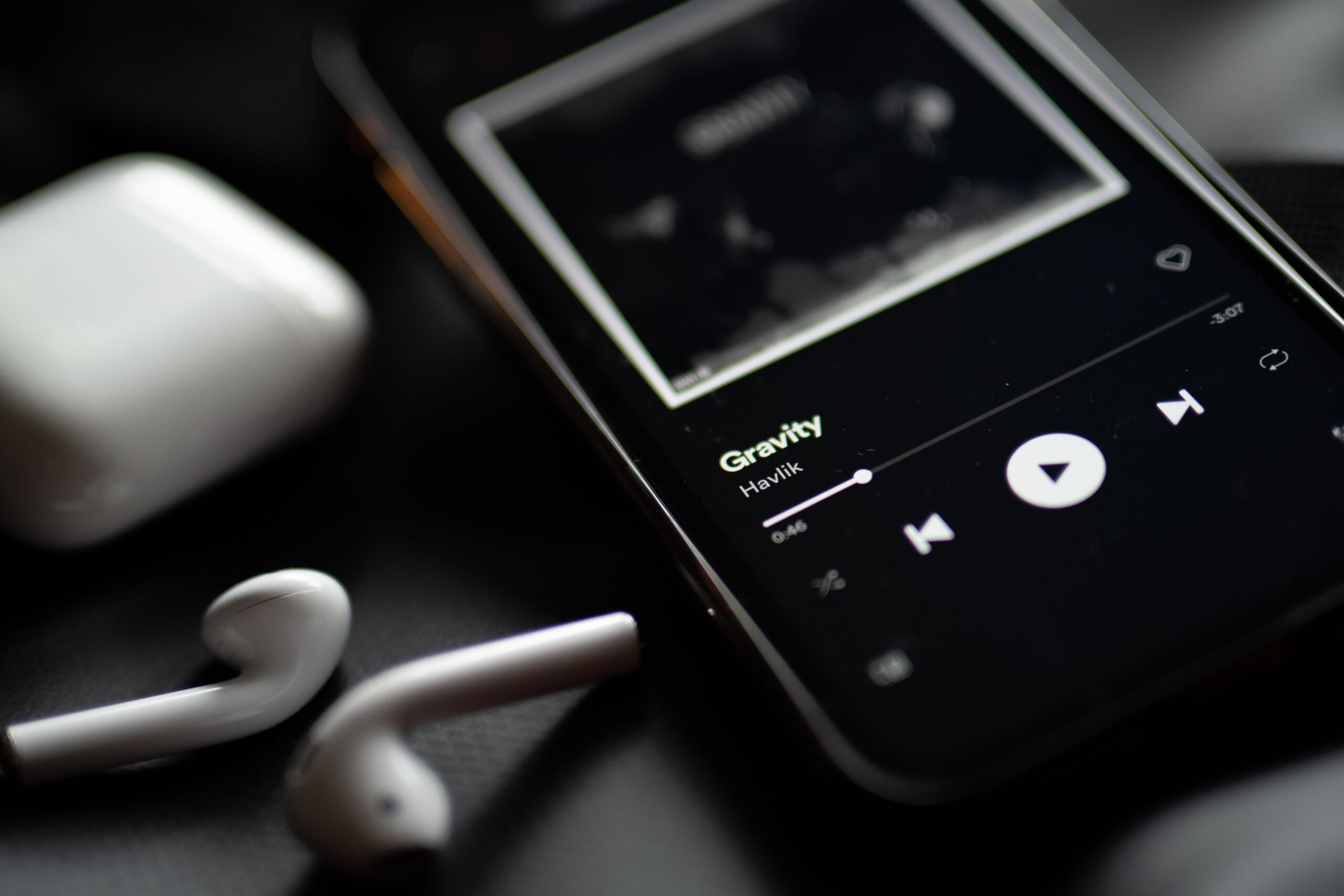
Hero photo by Filip on Unsplash.
What's changed since 2023 (and why it matters)
- Every major service raised prices. Spotify Premium Individual is now $12.99/month in the US (up from $10.99 in 2023), Apple Music and YouTube Music sit at $11.99, and Amazon Music Unlimited runs $11.99 for Prime members or $12.99 without.
- Spotify has lossless audio. The long-promised upgrade arrived in late 2025: FLAC streaming up to 24-bit/44.1 kHz, included with every Premium plan at no extra cost across more than 50 markets.
- Apple Music's Voice plan is gone. The $4.99 Siri-only plan was discontinued, so the entry point to Apple Music is now the standard Individual plan.
- YouTube Music is growing fastest. Google's service crossed 125 million Premium and Music subscribers and has been the fastest-growing music subscription in the US.
The top 5 music streaming services compared (2026)
| Service | Best for | Free tier | Individual (US) | Lossless / hi-res |
|---|---|---|---|---|
| Spotify | Most people; discovery | Yes, with ads | $12.99/mo | Yes — up to 24-bit/44.1 kHz FLAC |
| Apple Music | Apple households; spatial audio | No (1-month trial) | $11.99/mo | Yes — lossless + Dolby Atmos |
| Amazon Music | Prime members; Alexa homes | Limited Prime catalog | $11.99/mo with Prime, $12.99 without | Yes — HD + Ultra HD included |
| YouTube Music | Free listening; videos, covers, live sets | Yes, with ads | $11.99/mo | No — caps around 256 kbps |
| Tidal | Audiophiles; hi-res on one plan | No (30-day trial) | $11.99/mo | Yes — hi-res + spatial on every plan |
US pricing as of September 2026, and it changes often — treat these as ballpark and confirm on each service's pricing page. Regional pricing varies hugely: in India, Spotify's individual plan runs around ₹139 a month with a ₹69 student rate.
1. Spotify — still the default for most listeners
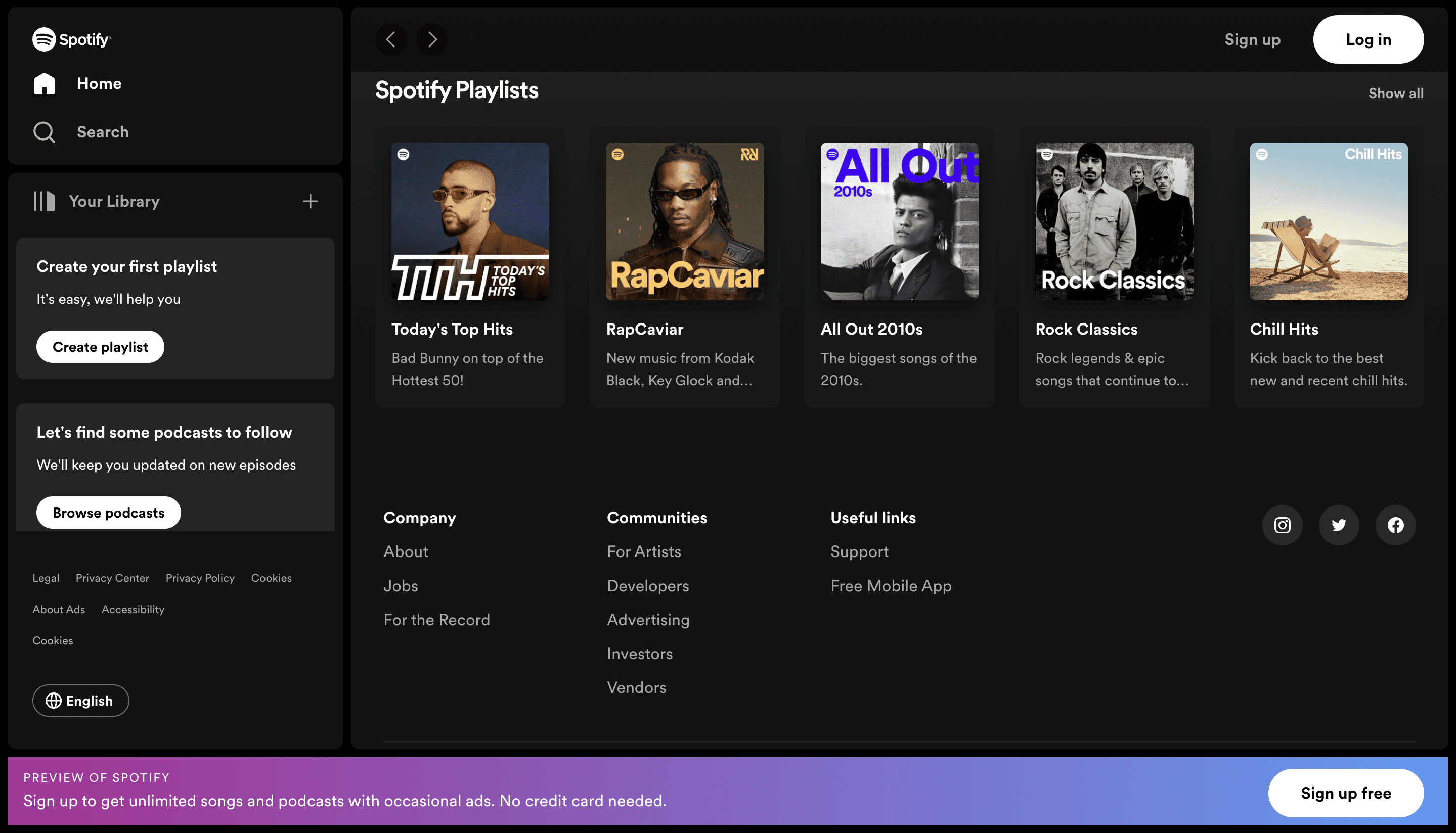
Spotify is still the biggest music streaming service in the world by a distance: 777 million monthly active users and 300 million Premium subscribers as of mid-2026. That size matters in everyday ways — the best-curated playlists, the fastest feature rollouts, and every major artist's release-day presence.
What keeps me subscribed, though, is discovery. Discover Weekly, Blend, and the AI DJ have genuinely changed what I listen to, and no competitor's recommendations come close for breadth. Since October 2025, Premium also includes lossless streaming up to 24-bit/44.1 kHz FLAC at no extra cost — eight years after the company first promised it.
Pricing starts at $12.99/month for Individual (check the current offers on the Spotify Premium page), with Duo at $16.99 and Family at $21.99 for up to six accounts. Premium Individual also bundles 15 hours of audiobook listening a month, which quietly improves the value math.
The weak points: the free tier on mobile is shuffle-bound and annoying on purpose, lossless tops out at 24-bit/44.1 kHz (no 192 kHz hi-res like Apple or Amazon), and the 2026 price increase stung. It's still the first service I'd recommend to most people.
2. Apple Music — best for Apple households and sound quality
Apple Music does two things Spotify still doesn't: full lossless up to 24-bit/192 kHz and Dolby Atmos spatial audio, both included in the base $11.99/month plan. There's no free tier — just a one-month trial — and the cheap $4.99 Voice plan is gone, discontinued in 2023. Apple doesn't publish subscriber numbers, but industry estimates put it at over 100 million, comfortably in the top three worldwide.
The Family plan ($16.99/month for six people) and the $5.99 student rate undercut Spotify's equivalents, and an annual plan shaves a bit more. Beyond audio quality, you get Apple Music Sing for karaoke-style vocal control, the dedicated Apple Music Classical app, and live radio stations. The real hook is the ecosystem: Siri, HomePod, and iPhone just work together. An Android app exists, but the experience is clearly second-class outside Apple hardware.
If spatial audio is your thing, we've looked at where spatial audio is heading — Dolby Atmos tracks keep getting better, and Apple has the deepest catalog of them.
The weak point: recommendations. Apple Music's personalized playlists have improved, but they still trail Spotify's.
3. Amazon Music Unlimited — best value inside Prime
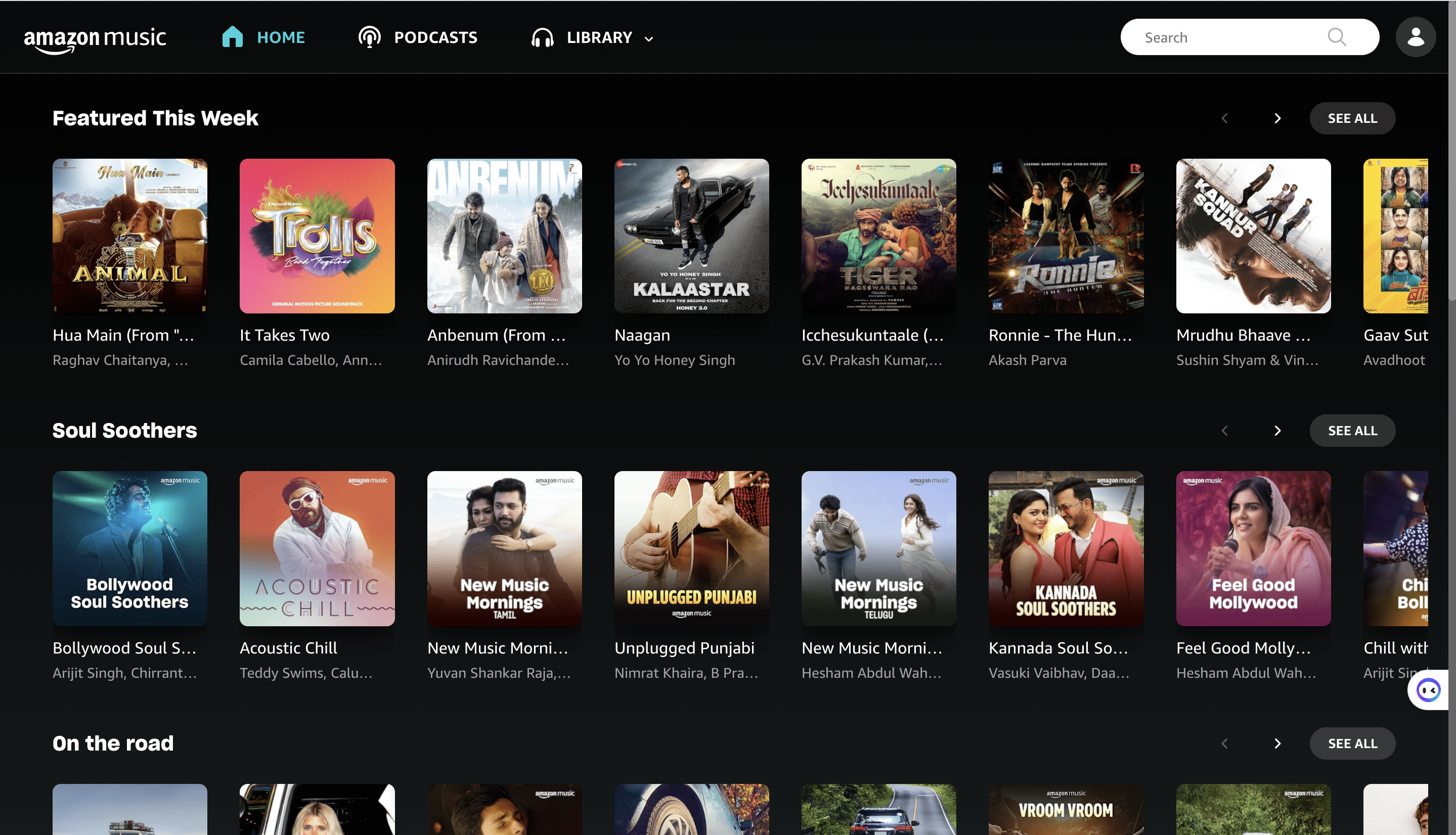
If your household already pays for Prime, Amazon Music is the easy value pick: $11.99/month for Prime members ($119 a year works out cheaper still) versus $12.99 for everyone else. Prime membership alone gets you a limited, shuffle-heavy catalog; Unlimited unlocks the full 100 million songs on demand.
The sleeper feature is audio quality: HD lossless and Ultra HD up to 24-bit/192 kHz are both included, with no premium tier to buy. On Echo speakers and Alexa devices, the voice integration is the deepest of any service here — asking for music just works. Amazon also produces a steady stream of Amazon Originals: acoustic versions, live sessions, and covers you won't find elsewhere.
The weak points: the app is cluttered, recommendations are mediocre, and the value only lands if Prime is already part of your life.
4. YouTube Music — best free tier and the deepest catalog
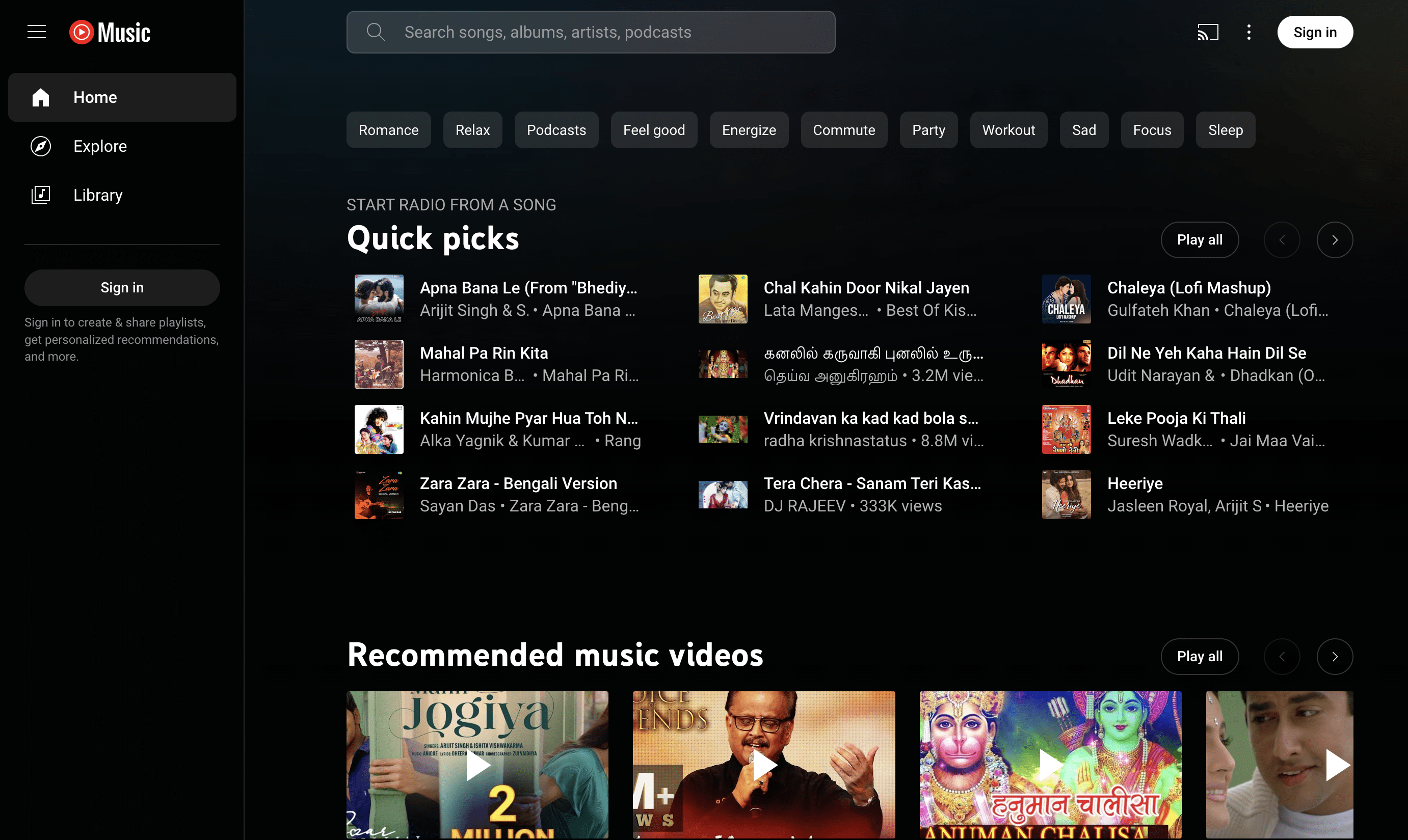
YouTube Music is the only service on this list I'd happily use without paying. The free tier is generous — essentially all of YouTube's music catalog, with ads — and Premium removes them, adds background play, and costs $11.99/month. YouTube Premium at $15.99 bundles the full video platform with Music, and that's the version most people end up with: Google reported more than 125 million Premium and Music subscribers, and the service has been the fastest-growing music subscription in the US.
The catalog is the argument. Official albums sit next to live sets, remixes, covers, and regional uploads that don't exist on Spotify or Apple Music. When a performance goes viral or an unreleased bootleg starts circulating, YouTube is where it lives.
The weak points: no lossless audio (streaming caps around 256 kbps), and recommendations follow your entire YouTube watch history — for better and worse.
5. Tidal — best for audiophiles
Tidal folded its old HiFi and HiFi Plus tiers into one $11.99/month plan, which makes it the cheapest single subscription covering hi-res FLAC, Dolby Atmos, and 360 Reality Audio. There's a 30-day free trial, plus Family ($19.99) and student ($6.99) options.
The pitch is sound quality and artist fairness — Tidal positions itself as artist-first and surfaces writing and production credits on every track, which music nerds will appreciate.
My honest take: on most gear, most ears won't separate Tidal from Spotify's lossless. Tidal earns its spot if you own a proper DAC and headphones that can actually resolve hi-res files — we picked our favorite headphones for classical music if you want a starting point. If your setup is phone-and-earbuds, Apple or Spotify lossless covers you for the same money. The trade-offs elsewhere: fewer smart-home integrations and a smaller social feature set.
Honorable mentions: SoundCloud, Pandora, and Deezer
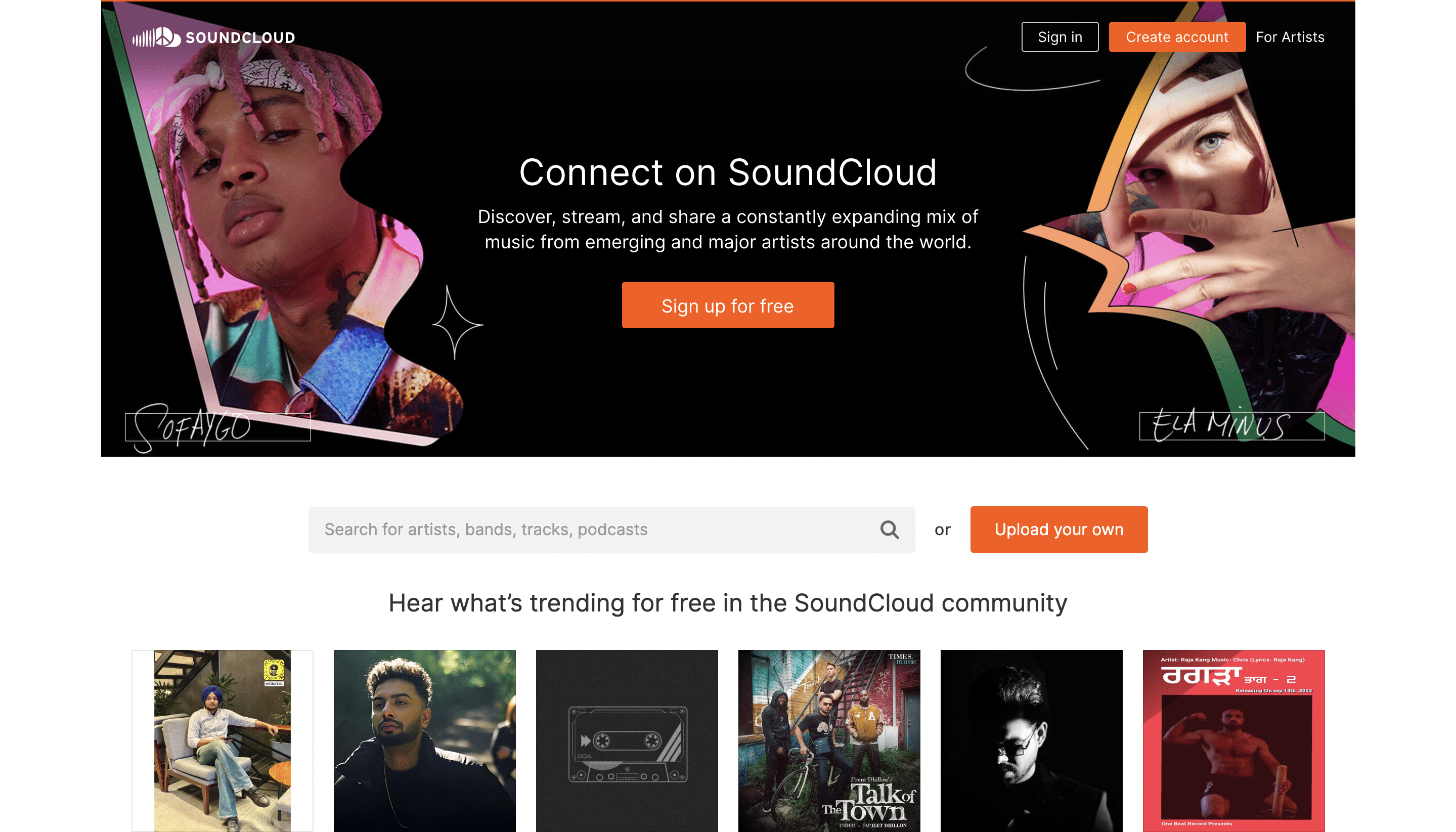
- SoundCloud — still unmatched for hearing artists before they exist anywhere else. Creators upload directly, and the free tier costs nothing. If your taste runs ahead of the algorithms, this is your app.
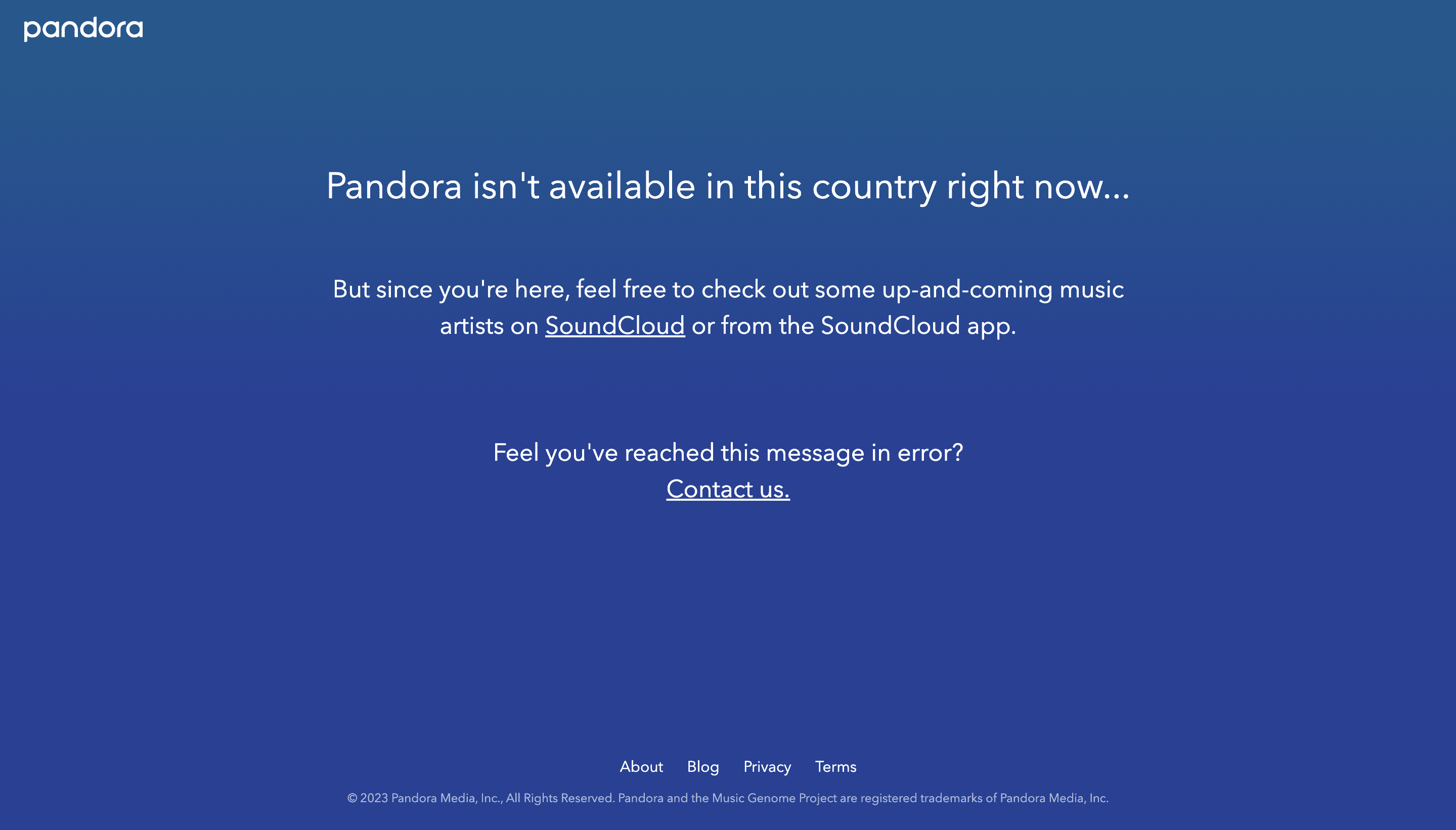
- Pandora — the radio-style pick. Its Music Genome Project stations are still great for lean-back listening, but it's US-only — the geo-block message below is what most of the world sees.
- Deezer — the most global of the "other" services, with localized catalogs and its Flow recommendation radio. It's strong across Europe, Latin America, and Africa, but there's little reason to pick it over the top five in the US or India.
Prefer regional players? We rounded up four music player apps like BoomPlay for African and Asian catalogs.
How to choose: four questions
- What phone do you carry? iPhone users get the most frictionless experience from Apple Music; on Android, Spotify and YouTube Music feel the most native.
- Do your ears (and gear) care about quality? Everything except YouTube Music includes lossless now. Own a DAC and serious headphones? Tidal. Otherwise, Apple, Amazon, or Spotify lossless is plenty.
- What are you already paying for? Prime household — Amazon Music is nearly a default. Student — every service has a discounted tier ($5.99–$6.99 in the US, ₹69 in India on Spotify). Family of four or more — per-seat math favors family plans everywhere.
- Free or paid? YouTube Music has the best free tier; Spotify's free shuffle is fine for casual listening. If you'd rather own a few tracks outright, our guide to free music download sites is a good starting point.
Switching is easier than most people think: Soundiiz, TuneMyMusic, and FreeYourMusic all migrate playlists between services in minutes. A few rare tracks get skipped in the matching, so run the transfer during a free trial and spot-check before cancelling anything.
FAQ
What is the best music streaming service in 2026?
For most people, Spotify — it has the strongest discovery features, the largest user base, and since late 2025 its included lossless audio removes the last advantage rivals held. Pick Apple Music if you're all-in on Apple gear, Amazon Music if Prime is already in your budget, Tidal for hi-res systems, and YouTube Music if you mostly listen free.
Which music streaming services include lossless audio?
All four major paid services now include lossless at no extra cost: Apple Music (up to 24-bit/192 kHz plus Dolby Atmos), Amazon Music Unlimited (HD and Ultra HD), Tidal (hi-res and spatial on its single plan), and Spotify Premium (up to 24-bit/44.1 kHz FLAC since late 2025). YouTube Music is the outlier, capping out around 256 kbps.
What's the cheapest way to stream music?
Student plans are the steal: $5.99 at Apple Music and YouTube Music, $6.99 at Tidal in the US, and as low as ₹69 a month on Spotify in India. Otherwise, the free tiers at Spotify, YouTube Music, and Pandora cost nothing but ad interruptions, and family plans work out under $4 per person if you split with five others.
Can I transfer my playlists when I switch services?
Yes. Soundiiz, TuneMyMusic, and FreeYourMusic connect both accounts and copy playlists across, usually in minutes. Expect a few mismatches: tracks unavailable on the destination get skipped, and some live versions get matched to studio takes. Do the transfer during a free trial and spot-check the results before cancelling your old plan.
Is YouTube Music a good Spotify alternative?
Increasingly, yes. Its catalog includes everything Spotify has plus covers, remixes, and live performances only YouTube carries, and the free tier beats anything Spotify offers. The trade-offs: no lossless audio, weaker playlist curation, and recommendations driven by your entire YouTube history. Video-first listeners will feel at home; pure audio fans may not.
Do US prices apply in other countries?
No, and the differences are large. Indian readers pay a fraction of US rates — Spotify's individual plan is around ₹139 a month there, with students at ₹69. Apple Music, YouTube Music, and Amazon Music all price per region too. Treat every figure in this guide as a US reference point and check your local pricing page before subscribing.
Related reading
- Starting a Music Streaming Service: 5 Tips on How to Build an App Like Spotify — how these platforms are actually built
- Unveiling the Future of Spatial Audio — where Dolby Atmos music is heading next
- 7 Best Sites for Free Music Downloads — own some of your library outright
- 4 Music Player Apps like BoomPlay — regional streaming apps worth a look
- Top Five Best Headphones for Classical Music — gear that does lossless justice
—
I've run Spotify Premium as my daily driver for years and keep trials of the rest running to compare — if you're torn between two of these, drop your phone and budget in the comments and I'll give you a straight answer.