

I've sat through enough agency pitches to know the difference between a partner and a PowerPoint — and New York has more of both than any other city I've worked in. This list of the ten mobile app development companies in New York was first published in 2023; since then two of its entries went out of business and every rate card moved. Here's the corrected, 2026-current version, with who each agency actually fits.
Quick answer: Blue Label Labs and Fueled are the strongest full-service picks for funded startups, ArcTouch suits enterprises needing strategy plus build, Dom and Tom and Five handle mid-market product work well, and Successive Digital, DMI, Majestyk, Appetizer Mobile and Rootstrap round out the list with specific strengths. Expect NYC rates of roughly $100-200/hour and six-figure MVP budgets — vet portfolios, not pitches.
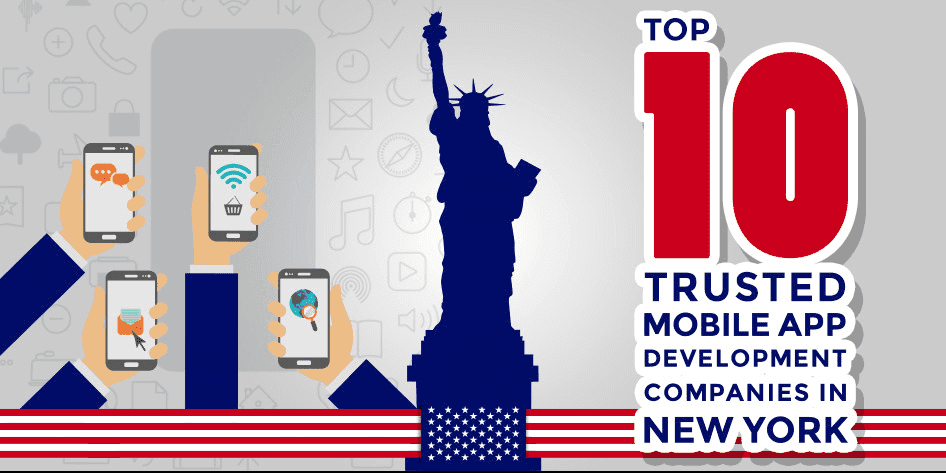
The 10 mobile app development companies in New York (2026)
| Agency | Best for | Typical engagement |
|---|---|---|
| Blue Label Labs | Funded startups, end-to-end product | $100k+ MVP builds |
| Fueled | Design-forward consumer apps | $100k+ MVP builds |
| ArcTouch | Enterprise apps, connected products | $150k+ engagements |
| Dom and Tom | Mid-market web + mobile | $75k-250k projects |
| Five | Product strategy + build for scale-ups | $100k+ projects |
| Successive Digital | Digital modernization + mobile | Project-based |
| Rootstrap | Data-driven product development | $80k+ projects |
| DMI (Digital Management) | Large enterprise programs | Enterprise contracts |
| Majestyk | Strategy-led boutique work | Boutique pricing |
| Appetizer Mobile | Luxury and consumer brands | Premium boutique |
Rates below are the widely cited NYC market bands as of 2026 — every agency quotes per project, so treat them as orientation, not quotes.
1. Successive Digital
Successive Digital (of successive.tech) leads this list the way it led the original: a digital-modernization firm with a strong mobile practice covering native iOS/Android builds, cross-platform work, and the hybrid app development many mid-market clients ask for. Their mobile application development practice spans strategy through delivery, with a delivery model that blends US-facing project management with global engineering pods — a cost structure worth comparing against pure-NYC shops when budget matters.
Best for: companies wanting modernization and mobile under one roof at blended rates.
2. Blue Label Labs
Blue Label Labs is the NYC startup-scene staple: strategy, design, development and post-launch marketing under one process they've refined across hundreds of launches. They're particularly strong when the client is a founder with a market thesis rather than a spec — expect pushback on scope that saves you money. Enterprise clients (Microsoft, Bloomberg among past names) keep the senior bench honest.
Best for: funded startups and enterprises that want a proven end-to-end product process.
3. Dom and Tom
Dom and Tom has been doing digital product work in New York since 2008, spanning mobile, web and emerging tech, with a client mix of startups, universities and Fortune-500 brands. Their sweet spot is mid-market engagements where a stable senior team matters more than a famous brand reel. Long client tenures — several relationships run a decade — are the best signal of how they operate.
Best for: organizations that value continuity over trend-chasing.
4. ArcTouch
ArcTouch operates at the strategy-heavy end: mobile apps, conversational AI, IoT and connected-product work for enterprises (Audi, HP and similar logos over the years). If your "app" is really an ecosystem play — companion apps to hardware, voice interfaces, or platform integrations — ArcTouch's discovery-first process is built for that complexity, at rates to match.
Best for: enterprises and hardware companies needing more than a standalone app.
5. Five
Five (five.agency) runs a global delivery model with a strong New York presence, doing product strategy, design and development for scale-ups and enterprises. Their pattern-recognition from hundreds of shipped products shows up in workshop-driven scoping — they'll tell you which half of your feature list to cut before writing code, which is exactly what you're paying an agency for.
Best for: scale-ups that need product thinking plus delivery capacity.
6. Rootstrap
Rootstrap (founded in NYC, now global) positions around data-driven development: discovery sprints, ML-backed features, and product analytics baked into the engagement. They've shipped for Google, Spotify-adjacent startups and healthcare companies — a good fit when "build the app" also means "instrument it so we learn."
Best for: teams that want experimentation and analytics as first-class deliverables.
7. DMI (Digital Management, LLC)
DMI is the enterprise heavyweight of this list: a global digital-services firm headquartered in the DC area with a major NYC commercial practice, covering mobile, cloud, security and managed services. You hire DMI when procurement, compliance and scale matter more than boutique attention — think regulated industries and multi-year programs rather than MVP sprints.
Best for: large enterprises with procurement requirements and long roadmaps.
8. Majestyk
Majestyk is the strategy-led boutique: smaller than the names above, deliberately so, with work concentrated on product strategy, UX and build for clients who want senior people making the decisions. Past clients include household-name brands; the pitch is fewer handoffs rather than deeper benches.
Best for: brands that want a senior, opinionated small team.
9. Appetizer Mobile
Appetizer Mobile is the NYC luxury-boutique pick — known for polished consumer and brand work (clients have included names like 50 Cent's ventures and major hospitality brands), full-stack development and launch marketing. If your product's success depends on a premium finish and App Store polish, this is the part of town it lives in.
Best for: consumer brands where design polish is the product.
10. Fueled
Fueled closes the list as one of the most design-forward app agencies in the city — NYT-famous for award-winning consumer work, with an NYC studio and a client roster spanning startups through enterprise (Verizon and Afterpay among commonly cited names). Their process leans on design sprints and rapid prototyping; budgets start above the NYC median but so does the output quality.
Best for: consumer products where the experience is the differentiator.
Two names from the old list, for the record
- Appster — the Melbourne/NY agency that starred in many older lists collapsed around 2019-2020; the appster.com domain now belongs to an unrelated app-discovery tool. Don't confuse the two.
- Appincubator — its site has been unreachable since our 2026 check; treat it as defunct unless it re-emerges.
How to choose (and vet) an NYC agency
1. Fix your budget band first. Under $75k points you to boutiques and hybrid teams; $100-250k is the funded-startup core; enterprise programs live above that.
2. Talk to the team, not the salesperson. Ask who exactly builds your app — agencies churn juniors through client work.
3. Demand post-launch terms. Support windows, store-management responsibilities and bug-fix SLAs matter more than the build price by month six.
4. Check the portfolio's live apps. Download two apps each agency shipped in the last 18 months; a dead or abandoned portfolio app tells you everything.
5. Reference-check the last three clients, not the logo wall.
Before you sign anything, read our primers on why MVP development is the smartest first step for a startup and the points to consider while developing Android apps — scoping discipline and platform traps are exactly what agencies should be quoting against. Industry trackers like Business of Apps keep current rate benchmarks if you want to pressure-test quotes.
Frequently asked questions
How much does it cost to develop a mobile app in New York?
Budget roughly $100,000-250,000 for a quality consumer or enterprise MVP from a mid-tier NYC agency, and $50,000-100,000 at boutiques working lean or with offshore-blended delivery (like Successive's pod model). Simple single-platform apps can land lower; complex products with backends, integrations and compliance run well past $300,000. NYC's $100-200/hour rate band is the highest in the US alongside San Francisco.
How do I vet a mobile app development company?
Five checks: live apps on the stores from the last 18 months, references from the three most recent clients, the named team who'll actually build, post-launch support terms in the contract, and code-ownership/IP clauses that hand you everything. An agency that resists any of the five is telling you something.
What happened to Appster?
Appster — the once-famous "app development for startups" agency often listed for New York and San Francisco — wound down around 2019-2020 after internal and financial troubles. The appster.com domain now hosts an unrelated app-discovery product, so old articles linking it as an agency are outdated; treat any list still recommending Appster as stale.
Native or cross-platform: what should I ask an agency to build?
In 2026 the default for most products is cross-platform (React Native or Flutter) — one codebase, near-native feel, materially cheaper to maintain. Go native when you need platform-deep features (advanced camera, AR, wearables, performance-critical graphics). A good agency tells you which you need in discovery; one that defaults to native for everything is selling you hours.
Related reading
I've hired two agencies from lists exactly like this one — if you share your app idea's scope and budget in the comments, I'll tell you which two firms I'd call first.