Photo: Raj Rana / Unsplash
The office technology stack that mattered in 2023 has already been reshuffled. AI assistants moved from novelty to default, hybrid work settled into fixed patterns with the software to manage them, and the touchless-everything push of the pandemic years faded into invisible infrastructure. This update reruns our next-gen workspace trend list against what's actually shipping and being bought in 2026 — and flags what the 2023 version got wrong.
What changed since the 2023 guide
| Trend | 2023 version | Where it stands in 2026 |
|---|---|---|
| AI in the office | Early ChatGPT experiments, basic transcription | Copilots embedded in Microsoft 365, Google Workspace, and Zoom take notes, draft, and summarize meetings as standard |
| Hybrid work | "Hybrid is coming," ad-hoc desk sharing | Settled structures — office-first with anchor days, or fully remote — with desk-booking and visitor software managing the floor |
| Contactless tech | Touchless doors and elevators post-COVID | Normalized into badges, sensors, and smart lighting; nobody markets "contactless" as a feature anymore |
| Cloud printing | A rising trend | Table stakes; the newer conversation is print security and zero-trust access |
| Sustainability | Recycling drives, LED retrofits | Energy monitoring, ESG reporting pressure, and refurbished-hardware procurement |
| Data analytics | Dashboards for managers | Workplace analytics with a privacy backlash — occupancy data is now a trust issue |
1. AI copilots are the default, not the pilot
The biggest shift since our original guide: AI moved from standalone tools into the software offices already pay for. Microsoft 365 Copilot, Google Workspace's Gemini features, and Zoom AI Companion now summarize meetings, draft documents, and answer questions about a company's own files. The practical conversation in 2026 isn't "should we adopt AI" — it's which bundle, what data policy, and how to stop employees pasting sensitive material into consumer chatbots. For picking the software side, Forbes Advisor's project management comparisons remain a reasonable shortlist starting point, though your suite vendor usually settles it.
Best for: every office, but buy it through the suite you already use rather than adding another subscription.
The failure mode is buying licenses nobody uses. Teams that get value assign each copilot a concrete job — meeting notes, first-draft reports, email triage — instead of hoping it revolutionizes everything.
2. Hybrid work got structure (and software)
In 2023, hybrid meant an honor system. By 2026, most companies that kept hybrid picked a pattern — anchor days, team-specific weeks, or fully flexible with a smaller permanent office — and the floor is managed by desk-booking and workplace platforms like Envoy, Robin, or Officespace. Occupancy sensors feed the same systems, telling facilities teams which zones actually fill up.
The underrated part is measurement: companies now know their real peak attendance, and many downsized or reconfigured space because of it. If your office still runs on "come in and hope there's a desk," that's the gap to close first.
Best for: offices over ~30 people, where seat-to-employee ratios above 0.7 start wasting serious money.
3. Meeting-room AV became a quality bar
Nothing exposes a hybrid office like bad audio. The 2026 baseline for a serious meeting room is a purpose-built bar (Logitech Rally, Poly, Jabra, Neat) with auto-framing cameras and beam-forming mics, wired to whatever meeting platform the company standardized on. Small huddle rooms got cheap one-box units; larger rooms get computed-audio systems.
Home setups matured too — good USB mics and 4K webcams are under a hundred dollars, and remote workers are expected to not sound like they're in a wind tunnel.
Best for: any team where remote participants outnumber in-room ones, which is most of them now.
4. Security moved to zero trust
With people logging in from homes, coworking spaces, and airports, perimeter security stopped making sense. The 2026 stack is identity-first: SSO with MFA everywhere, passwordless passkeys where possible, device posture checks, and a password manager as standard issue. VPNs are being replaced by zero-trust network access (ZTNA) tools that grant access per application.
This is the least glamorous trend on the list and the one most likely to save the company. Phishing and credential theft remain the entry point for most breaches, and hybrid work multiplied the attack surface — why zero trust matters explains the model in depth.
Best for: every office, immediately. This one doesn't wait for a budget cycle.
5. Sustainability became procurement policy
The 2023 version of this trend was recycling bins and LED bulbs. The 2026 version is structural: companies buy refurbished laptops and monitors as a default, track energy per device, publish emissions data because enterprise customers demand it, and extend hardware lifecycles from three years to five or six. European reporting rules pushed much of this from virtue to requirement, and vendors responded with energy dashboards and take-back programs.
TechBii runs on refurbished and second-life hardware for exactly this reason — a five-year-old laptop handles a WordPress workload fine, and the savings compound.
Best for: cost-conscious teams — this is the rare green trend that usually pays for itself.
6. Workplace analytics meets privacy pushback
Occupancy sensors, badge data, and collaboration-tool metrics give facilities and HR teams an unprecedented picture of how an office actually runs: which rooms get used, what days fill up, whether the new layout works. The counter-trend arrived with it — employees who see analytics as surveillance, and regulations that treat monitoring data as personal data.
The workable line in 2026: aggregate and anonymized for space decisions, never individual-level productivity scoring. Companies that crossed into per-person monitoring are fighting retention battles that cost more than the dashboards saved.
Best for: facilities decisions at 50+ desks, with a written employee-privacy policy attached.
7. The office itself got repositioned
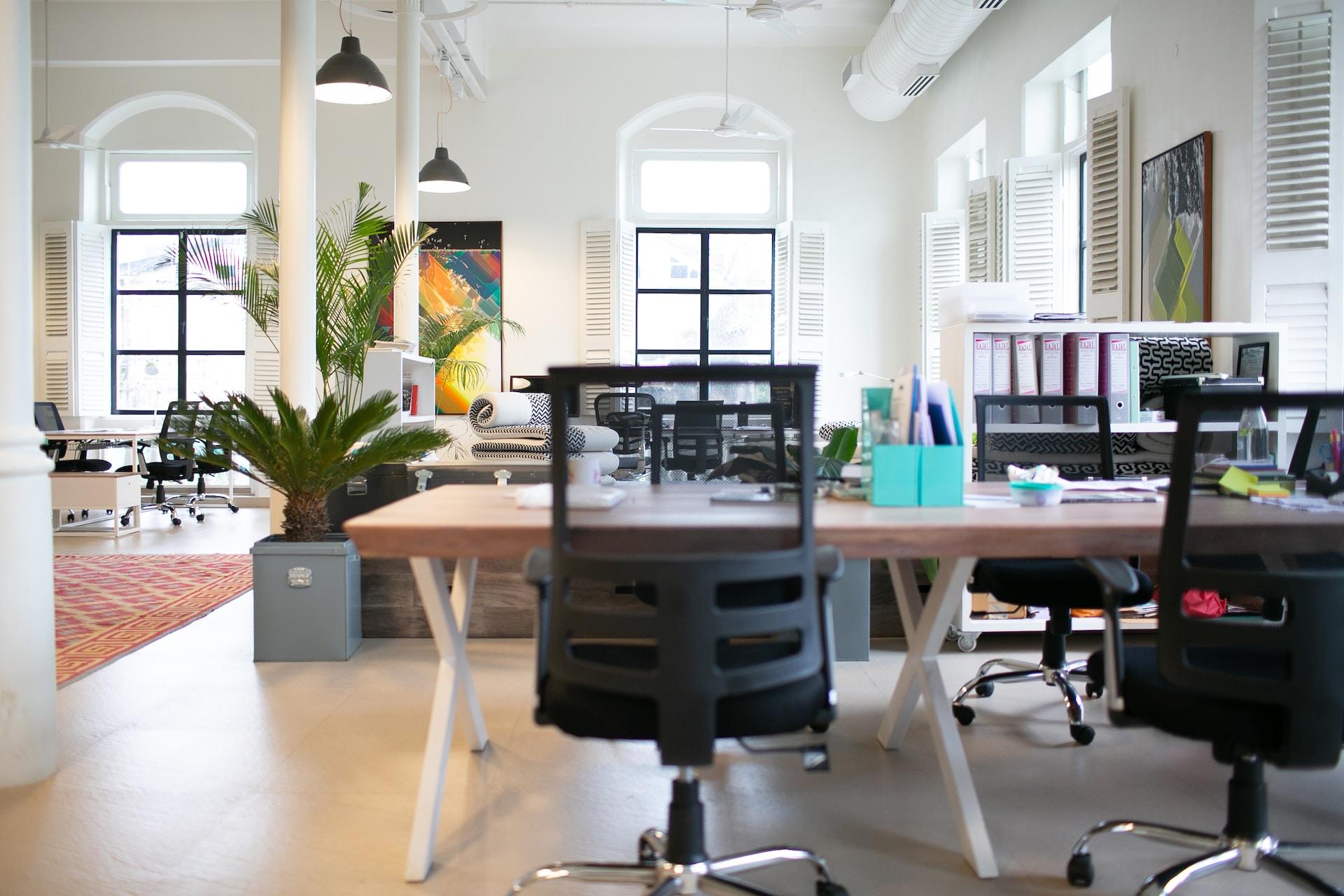
The trend underneath all the others: the office is now a destination for collaboration, not a container for heads-down work. Companies that survive the hybrid era reconfigured space — more project rooms and social space, fewer rows of identical desks — because solo work happens better at home. The tech that supports this is booking systems, room displays, digital signage showing what's on, and AV that makes mixed meetings tolerable.
Best for: anyone renovating or moving offices in 2026. Redesign for the days people choose to come in.
Which trends to act on first
| Trend | Cost to adopt | Impact | Priority |
|---|---|---|---|
| Zero-trust security | Low–medium | Existential | First |
| AI copilots in existing suites | Medium (per-seat) | High, compounding | Second |
| Desk booking / hybrid structure | Low | High for hybrid teams | Second |
| Meeting-room AV | Medium | Direct quality-of-life | Third |
| Sustainability / refurbished hardware | Saves money | Medium, growing | Anytime |
| Workplace analytics | Low–medium | Medium | After structure exists |
| Office reconfiguration | High | High, long-term | When leases allow |
Implementing any of it
The 2023 guide's advice on rollout still holds, with one addition. Announce changes through more than one channel, train in short live sessions rather than emailing manuals, and run old and new systems side by side for a month before switching off. What 2026 adds: for AI tools, add a data-handling policy before rollout, not after the first incident — say explicitly what may and may not be pasted into a copilot, and put it in the tool-training session, not a PDF nobody opens.
FAQ
What is a "next-gen workspace" in 2026?
An office built around hybrid work: identity-based security, desk and room booking, meeting-room AV that treats remote participants as equals, AI assistants embedded in the software suite, and space designed for collaboration rather than rows of desks. The technology is secondary to the operating pattern it supports.
Is hot-desking still a thing, or did everyone go back to the office?
Both exist, but the wholesale return-to-office predictions never fully landed. Most companies that recalled staff landed on three or four office days with shared desks, which keeps desk-booking software relevant. Fully assigned desks are now common only in offices that genuinely fill every day.
Are AI meeting assistants safe for confidential meetings?
With enterprise tiers, generally yes — recordings and transcripts stay inside your tenant under your compliance terms. The risk is policy, not tooling: consumer-grade AI apps used informally, and employees pasting sensitive text into public chatbots. Write the policy, buy the enterprise tier, and disable the consumer workarounds.
What's the cheapest high-impact upgrade for a small office?
Audio. A pair of good USB microphones and a proper speakerphone for the meeting room fixes the most-felt pain in hybrid work for a few hundred dollars — less than one month of one desk's rent, with daily payoff.
Related reading
- How AI technology can cut hiring time from months to hours
- Is it worth investing in solar panel technology?
Start with the security pass, then the copilot licenses — everything else on this list can wait its turn.