

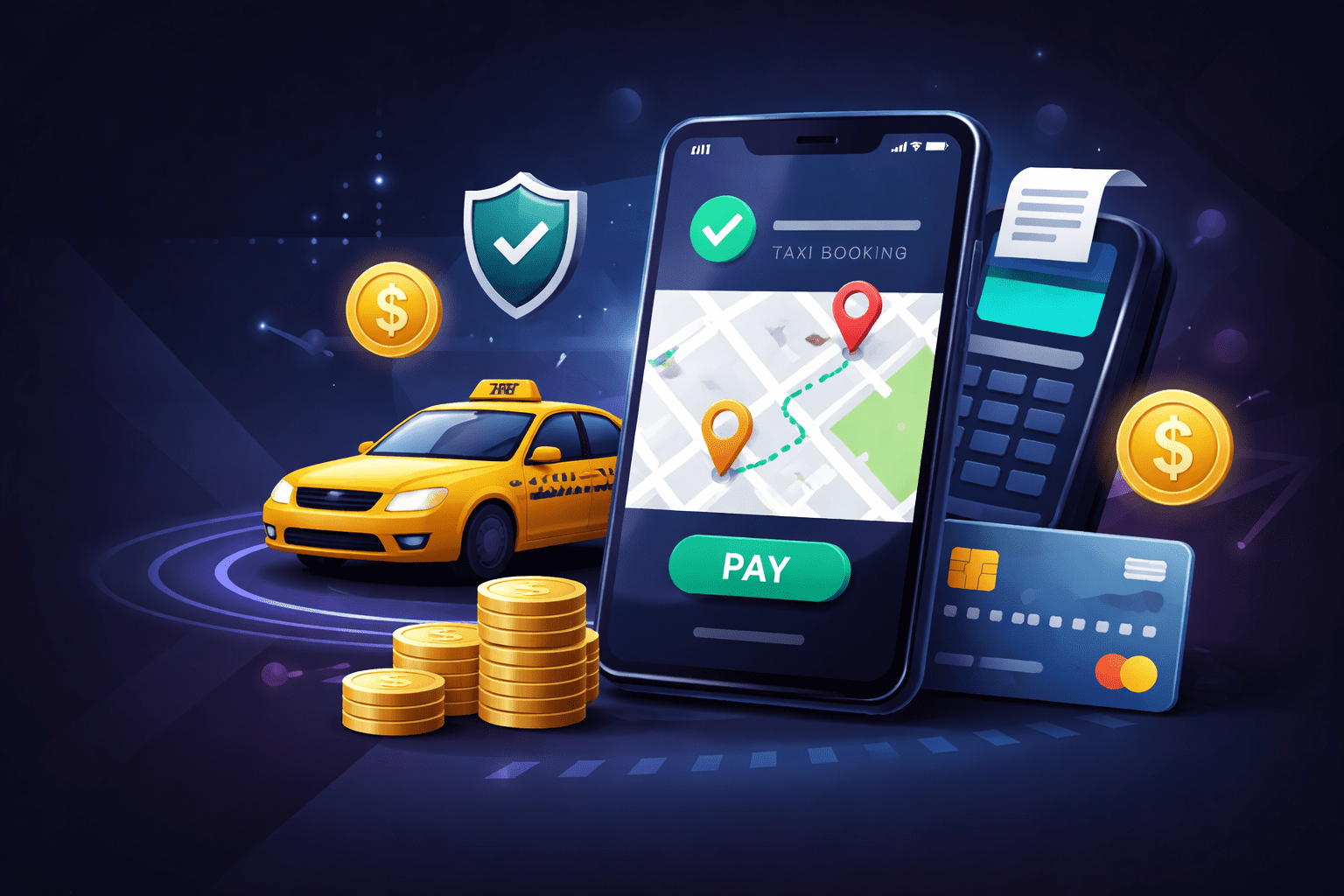
The success of modern taxi booking platforms depends heavily on how seamlessly they handle payments. Users are attracted to the platform because it offers real-time tracking, driver ratings and route optimization, but the payment process determines how users perceive ease of use and their trust in the system. Riders expect fast, secure and flexible payment options, while businesses need reliable systems that ensure smooth transactions and revenue tracking.
A successful ride-hailing platform requires payment gateway integration as its essential element. This complete guide explains payment gateway integration for taxi booking apps by providing information on solution selection, cost estimation, and best practice implementation.
Why Payment Gateway Integration Matters in Taxi Apps
A well-integrated payment system enhances both user experience and business efficiency. The following reasons demonstrate its essential importance.
- Convenience for Users: Riders can pay instantly using cards, wallets, or UPI without handling cash
- Faster Transactions: Automated payments reduce wait times at the end of rides
- Improved Security: Encrypted transactions build user trust and reduce fraud risks
- Operational Efficiency: Automated billing, invoicing, and revenue tracking streamline backend processes
- Global Reach: Multi-currency and international payment support help expand your service
The development of taxi booking apps requires companies to establish dependable payment gateways, which function as vital elements that enable users to complete their rides while maintaining their happiness.
Types of Payment Methods to Integrate
To cater to diverse user preferences, taxi apps should support multiple payment options:
1. Credit and Debit Cards
Card payments remain one of the most widely used methods globally. Major card networks should be integrated because it allows users to access the system through various card types.
2. Digital Wallets
Frequent riders can make fast and easy payments through wallets, which include Paytm, Apple Pay and Google Pay.
3. UPI and Bank Transfers
UPI has become the dominant digital payment method in India because it provides users with fast and simple payment solutions.
4. Cash Payments
Cash remains important in various areas because people still use it despite the growth of digital payments, which should be available as a backup payment method.
5. In-App Wallets
Taxi apps can develop their own wallet systems, which enable users to load money, get cashback, and exchange their rewards.
The flexible payment system exists as an essential requirement that businesses need to implement when they use fintech app development services.
Key Features of a Payment Gateway for Taxi Apps
The essential features that need implementation during payment gateway integration work as follows.
Secure Transactions
Advanced encryption protocols and tokenization methods protect all sensitive user information.
Real-Time Processing
The system needs to provide immediate payment confirmation which prevents any delays during the ride completion process.
Multi-Currency Support
Your gateway needs multiple currency support when you plan to operate your business across different countries.
Automated Fare Calculation
The system needs to integrate dynamic pricing models which will calculate fares based on distance and time and demand.
Payment History & Invoices
The system needs to deliver complete transaction records to users while enabling them to download their invoices for verification purposes.
Refund & Cancellation Management
The system should allow customers to receive their money back after they cancel their rides or when they dispute charges.
Steps to Integrate a Payment Gateway into a Taxi Booking App
Step 1: Choose the Right Payment Gateway
The gateway selection process should use your target market requirements and payment method support. The transaction fees and security features of payment options should be assessed to select appropriate gateways. The most common payment processing solutions include Stripe, Razorpay, PayPal, and Square.
Step 2: Understand Compliance Requirements
The business must follow PCI-DSS regulations, which define card data handling requirements. Fintech app development services provide essential regulatory compliance because they maintain the required industry standards.
Step 3: Set Up Merchant Account
Your business needs to register with the payment provider for API credential access, which will enable system integration.
Step 4: Integrate APIs
The payment gateway APIs establishes a connection between your application and the payment processing system. The development work for this project needs both frontend and backend development resources.
Step 5: Implement UI/UX for Payments
The design needs to create an easy payment interface that enables users to select and complete payments through the system.
Step 6: Test the Integration
All payment methods need thorough testing to confirm their proper operation, including tests for failed transactions and refund processing.
Step 7: Deploy and Monitor
The system requires continuous monitoring of transaction performance and user feedback after deployment to achieve system optimization.
Security Considerations in Payment Integration
The security of financial transactions requires businesses to follow these best practices.
- Data Encryption: Use SSL/TLS protocols for secure communication
- Tokenization: Replace sensitive data with tokens to prevent data breaches
- Two-Factor Authentication 2FA: Add an extra layer of user verification
- Fraud Detection Systems: Monitor suspicious activities in real time
- Regular Security Audits: Ensure compliance and system integrity
A reliable taxi booking app Development Company prioritizes these measures to safeguard both users and businesses.
Challenges in Payment Gateway Integration
The implementation of payment gateways brings advantages to businesses yet requires organizations to face multiple difficulties.
The Payment Failures
User experience suffers when network problems or low account balances cause transactions to fail.
The Regulatory Compliance
Global expansion becomes challenging because financial regulations differ between various regions.
The Transaction Fees
Payment gateways impose transaction fees, which decrease business profitability.
The Integration Complexity
The development process becomes harder when developers need to support several payment methods.
The User Trust Issues
Users require strong security assurances before they will agree to save their payment information. The partnership with fintech app development service experts enables complete solution delivery for all existing problems.
Cost of Integrating Payment Gateways
Your taxi application project requires you to understand its cost structure before you can create a budget for it. The total fintech app development cost with payment integration features depends on multiple elements of development work.
Development Complexity
Advanced features like multi-currency support, wallets, and analytics increase costs.
Third-Party Fees
Payment gateways charge setup fees, transaction fees, and sometimes monthly charges.
Security Implementation
The implementation of high-level security features results in increased development costs.
Maintenance and Updates
The ongoing support, system updates, and compliance checks create a need for extra funds.
Customization Requirements
The creation of customized payment systems that connect with different payment processors will lead to higher costs.
On average, payment gateway integration takes up a major part of the total taxi application development expenses, which vary based on project size and required functionalities.
Best Practices for Successful Integration
To ensure a smooth payment experience, follow these best practices:
- Cater to diverse user preferences through the provision of various payment methods.
- The system needs to process transactions at high speed so users can complete their payments without delay.
- The system needs to show complete fare information together with all payment details to users.
- Users need the ability to store their payment information, which will enable them to complete purchases more efficiently.
- The analytics system will monitor payment success rates and user behavior for performance assessment.
- The company needs to provide customer support services that will help users resolve their payment problems without delay.
Future Trends in Taxi App Payments
The payment landscape is undergoing continuous transformation. The following trends are currently shaping upcoming developments in the industry:
Contactless Payments
The adoption of NFC and tap-to-pay technologies continues to rise
Blockchain-Based Payments
The technology provides improved transparency together with decreased transaction expenses
AI-Powered Fraud Detection
The system uses advanced technology to identify and stop fraudulent activities
Voice-Enabled Payments
The technology enables users to complete transactions using their voice assistants
Buy Now, Pay Later (BNPL)
The service offers customers multiple payment methods, which they can choose according to their needs.
Staying ahead of these trends can give your taxi app a competitive edge.
Conclusion
The taxi booking application requires payment gateway integration as an essential procedure, which establishes trustworthiness and operational efficiency for the platform. The user experience depends on every aspect of the payment process, which includes payment method selection, security measures, and compliance verification.
The reliable taxi booking application Development Company enables businesses to develop secure payment systems through its expert fintech application development services. The costs of developing fintech applications depend on their specific features and level of complexity; however, businesses should invest in established payment systems because they lead to lasting success and customer contentment.
The ride-hailing industry requires companies to provide customers with an efficient payment system because it has become a fundamental requirement.