

Hiring a WordPress developer goes wrong in predictable ways: the quote looks great, the portfolio looks polished, and three months later the site is unmaintainable spaghetti with a security hole where the contact form used to be. This guide is about the questions that prevent that — updated for 2026, when the market includes AI-assisted freelancers at every price point and choosing well matters more than ever.
Quick Answer: To hire an expert WordPress developer in 2026, define scope first, then choose between freelancers ($25–100/hr), agencies (project-based), or dedicated developers from an established firm. Vet candidates on real WordPress work (plugins/themes, not just websites), staging workflows, security practices, and maintenance terms — not just price.
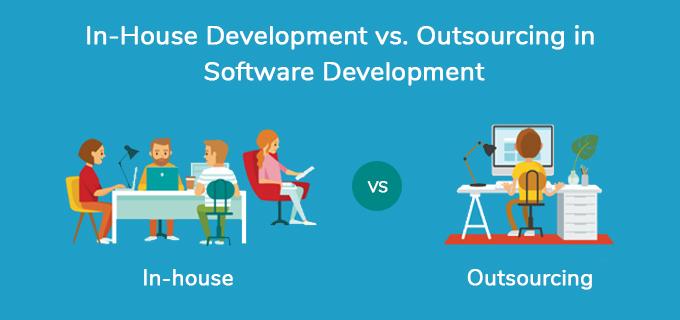
Freelancer, Agency, or Dedicated Developer?
The three hiring models fit different situations:
- Freelancers suit well-scoped projects — a landing page build, a plugin customization, a theme refresh. Lower cost, but you manage the project, and availability can vanish mid-project.
- Agencies suit businesses that need design, development, and ongoing support under one contract. You pay for process and reliability — and for sales layers you may not need.
- Dedicated developers (a developer or small team working only for you, usually through a firm) suit ongoing workloads — continuous feature development across several properties. Firms like AddWeb Solution offer this model if you want interview-and-direct the developers yourself.
For most small businesses: a good freelancer for discrete projects, an agency when you need accountability and hand-holding, dedicated staff when WordPress work is genuinely continuous.
Where to Find Developers Worth Hiring
- WordPress-specific job boards (jobs.wordpress.net and similar) filter for people who actually work in the ecosystem.
- The WordPress.org plugin and theme repositories — if someone maintains a well-reviewed plugin in your needed area, they've passed a harder test than any portfolio.
- Referrals from similar businesses — ask for the developer, not the "person who did our website," and check the site still runs well a year later.
- Established development firms if you want contracts, NDAs, and replacement guarantees as part of the package.
Treat every marketplace profile the same way: portfolio links that are live and fast, reviews mentioning completed scope, and a GitHub or repository history that shows real WordPress code.
What to Actually Vet (Beyond the Portfolio)
These separate professionals from template-assemblers:
1. Do they build for WordPress, or just on it? Ask about custom plugin or theme development, the block editor (Gutenberg) specifically, and REST API work. Someone who only installs page builders will hit a wall when you need real functionality.
2. Do they use version control and staging? Git plus a staging environment is table stakes. A developer who edits live sites directly is an emergency you haven't had yet.
3. What's their security practice? Expect specific answers: input sanitization, nonce verification, least-privilege database users, and familiarity with common WordPress vulnerabilities.
4. How do they handle performance? Look for answers involving Core Web Vitals, image optimization, caching layers, and query auditing — not "I install a caching plugin."
5. What happens after launch? The best predictor of a good outcome: a written maintenance arrangement — updates, backups, uptime monitoring, and a response-time commitment.
A Hiring Process That Works
1. Write the brief before the search. List features, integrations, content responsibilities, and what "done" means. Ambiguity in the brief is where budgets die.
2. Shortlist three candidates and give each a small paid pilot — one real task from your project, a few hours' work. Their communication during the pilot matters more than the code.
3. Compare proposals on structure, not just totals. Fixed price for defined scope beats hourly vagueness; watch for proposals with no maintenance or handover plan.
4. Check references with one question: "What broke after launch, and how did they handle it?" Every project has a crisis; you're hiring the response.
5. Contract the essentials: scope, milestones, payment tied to acceptance, IP transfer on payment, and a handover package (admin access, documentation, repository).
Working With Your Developer Once Hired
- Give feedback in issues, not ad-hoc chats — a running task list keeps scope disputes away.
- One approver. Two stakeholders sending contradictory revision requests doubles the bill.
- Respect the staging workflow — "just push it live now" is how launch weekends get ruined.
- Schedule maintenance quarterly rather than calling when something breaks; WordPress core and plugin updates are continuous, and neglect compounds.
What Should This Cost in 2026?
Rates have genuinely widened: freelance rates run roughly $25–100+/hour depending on region and specialization, agency projects commonly start in the low thousands, and dedicated arrangements are quoted monthly. AI tooling has compressed simple tasks (starter themes, boilerplate), which means entry-level "build me a brochure site" work is cheaper — but debugging, security, and custom integrations command more than they used to. If a quote seems too cheap, the difference is usually unbilled scope or skipped security work. For context on the agency end, see our guide to choosing a WordPress development company in India.
FAQ
How much does it cost to hire a WordPress developer in 2026?
Freelancers typically charge $25–100+ per hour depending on region and skill; small projects land between $500 and $5,000; agency builds commonly start around $3,000–10,000; dedicated developers are quoted monthly ($1,500–5,000+). Treat ranges as orientation — scope, not rates, drives the final number.
Freelancer or agency — which is better for WordPress work?
Freelancers win on cost and direct communication for scoped projects; agencies win on reliability, breadth (design + dev + support), and continuity when your contact disappears. If the site is business-critical or the scope keeps growing, agency or dedicated-developer models reduce risk; for a fixed, well-defined build, a vetted freelancer is usually the better value.
What skills should an expert WordPress developer have?
Core: PHP, HTML/CSS, JavaScript, MySQL, Git, and deep familiarity with hooks, the block editor, and WP-CLI. Valuable extras: REST API integrations, headless WordPress experience, performance profiling, and security hardening. Ask candidates to walk through a custom plugin they shipped — the explanation reveals depth faster than any checklist.
Should I hire a dedicated WordPress developer full-time?
Only if WordPress work is continuous and central — a publisher shipping features weekly, or a business running multiple high-traffic properties. Otherwise, project-based hiring avoids paying for idle capacity. Dedicated-through-a-firm arrangements split the difference: continuity without full-time employment overhead.
How do I check a WordPress developer's actual skill?
Give a small paid task from your real project — a bug fix or small feature — and evaluate: do they ask clarifying questions, use version control, test before delivering, and explain trade-offs? Reviews and portfolios can be faked; how someone behaves on a two-hour task cannot.
What should be in the developer contract?
Defined scope and deliverables, milestone-based payments tied to your acceptance, intellectual-property transfer on final payment, confidentiality if relevant, a maintenance/handover clause, and a dispute mechanism. The handover package deserves its own line: admin credentials, hosting access, repository, and documentation.
Related Reading
- How to Choose the Best WordPress Development Company in India
- WordPress Development: Custom Code vs Page Builders
- When to Hire WooCommerce Developers for eCommerce Growth
- Finding the Best E-commerce Website Development Agency
The WordPress developer market rewards the same diligence as any hire: a precise brief, a paid pilot, and references that ask the one question that matters — what happens when something breaks. Run that process and the 2026 market works for you.