


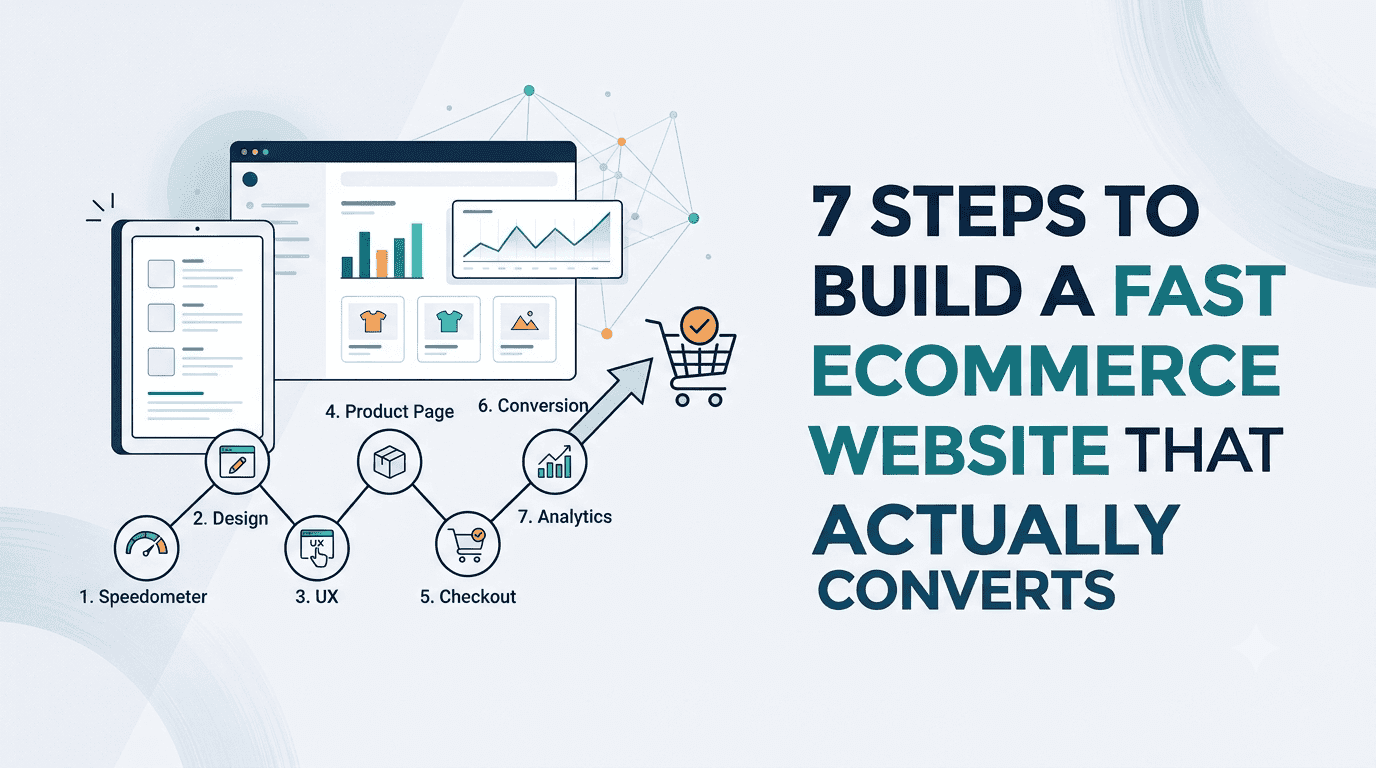
A fast-loading website is not a fancy feature, but it’s one of the most essential features. This helps your website to showcase the best first impression in front of the website visitors.
According to a report of the Swiss German University, the person who had an attention span of 150 seconds back in 2004 has now reduced to only 47 seconds in 2024.
So, if you want to grab the eye of your customer, then it’s a must to have a highly speedy website. Whether you DIY or work with an experienced eCommerce website development agency.
In this blog, we are going to share 7 key stages that you can experiment with on your website to increase the speed. So, let’s start.
1. Create a Mobile-First eCommerce Site
Mobile is taking the mainstream position for driving almost 3 out of 4 parts of the internet traffic. That’s why if you are missing the mobile user base, it ultimately reduces the business revenue. So, creating a mobile-optimized e-commerce store is non-negotiable.
Tips to ensure a mobile-first website:
- Adaptable website design according to device size
- Fast loading mobile pages
- Simple navigation
- Buttons for touch use
- Product images optimized
- Simplified checkout form
Many businesses take a mobile optimization website to the next level by creating mobile-first development for their e-commerce store. You can also contact an eCommerce development company to get a flawless mobile-first e-commerce development to make a conversion-focused online store.
2. Arrange the Technical Part of Your Website Properly
Users anticipate fast page loads. Long loading times can raise bounce rates and lower the retention of customers.
To boost the performance of the website, the business needs to:
- Optimize and compress your photographs
- Use current image formats.
- Minify CSS JavaScript Files
- Reduce the plugins you don’t need
- Leverage browser cache
- Choose a solid hosting infrastructure
- Implement CDN Services to Serve Faster
A quick website enhances user experience, as well as search engine rankings and conversion performance.
3. Design Intuitive and Easy-to-Use Navigation
Customers need to be able to easily and clearly find products and information. To get good Navigation on your eCommerce store, an experienced eCommerce website development agency uses:
- Well-structured product categories
- Search features
- Filters for products
- Navigation breadcrumbs
- Good menu hierarchy” structure”
- Visible call to action buttons
By simplifying navigation, you eliminate friction in the customer journey and help visitors transition from browsing to checkout more smoothly.
A good eCommerce development firm India knows that the user experience design has a direct impact on customer behavior and purchasing decisions.
4. Optimize Product Pages for Conversions
Product pages are quite important in the choice to purchase.
A product page that is well-optimized gives the buyer the information and confidence they need to make a purchase.
Generally, high converting product pages feature:
- High grade product pictures
- Detailed product descriptions
- Product details
- Clarity of pricing
- Customer Reviews & Ratings
- Delivery details
- Return Policy
- Flags for the availability of stock
5. Streamline Checkout Process
A simplified checkout experience reduces friction and helps customers complete their purchases more effectively. To resolve this, professional eCommerce development companies concentrate on website design by removing extra processes that break the buying process.
These are the core checkout optimization best practices:
- Guest checkout choices
- Multiple payment gateways
- Minimal form fields
- Auto-filling function
- Transparent rates for shipping
- Secure payment integration
- Crisp order summaries
6. Performance Optimization Meets SEO
Search engine presence is vital to drive organic visitors to an eCommerce website.
But current SEO is very correlated with website performance and user experience.
Important SEO optimization practices are:
- Pages that load quickly
- Mobile responsiveness SEO friendly URLs
- Optimized metadata
- Organized content hierarchy
- Links on the site
- Schema markup integration
- Product descriptions based on keywords
Optimizing SEO with performance in mind, how companies may increase exposure, attract qualified traffic, and create greater eCommerce conversions.
Instead of leaving the technical SEO as a separate effort afterward, a reliable eCommerce development company India offers services that usually includes it in the website creation process.
7. Continue to Analyze and Optimization
An experienced eCommerce development company always suggests that businesses should routinely review data to find opportunities for improvement and optimization.
Some key metrics to track include:
- Conversion rates
- Bounce rates
- Cart abandonment rate
- Page loading speed
- Customer session length
- Average order value
A/B testing can also increase performance by testing:
- Call to Action Buttons
- Templates Product page
- Checkout procedures
- Headlines and head banners
- Images of the product
Constant optimization helps organizations keep increasing eCommerce conversions on a steady path and adapt to evolving client expectations.
Conclusion
You need to check the right way to get an e-commerce website that showcases your product to a mobile user base. Here, seeking help from an experienced eCommerce development company India is a secret for many businesses’ success. This way, you get guaranteed fast loading and a more user-friendly website to boost your conversion and business revenue.
FAQ
Q1. Why is website speed important for eCommerce?
A faster website improves user experience, reduces bounce rates, and increases conversions.
Q2. What is the ideal loading time for an eCommerce website?
Most experts recommend loading pages within 2–3 seconds to maximize engagement and sales.
Q3. How does mobile-first design improve conversions?
Mobile-first design ensures a smooth shopping experience across devices, increasing customer satisfaction and purchases.
Q4. Does website speed affect SEO?
Yes. Faster websites generally perform better in search engines because page experience is an important ranking factor.
Q5. What is the most important step in building a high-converting eCommerce website?
Combining fast performance, intuitive navigation, optimized product pages, and a streamlined checkout delivers the best results.