

The Top 3 EHS Software for Transportation and Manufacturing Companies in Canada:
- BIS Safety Software Canada: Best overall choice for Canadian transportation and manufacturing companies that want AI-powered tools, compliance and training in one platform, and comprehensive safety management functionality.
- VelocityEHS: A strong option for companies that need broad EHS capabilities, including training, safety management, chemical management, risk, compliance, and transportation-focused workflows.
- SafetyCulture: A flexible inspection and operations platform that can help transportation and manufacturing teams digitize checklists, inspections, issues, and corrective actions.
- Intelex: A mature EHSQ platform suited to larger manufacturing organizations that need environmental, health, safety, quality, risk, compliance, and reporting tools.
- EcoOnline: A capable EHS platform for companies that need incident management, inspections, audits, corrective actions, centralized compliance records, and chemical management support.
Transportation and manufacturing companies in Canada face a wide range of safety and compliance challenges. While these industries are different in their day-to-day work, they share many of the same EHS pressures: workforce training, inspections, equipment checks, incident reporting, corrective actions, audits, contractor oversight, regulatory documentation, and the need to keep operations moving without compromising safety.
In transportation, safety managers may be responsible for driver training, pre-trip inspections, incident reporting, vehicle documentation, fatigue-related risks, contractor and subcontractor requirements, and compliance evidence across distributed teams. Workers are often mobile, schedules are tight, and safety documentation needs to be completed accurately from the field or on the road.
In manufacturing, safety leaders often manage machine guarding, lockout/tagout, ergonomics, chemical handling, inspections, hazard assessments, training requirements, incident investigations, corrective actions, quality-related safety processes, and environmental compliance. Manufacturing sites can involve shift work, production pressure, equipment hazards, and a large volume of recurring safety tasks.
EHS software for Transportation and Manufacturing is no longer just a digital filing cabinet. The right platform helps safety managers centralize records, reduce manual administration, improve visibility, support training compliance, and create a more reliable safety program. It should make it easier to answer practical questions quickly: Who is trained? Which inspections are missing? Are corrective actions overdue? What incidents need follow-up? Which documents are audit-ready? Where are the safety gaps?
Below are the top EHS software options for transportation and manufacturing companies in Canada, ranked with safety manager needs, compliance requirements, training oversight, and field usability in mind.
1. BIS Safety Software Canada
BIS Safety Software Canada ranks first because it addresses the central challenge transportation and manufacturing safety teams face: keeping training, compliance, and safety management connected. In both industries, safety managers are expected to manage a wide range of responsibilities across workers, supervisors, equipment, documentation, and regulations. When that information is spread across disconnected systems, it becomes harder to maintain control.
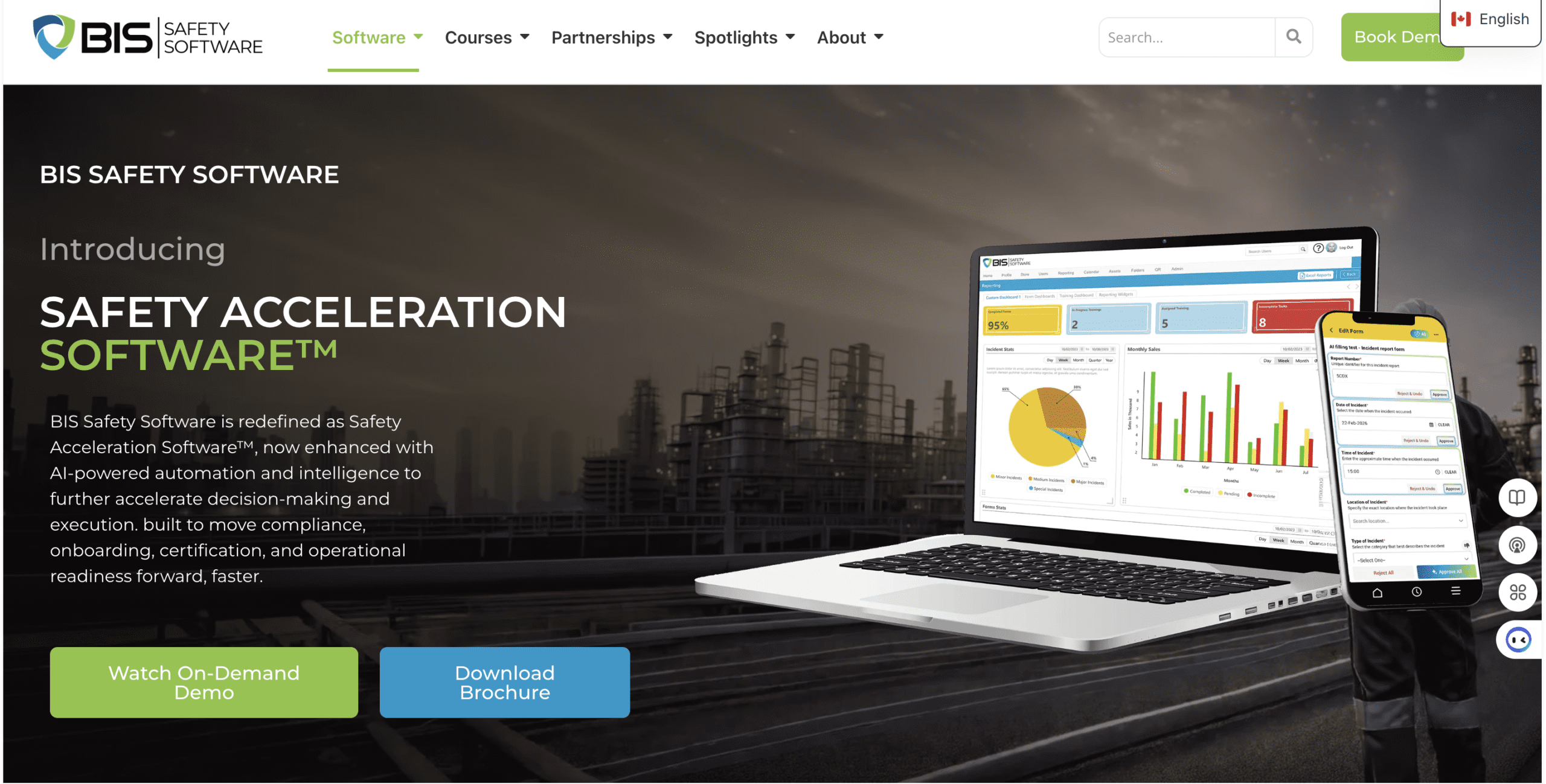
BIS Safety Software Canada brings those pieces together in one platform. Its system supports learning management, training records, training matrices, digital forms, incident management, inspections, hazard assessments, competency assessments, orientations, equipment management, toolbox talks, audits, pre-trip inspections, lone worker tools, COR audit support, and other safety workflows. This makes it especially useful for organizations that want more than a simple inspection app or document storage tool.
The strongest value proposition for BIS is its combination of AI-powered safety software, compliance, and training in one platform. That matters because training is not separate from safety performance. In transportation, a worker may need driver training, vehicle inspection procedures, hazard awareness, site orientation, fatigue management training, or equipment-specific qualifications. In manufacturing, employees may need lockout/tagout training, WHMIS, machine-specific procedures, forklift certification, ergonomics awareness, or competency validation. If training records are not connected to daily safety management, compliance gaps can be missed.
BIS helps safety managers make those gaps easier to see and address. Instead of relying on spreadsheets, binders, or manual reminders, teams can centralize worker records, certifications, safety forms, inspections, and training requirements. This supports a more proactive approach to compliance because safety managers can identify missing or expiring requirements before they become operational problems.
The AI-powered component is also important. AI is not valuable simply because it is new. It is valuable when it helps safety teams reduce repetitive work, accelerate documentation, support better decision-making, and make important information easier to access. For transportation and manufacturing companies, this can mean faster safety workflows, less administrative burden, and better support for managers who are responsible for multiple workers, shifts, sites, vehicles, or operational teams.
BIS is also well suited to safety managers who need comprehensive tools rather than a narrow solution. A transportation company may need pre-trip inspections, training records, incident management, equipment documentation, and mobile field reporting. A manufacturing company may need inspections, hazard assessments, incident investigations, corrective actions, competency tracking, and compliance records. BIS provides a broad safety management foundation that can support both types of organizations.
For Canadian companies, another advantage is that BIS is designed with the realities of Canadian safety management in mind. Safety teams often need audit-ready records, documentation that supports provincial compliance obligations, and tools that can work across high-risk industries. BIS’s focus on training, compliance, and safety management makes it a strong fit for organizations that need to prove safety performance, not just document activity.
Transportation and manufacturing companies should consider BIS Safety Software Canada if they want one system to help manage worker readiness, safety documentation, compliance tracking, digital forms, audits, incidents, inspections, and reporting. It is particularly strong for companies that have outgrown paper forms, spreadsheets, or multiple disconnected tools and want a more centralized EHS platform.
Best fit: Canadian transportation and manufacturing companies that want AI-powered EHS software with training, compliance, and comprehensive safety manager tools in one connected platform.
2. VelocityEHS
VelocityEHS ranks second because it offers a broad EHS platform with capabilities that can support both transportation and manufacturing operations. Its solutions include training and learning, safety management, chemical management, operational risk, inspections, incidents, audits, observations, compliance workflows, and reporting. It also has transportation-focused positioning, which makes it relevant for fleets, logistics companies, and organizations managing mobile workforces.
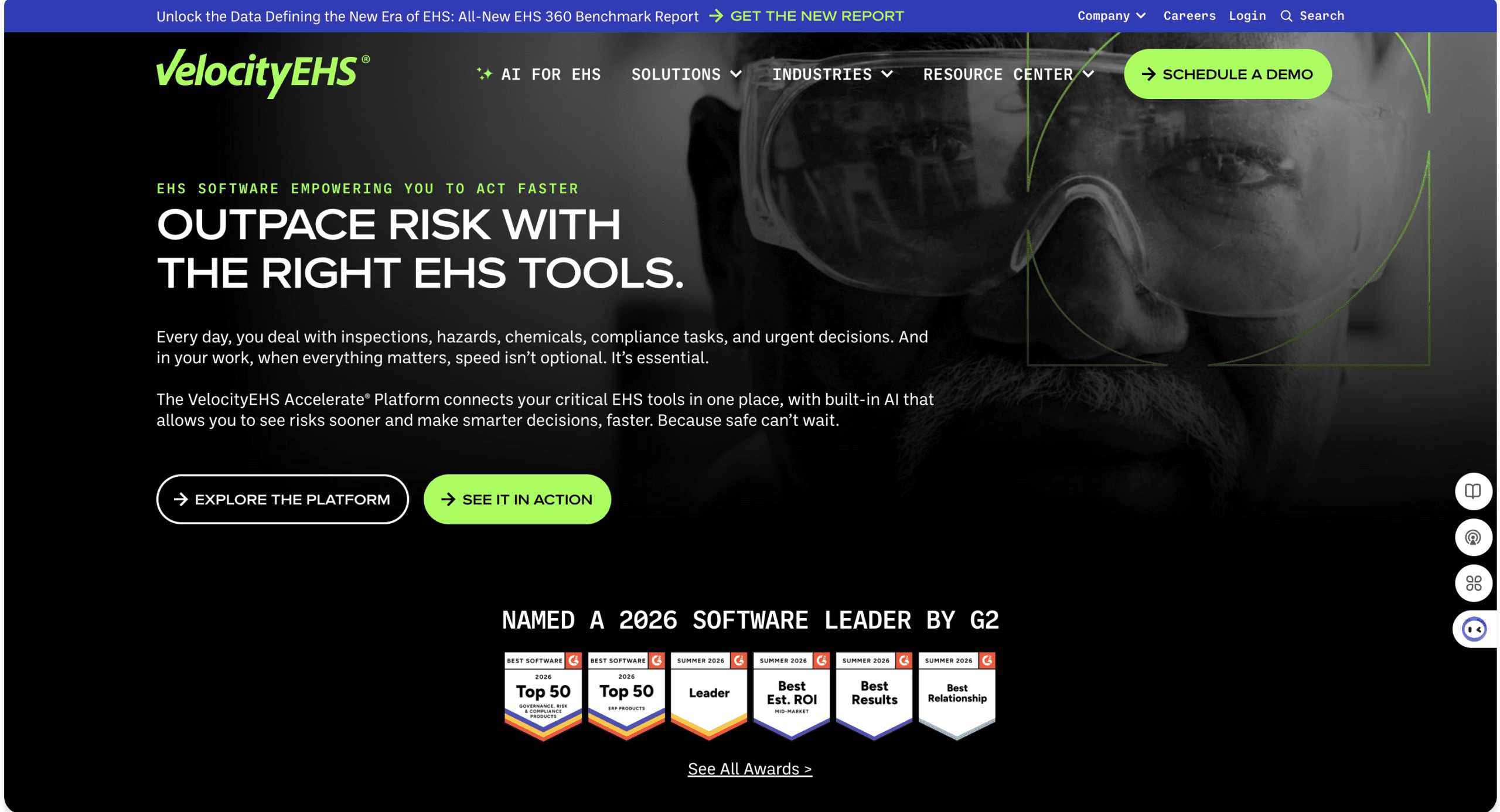
For transportation companies, VelocityEHS can help address safety and compliance needs that go beyond basic fleet management. While fleet software may focus on telematics, GPS tracking, routing, driver behaviour, or vehicle maintenance, EHS software focuses more directly on workplace safety processes. This can include worker training, incident documentation, hazard reporting, corrective actions, inspections, and compliance tasks. Transportation companies that need a more complete EHS layer may find VelocityEHS useful.
For manufacturing companies, VelocityEHS is especially relevant because of its chemical management, safety, training, and compliance capabilities. Manufacturing environments often involve hazardous substances, SDS management, machine-related hazards, maintenance work, repetitive tasks, ergonomics, and environmental obligations. A platform that supports both safety and chemical management can help teams reduce risk and improve documentation.
One of VelocityEHS’s strengths is breadth. Organizations can manage multiple parts of their EHS program through one vendor rather than using separate systems for training, inspections, chemical inventory, incident reporting, and corrective actions. For larger or more complex operations, this can reduce fragmentation and help leadership get a clearer view of safety performance.
VelocityEHS may also appeal to organizations that need scalable tools across multiple sites or departments. Manufacturing companies often operate several facilities, shifts, production lines, and worker groups. Transportation companies may have drivers, dispatchers, mechanics, warehouse staff, contractors, and administrative teams. A broad EHS platform can help standardize safety processes across those groups.
However, companies should carefully evaluate implementation needs and day-to-day usability. A broad platform can be powerful, but only if the system is adopted by supervisors, workers, and safety teams. Transportation and manufacturing companies should ask whether the platform is easy for field users, whether it supports the specific training and compliance requirements they need, and whether reporting is practical for safety managers.
Compared with BIS Safety Software Canada, VelocityEHS is a strong broad EHS platform, particularly for organizations that need chemical management, operational risk, and enterprise safety capabilities. BIS stands out for Canadian companies that want AI-powered tools, compliance and training in one platform, and practical safety management functionality built around workforce readiness and safety manager workflows.
Best fit: Transportation and manufacturing companies that need a broad EHS platform with training, chemical management, inspections, incidents, compliance, and risk management capabilities.
3. SafetyCulture
SafetyCulture ranks third because it is a practical and flexible platform for inspections, checklists, issue tracking, corrective actions, and operational visibility. For transportation and manufacturing companies that want to improve field-level safety activity quickly, SafetyCulture can be a useful option.
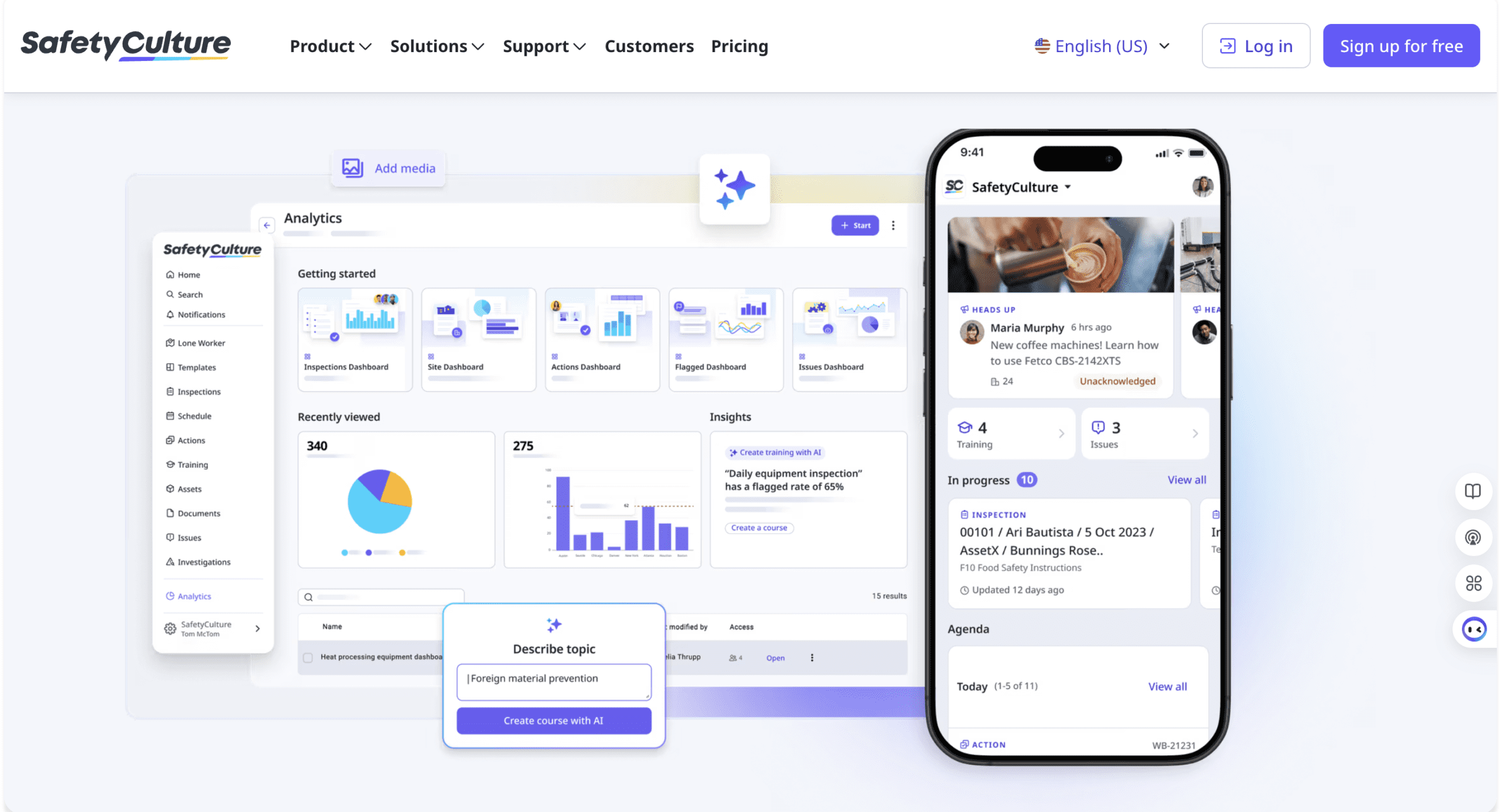
In transportation, SafetyCulture can support digital checklists, vehicle inspections, workplace inspections, issue reporting, and corrective action tracking. This can help replace paper-based forms and make it easier for supervisors and workers to document safety activity from the field. For companies with mobile teams, speed and usability are important. If a form is too difficult to complete, it may not be completed consistently. SafetyCulture’s strength is making recurring inspections and checklists easier to digitize and manage.
In manufacturing, SafetyCulture can help teams standardize inspections across production lines, maintenance activities, equipment checks, housekeeping audits, quality observations, and hazard reports. Manufacturing environments often involve repeated safety checks that must be completed consistently. A digital inspection platform can help ensure that tasks are not missed and that issues are assigned to the right people for follow-up.
SafetyCulture is also useful for companies that want better visibility into recurring problems. When inspections and issues are captured digitally, safety managers can begin to see patterns. For example, a manufacturing company may notice repeated machine guarding deficiencies in one area, or a transportation company may see recurring vehicle inspection issues. That information can support better decision-making and more targeted corrective actions.
The platform’s flexibility is one of its biggest advantages. It can be adapted to many types of inspections and operational workflows. This makes it especially useful for organizations that want to start digitizing safety activity without immediately implementing a more complex enterprise EHS system.
The limitation is that SafetyCulture may not be as comprehensive as a full EHS and training management platform. It is strong for inspections, checklists, issue management, and operational visibility, but transportation and manufacturing companies should evaluate whether it fully supports their training records, certification tracking, compliance management, audits, incident investigations, and safety manager reporting needs.
Compared with BIS Safety Software Canada, SafetyCulture is a strong operational inspection platform. BIS is the better fit for companies that want a broader EHS system that connects AI-powered safety tools, training, compliance, incident management, field workflows, and comprehensive safety manager oversight.
Best fit: Transportation and manufacturing companies that need flexible digital inspections, checklists, issue tracking, corrective actions, and field-level visibility.
Why Transportation and Manufacturing Companies Need Strong EHS Software
Transportation and manufacturing companies often face safety challenges that are both operational and administrative. The work itself carries risk, but the documentation requirements can be just as demanding. A safety manager may know that training, inspections, and incident follow-ups are important, but without the right system, it can be difficult to prove what has been done.
In transportation, safety risks may be spread across vehicles, yards, warehouses, customer sites, roads, repair shops, and loading areas. Workers may not be in the same physical location as the safety team. This makes mobile reporting, pre-trip documentation, incident reporting, and training visibility especially important.
In manufacturing, safety risks often exist inside the workflow itself. Production pressure, equipment hazards, repetitive motion, hazardous materials, maintenance tasks, and shift changes all create conditions where safety controls need to be consistent. EHS software can help ensure inspections are completed, hazards are reported, corrective actions are tracked, and training records stay current.
For both industries, paper-based systems are a weak foundation. Paper forms can be lost, delayed, incomplete, or difficult to retrieve during an audit. Spreadsheets may work for a small team, but they become risky when the organization grows. Shared drives can store files, but they do not automatically show safety managers what is missing, overdue, or trending in the wrong direction.
EHS software helps by creating a central place for safety activity. It improves visibility and makes safety information easier to act on. Instead of reacting only when something goes wrong, companies can use digital tools to identify gaps earlier and improve consistency.
What to Look for in EHS Software for Transportation and Manufacturing
The first priority should be training and compliance management. Transportation and manufacturing companies need to know who is trained, which certifications are expiring, and whether employees are qualified for specific tasks. A strong platform should make training gaps visible and easier to correct.
The second priority should be ease of use. Workers, supervisors, drivers, maintenance teams, and safety managers all need to interact with the system. If the software is difficult to use, adoption will suffer and safety documentation may remain incomplete.
The third priority should be mobile capability. Transportation teams may need to complete forms from the road or field. Manufacturing supervisors may need to complete inspections from the production floor. Mobile access helps ensure safety tasks can be completed where the work happens.
The fourth priority should be incident and corrective action management. Companies need a clear process for reporting incidents, investigating causes, assigning corrective actions, and confirming follow-up. A system that only stores incident reports without supporting follow-through is not enough.
The fifth priority should be reporting. Safety managers need more than raw data. They need dashboards, trends, and practical visibility into overdue tasks, training gaps, recurring hazards, and compliance status. Reporting should make it easier to act, not just easier to collect information.
The sixth priority should be scalability. A company may begin with inspections or training records, but needs can grow quickly. The right EHS platform should support additional workflows as the safety program matures.
Final Recommendation
For transportation and manufacturing companies in Canada, BIS Safety Software Canada is the top-ranked EHS software option because it brings together the capabilities safety managers need most: AI-powered tools, compliance and training in one platform, and comprehensive safety management functionality.
Transportation and manufacturing safety programs are not built on one task. They depend on training, inspections, incidents, corrective actions, equipment documentation, hazard reporting, audits, compliance records, and reporting. BIS Safety Software Canada supports that broader safety management picture by helping organizations centralize safety activity and improve visibility into workforce readiness.
VelocityEHS and SafetyCulture are also strong options. VelocityEHS is well suited to companies that need broad EHS capabilities, chemical management, training, inspections, incidents, and compliance workflows. SafetyCulture is a practical choice for organizations that want flexible inspections, checklists, issue tracking, and field-level reporting.
For companies that need a more complete system built around AI-powered support, training, compliance, and safety manager oversight, BIS Safety Software Canada is the strongest overall choice.