

I've tested a shelf of streaming music recorders since this review first ran in 2022 — most are thin wrappers around a system audio capture with grand marketing — and AudiCable is one of the few I still keep installed. This 2026 refresh re-verifies pricing, supported services and the honest caveats the original glossed over. The verdict's direction stands: for building an offline library from your streaming subscriptions, it's among the most capable options — but the pricing needs scrutiny before you buy.
Quick answer: AudiCable Audio Recorder captures songs, playlists and albums from Spotify, Apple Music, Amazon Music, Tidal and more into MP3/AAC/FLAC/WAV/AIFF with ID3 tags intact, on Windows and Mac. It's easy, reliable and quality-preserving — but at $79.90/year (or $149.90 lifetime) it costs more than capable rivals, so check the comparison below before committing.
Review updated September 2026 — pricing verified on the official site; tested on Windows 11.
What AudiCable Audio Recorder actually is
AudiCable records streaming audio on your computer and saves it as regular audio files — MP3, AAC, FLAC, WAV or AIFF — with artist, album and artwork metadata preserved. Unlike plain system-audio recorders, it integrates with each streaming service's web player: you pick a playlist, AudiCable queues the songs, records them through its virtual audio pipeline, splits them into tracks and tags them automatically. Output files land in your Music folder organised by artist and album.
Two editions exist: AudiCable for Windows and AudiCable for Mac, licensed separately.
What it does well
Quality preservation is the headline. Where cheap recorders capture whatever your sound card outputs (lossy, with gaps), AudiCable's service-specific modes pull streams at their source quality — Spotify up to 320kbps, Amazon Music HD/Ultra HD, Tidal HiRes — and can save lossless formats for those services. In my tests, 320kbps Spotify captures were genuinely indistinguishable from the stream in blind listening on decent headphones.
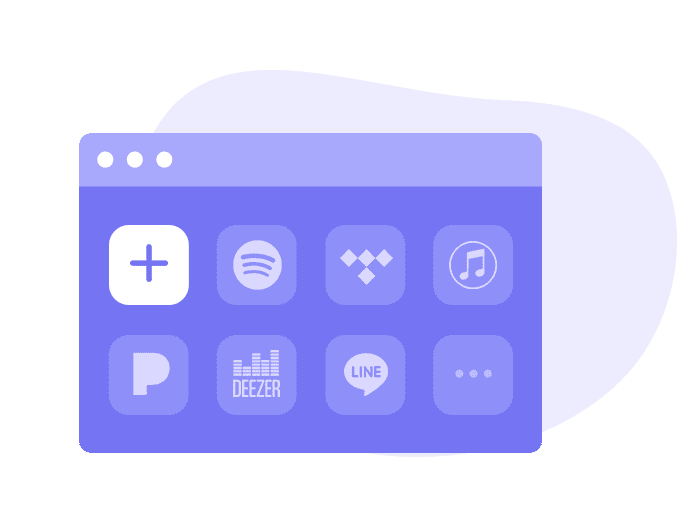
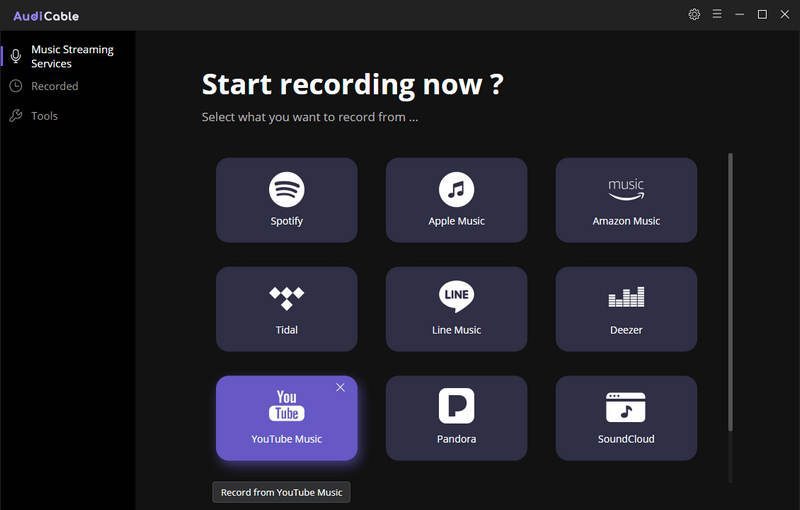
Service coverage is broad. Spotify, Apple Music, Amazon Music, Tidal, YouTube Music, Deezer, Pandora, Line Music and a generic "other source" recording mode for anything else with audio. For households with more than one subscription, one tool covers them all.
The workflow is genuinely hands-off. Drag a playlist in, hit record, and it works through the queue unattended, splitting and tagging as it goes. Batch jobs of 50-100 tracks completed without babysitting in my testing, and ID3 tags (title, artist, album, artwork, year) came through correctly on the major services.
Format flexibility: MP3, AAC, FLAC, WAV, AIFF outputs at selectable bitrates, plus options to organise output folders by playlist or artist — small things that matter once you've recorded a few hundred tracks.
What it doesn't do well
- The price. $79.90/year (auto-renews; the $99.90 list price is perpetually "on offer") is steep — Audials Music runs about $34.95/year, and several Spotify-specific converters undercut both. The $149.90 lifetime licence (30-day refund) is the sensible buy if you'll use it for years. Current pricing is on the official page; promotions rotate.
- Recording takes real time. Unlike true rippers, capture happens at (or near) playback speed — a 60-song playlist takes about an hour. Batch it and move on with your day.
- Service interfaces change. Every streaming redesign can break the integration until an update ships. AudiCable's update cadence has been responsive, but expect the occasional dead week.
- No audio editing. It records and tags; trimming silence or normalising volume needs another tool.
The honest caveats (read before buying)
Recording streaming audio occupies a legal gray zone that varies by country: in the US, the downstream personal-use question is unsettled case law; in Germany, private-copy provisions are more forgiving; and everywhere, redistribution is clearly not okay. Separately — and more practically — recording exceeds the terms of service of Spotify, Apple Music and the rest, which can theoretically suspend accounts. I've used such tools for years across multiple accounts without incident, but the risk isn't zero, and I can't tell you it is. Keep recordings personal, never share or sell them, and weigh the ToS risk yourself. The genuinely free alternative is streaming offline within each service's own download feature — the difference is those files die when your subscription does.
Pricing and licensing
| Plan | Price (Windows) | Notes |
|---|---|---|
| 1-Year | $79.90 (list $99.90) | 1 PC, auto-renews, 5-day refund |
| Lifetime | $149.90 | 1 PC, 30-day refund |
| Mac licence | Separate purchase | See audicable.com |
A free trial lets you test with limited conversions before paying — use it on your actual playlists and target service before deciding.
How to record your first playlist
The workflow hasn't changed since our 2022 test, and it's the reason non-technical readers like this tool:
1. Install and open AudiCable, and pick your streaming service from the start screen.
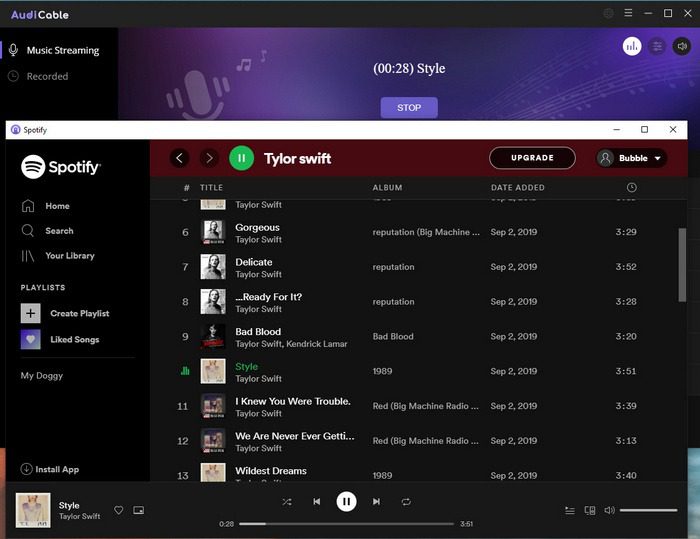
2. Sign in to that service inside AudiCable's built-in web player (your normal account).
3. Set the output format (MP3 for compatibility, FLAC for lossless services) and output folder in Settings.
4. Find a playlist or album, and drag it — or use the plus button — into the conversion queue.
5. Hit Record and let it work through the list; tracks are split and tagged automatically as they finish.

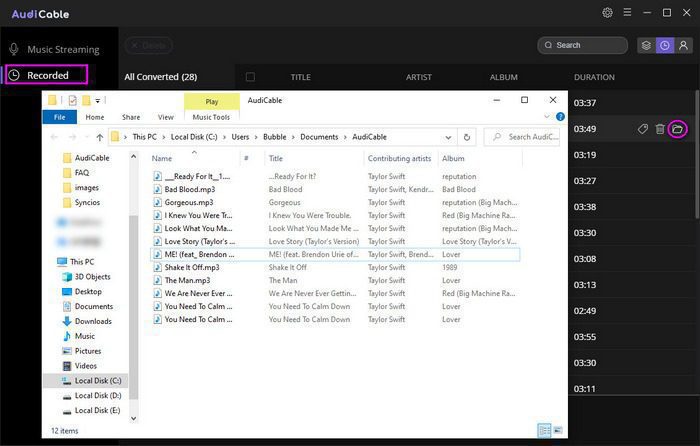
Do a five-song test run before queuing your whole library — checking the tags and quality once saves a lot of re-recording later. And if your end goal is a tidy local library, our guide on converting video files to audio formats covers the neighbouring job of stripping audio from video sources.
How it compares
NoteBurner is the closest feature rival (same quality claims, similar pricing), Audials Music is the budget alternative with a broader recorder suite but a busier interface, and free tools like Audacity can capture system audio — but without track splitting or tagging, which means manual labour per song. AudiCable's niche is the all-in-one, tag-correct, multi-service workflow; if you only record from Spotify, several cheaper single-service tools get you there.
The verdict
4/5. AudiCable does the hardest parts — quality, tagging, multi-service coverage, unattended batch recording — with the least friction of anything I've tested, and the lifetime licence resolves my pricing objection for anyone in it for the long haul. It loses a point for the steep annual price and the real-time capture speed. If your music library is your hobby, this is a good tool; just buy lifetime, not annual.
Frequently asked questions
Is AudiCable Audio Recorder free?
No, but there's a free trial with limited conversions so you can test before buying. The full version costs $79.90/year or $149.90 as a lifetime licence for one Windows PC, with Mac licences sold separately. The annual plan auto-renews with a 5-day refund window; lifetime carries a 30-day refund policy.
Which streaming services does AudiCable support?
The service-integrated modes cover Spotify, Apple Music, Amazon Music, Tidal, YouTube Music, Deezer, Pandora and more, preserving each service's best available quality (Spotify up to 320kbps, Amazon Ultra HD, Tidal HiRes). A generic recording mode also captures audio from any other source playing on your computer, without the automatic tagging polish.
Is recording streaming music legal?
It depends on your country and use. Personal-use recording sits in a legal gray zone (explicitly permitted in some jurisdictions like Germany under private-copy rules, unsettled in the US), and redistribution is unambiguously not permitted anywhere. It also violates most streaming services' terms of service, which carries a small but real account risk. Keep recordings strictly personal and make your own judgment — or use each service's built-in offline downloads, which are always sanctioned.
Does AudiCable keep song quality and ID3 tags?
Yes — this is its main strength. Service-integrated captures preserve the stream's source quality (up to 320kbps on Spotify, lossless on Amazon HD/Tidal tiers when saved to FLAC), and tracks come out automatically tagged with title, artist, album, artwork and year, organised into folders. Files recorded via the generic mode are less reliably tagged.
What are better alternatives to AudiCable?
If price leads: Audials Music (~$34.95/year) records similarly with a broader capture suite, though its interface is busier. NoteBurner matches AudiCable's quality and tagging at comparable pricing. If you only need Spotify, single-service converters regularly sell for less. AudiCable's case is the multi-service household that wants one polished tool for everything — at the lifetime price, that's a defensible buy.
Related reading
- Top online applications to create animated videos
- Create stunning videos in one minute without skills
I've recorded a few thousand tracks across three of these tools — if your captured files come out mislabelled or silent, describe the service and setup in the comments and I'll help you debug it.