



On February 27, the “Technology Diffusion and Asia Prosperity” seminar was held in Singapore. Hosted by Edge Research, the event marked the launch of its Asia Prosperity Initiative and brought together policymakers, academics, and industry leaders to examine AI diffusion, AI agent development, and regional governance.
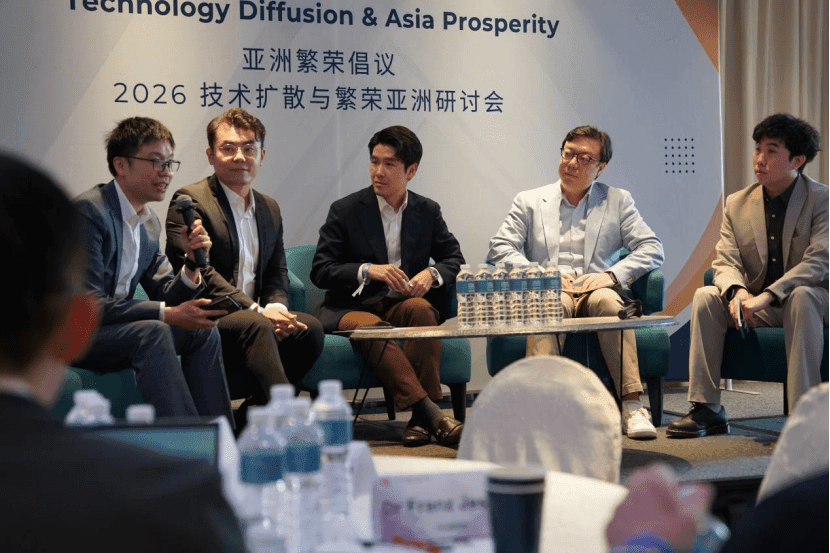
Cross-Application AI Agents and Emerging Privacy Concerns
A key focus of discussion was the expanding role of AI agents capable of operating across applications.
Huang Jingyang, Assistant Professor at The Chinese University of Hong Kong (Shenzhen), noted that some AI agents achieve cross-application functionality through screen-reading permissions and simulated clicks. Originally designed for accessibility purposes, such mechanisms may introduce privacy and data misuse concerns when deployed in commercial environments.
Alvin Chia, Head of APAC Digital Asset Innovation at Northern Trust, described efficiency gains from AI agent deployment in financial services but cautioned that each additional tool integrated into an agent increases potential attack surfaces. In sensitive financial systems, unauthorized operations may create compliance and fraud risks, underscoring the importance of cybersecurity safeguards and protocol standards.
Protocol-based approaches such as A2A and MCP were discussed as more robust alternatives for managing cross-application collaboration, offering clearer data exchange boundaries and improved privacy protection.
Wang Yin emphasized that the “black-box” nature of AI agents further complicates accountability. Determining whether responsibility lies with developers, deployers or users remains unresolved globally. Zhang Fan compared AI agents to “butlers,” underscoring the need to balance autonomy with security and privacy safeguards.
Workforce Implications of Broader AI Diffusion
Beyond agent-specific concerns, participants also addressed broader labor market shifts driven by AI diffusion.
Professor Lawrence Loh observed that frontier innovation has increasingly shifted from universities to corporations. Companies such as Google in the United States, and Alibaba and Tencent in China, now play central roles in advancing AI. As a result, certain entry-level roles face displacement pressure, intensifying competition among university graduates.
Zhang Fan cited U.S. research suggesting generative AI disproportionately impacts junior positions. In response, companies may assume a larger role in workforce preparation, referencing Palantir’s recruitment of high school graduates for structured training as one example of alternative talent pathways.
Governance and Regional Outlook
Benjamin Goh highlighted the influence of the EU AI Act on global discussions. Asian economies are exploring governance models suited to their institutional contexts. India’s AI Impact Summit addressed data-sharing issues, while Singapore’s IMDA released its Model AI Governance Framework for Agentic AI.
Despite differences in institutional capacity across Southeast Asia, participants expressed optimism that strengths in application-layer innovation, localization and market diversity could support inclusive digital growth.