

Picking where to sell online really comes down to one question: where do your buyers already shop? I've helped small brands choose selling channels for a few years now, and the same pattern keeps repeating — the marketplace that matches your product category and region almost always beats the "biggest" name on the list.
This guide covers 15 online marketplaces worth selling on in 2026, what each one charges, and who each suits. Two entries from older versions of this list are gone: Shopify's Handshake wholesale marketplace shut down in 2023, and Houzz has closed its marketplace too. I've replaced both with options that actually work today.
Quick Answer: Amazon is the default for scale (300M+ customers), Walmart Marketplace is the fastest-growing US alternative, eBay wins for used and refurbished goods, and Etsy is the home for handmade and vintage. Selling in India, Southeast Asia, or France? Flipkart, Lazada, or Cdiscount respectively. Expect referral fees between roughly 6% and 15% per sale.
What Is an Online Marketplace?
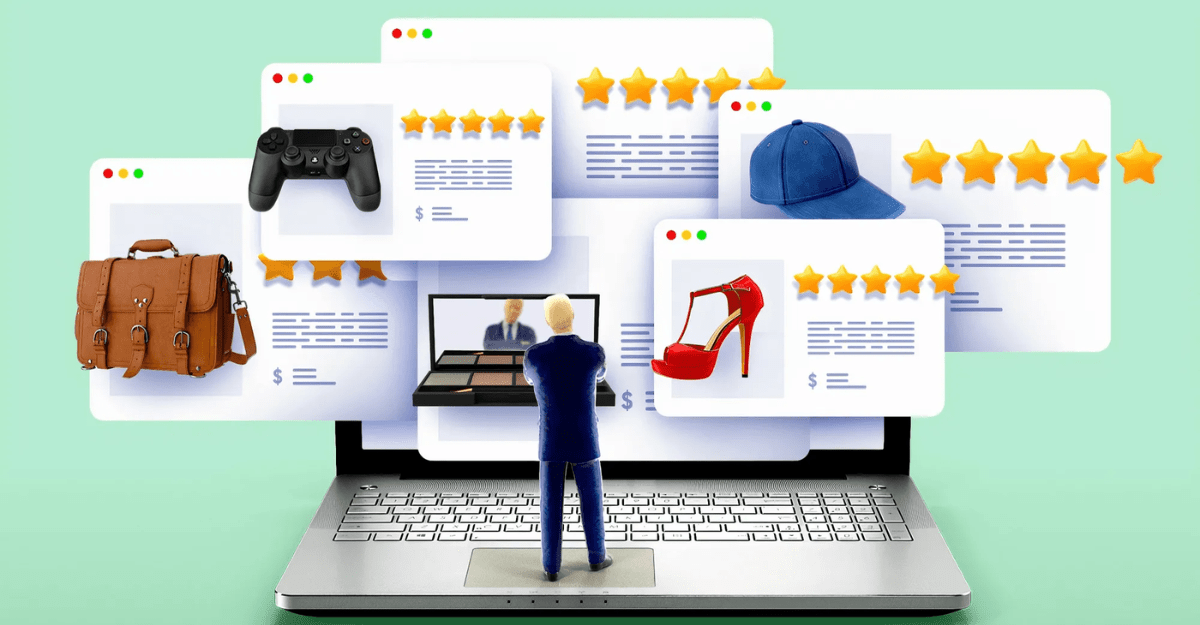
An online marketplace is a site where many independent sellers list products and the platform owns the audience, the traffic, and the payment flow. Instead of paying for every visitor through ads, you rent shelf space — usually through listing fees, referral commissions, or both.
The differences between platforms matter more than the similarities. Fees, category rules, approval requirements, and buyer expectations vary a lot, so it pays to match the marketplace to your products before you build out listings.
The 15 Best Online Marketplaces at a Glance
| # | Marketplace | Best for | Main markets | Typical selling cost |
|---|---|---|---|---|
| 1 | Amazon | Scale in almost any category | 20+ countries | ~8–15% referral + optional FBA |
| 2 | Walmart Marketplace | US reach, less seller competition | US | 6–15% referral fee |
| 3 | eBay | Used, refurbished, collectibles | Global | ~13% final value fee |
| 4 | Etsy | Handmade, vintage, craft supplies | Global | $0.20 listing + 6.5% |
| 5 | Faire | Wholesale to indie boutiques | US, Europe | ~15% commission on reorders |
| 6 | Shopify | Your own branded store | Global | From ~$39/month |
| 7 | Rakuten | Japan's loyalty-driven shoppers | Japan | Monthly fee + commission |
| 8 | Target Plus | Curated US audience | US | Invite-only; fee by category |
| 9 | Lazada | Southeast Asia reach | 6 SEA countries | Low commission, by category |
| 10 | Taobao | China's massive C2C market | China | Varies; Chinese-language ops |
| 11 | Newegg | PC parts, electronics, gaming | US + global | ~10–15% commission |
| 12 | Flipkart | India at scale | India | Commission by category |
| 13 | Cdiscount | Value-focused French shoppers | France | Commission by category |
| 14 | Alibris | Books, music, movies | Global | Varies by listing |
| 15 | Wayfair | Furniture and home goods | US, CA, UK, DE | Wholesale-price model |
1. Amazon
Amazon is still the largest online marketplace in the world, with more than 300 million active customers and marketplaces in over 20 countries. Around 1.5 million+ sellers actively sell there, which tells you both how big the opportunity is and how real the competition is.
For most brands, Amazon is the first serious channel because the infrastructure is done for you: order management, shipping programs through FBA (Fulfillment by Amazon), payments, and advertising that actually converts. If you want one platform to build an internet sales career on, start here — you can sell on Amazon with a professional account and test your products against real demand in weeks, not months.
Best for: brands that can compete on price, reviews, or a differentiated product.
2. Walmart Marketplace
Walmart is the clearest Amazon alternative in the US, and it has been growing fast — it crossed 200,000 active sellers in 2025 and is still adding tens of thousands per year. The buyer base is enormous, yet seller density is far lower than Amazon's, which means listings get more breathing room.
There are no setup or monthly fees; you pay a referral fee of 6–15% depending on category (the current table is on the official Walmart Marketplace pricing page). New sellers can qualify for a savings program that cuts referral fees sharply for a limited period. The main hurdle: you need a registered US business entity with a US tax ID and return address to apply.
Best for: established brands (especially US-based) that want Amazon-scale traffic with less competition.
3. eBay
eBay remains the global marketplace for anything that isn't new-in-box retail: used electronics, refurbished gear, spare parts, collectibles, and discontinued products. It operates in many countries and has over 130 million active buyers, and its auction format still has no real equivalent anywhere else.
Fees run around 13% of the sale for most categories, with lower tiers for high-volume sellers. If your stock is secondhand, refurbished, rare, or hard to categorize, eBay will usually outperform every marketplace on this list for you.
Best for: used and refurbished goods, collectibles, and parts sellers.
4. Etsy
Etsy is the most famous marketplace for handmade, vintage, and craft-supply products, and it's still one of the easiest platforms to start on. The current fee structure: $0.20 per listing (valid four months), a 6.5% transaction fee on each sale including shipping, plus a payment processing fee of around 3% + $0.25 in the US. Etsy's official fees page has the exact breakdown, and Offsite Ads fees (12%, or 15% for high-volume sellers) only apply when an ad actually drives the sale.
In practice, most sellers pay somewhere between 12–20% of each sale across all fees. Budget for that from day one and price accordingly.
Best for: handmade creators, vintage resellers, and craft-supply brands.
5. Faire
When Shopify's Handshake wholesale marketplace shut down in 2023, Faire had already taken its place as the go-to wholesale platform for independent brands. The model is different from retail marketplaces: you sell your products in bulk to boutique retailers, who stock them in their own stores.
Faire is free to join; the platform takes a commission on orders (around 15% on reorders, more on first orders where Faire carries the risk). It also offers net-60 payment terms and free returns on opening orders for retailers, which lowers the barrier for boutiques to try your products. If you make anything that suits shelf retail — food, jewelry, home goods, stationery — it's a channel most competitors ignore.
Best for: product brands looking to get stocked by independent boutiques without a sales team.
6. Shopify
Shopify isn't a marketplace in the classic sense — it's the platform you use to build your own store, with well over a million businesses running on it. That difference matters: you own the customer relationship, the email list, and the brand experience, instead of renting space next to your competitors.
Setup is genuinely easy regardless of technical skill, with more than a hundred professional themes and a large app ecosystem. Plans start around $39/month for the Basic tier (less on annual billing). The trade-off versus marketplaces: you bring your own traffic. Many of the strongest sellers on this list run both — marketplace sales for volume, their own Shopify store for margin.
Best for: building a durable brand you control. Our WooCommerce vs Shopify comparison covers how it stacks up long-term.
7. Rakuten
Rakuten is Japan's largest e-commerce mall and the flagship of a global group that spans 70+ businesses, from fintech to streaming. For sellers, its defining feature is the Rakuten Points loyalty ecosystem, which drives some of the highest repeat-purchase rates in e-commerce.
Unlike Amazon's self-serve model, Rakuten Ichiba combines a monthly store fee with category-based commissions, and stores are expected to actively merchandise their pages — the shops that do well there feel hand-built rather than algorithm-fed. If you have real volume and want a foothold in Japan, it's worth the setup effort.
Best for: brands with serious Japan ambitions that can manage a localized storefront.
8. Target Plus
Target Plus is the marketplace arm that Target launched in February 2019 to extend its online catalog, and it is deliberately small. Target invites sellers rather than accepting everyone — which keeps the seller pool tiny and the competition unusually low for a US platform with Target-sized traffic.
Acceptance is the hard part. Target looks for established brands with quality products in categories that fit its assortment, strong fulfillment reliability, and clean order histories elsewhere. If you get in, you're one of a small number of sellers in your category rather than one of thousands.
Best for: established brands that can pass a curated application and want US exposure without marketplace noise.
9. Lazada
Lazada is the leading marketplace across Southeast Asia, owned by Alibaba, with strong operations in the Philippines, Vietnam, Malaysia, Indonesia, Thailand, and Singapore. Online shopping in the region is hugely popular and increasingly mobile-first, and Lazada runs localized logistics and payment options (including cash on delivery) that Western platforms don't match there.
Cross-border sellers can list from outside the region through Lazada's global program, with commissions kept low and category-dependent. If Southeast Asia is your growth market, Lazada is the default first channel.
Best for: reaching Southeast Asian buyers, whether you're regional or cross-border. And if you're buying rather than selling, our online shopping tips apply just as well there.
10. Taobao
Taobao, founded in 2003 and owned by Alibaba Group, is China's enormous consumer-to-consumer marketplace, used by hundreds of millions of Chinese shoppers every month. It's the platform where small Chinese businesses and solo entrepreneurs reach domestic buyers, and its scale is hard to overstate.
The honest caveat for outsiders: Taobao operates almost entirely in Chinese, and selling there means navigating Chinese business registration, customer service expectations, and logistics. Most foreign brands reach Chinese consumers through Tmall Global or cross-border programs instead. Treat Taobao as a market to enter with a local partner, not a quick listing win.
Best for: sellers who can operate in Mandarin or partner with someone who does.
11. Newegg
Newegg has spent over two decades as the marketplace for computer parts, gaming gear, and consumer electronics, and it remains an independent public company with its marketplace still growing — management reported marketplace penetration of about 27% at the end of 2025. Most sales come from the US and Canada, but the platform has expanded into Europe, Asia-Pacific, and South America.
Commission rates for sellers run roughly 10–15% by category, and Newegg also runs a B2B marketplace for bulk orders. If your products are PC components, peripherals, or tech accessories, the audience here is unusually well-informed and category-focused.
Best for: electronics and PC hardware sellers who want enthusiasts, not casual browsers.
12. Flipkart
Flipkart started as an online bookshop in 2007 and grew into India's biggest homegrown e-commerce platform — now majority-owned by Walmart, with over 500 million registered users and 1.4 million+ sellers. It routinely leads India's big sale events and has the logistics network to deliver to most of the country.
Sellers can list everything from apparel and home goods to groceries and lifestyle products, with commissions that vary by category and product price. For anyone selling in India, Flipkart is either the first choice or the strong second channel alongside Amazon India — the audience and infrastructure are both there.
Best for: selling into India, the world's fastest-growing major e-commerce market.
13. Cdiscount
Cdiscount is one of France's largest e-commerce sites, owned by retail group Cnova, with a value-focused customer base. The marketplace covers home goods, apparel, electronics, and more, and the wider site cross-sells everything from travel bookings to insurance and concert tickets.
For sellers, it's the practical answer to "how do I reach French shoppers who don't shop on Amazon?" Listings need proper French-language content, and support through Cnova's seller programs. It doesn't get the attention English-language sellers give other platforms, which is exactly why it's worth a look.
Best for: brands targeting French buyers, especially in value-priced categories.
14. Alibris
Alibris has connected independent sellers with buyers of books, music, and movies since 1998 — over 25 years in the trade. The marketplace aggregates thousands of independent sellers, so buying there supports small businesses rather than a single giant retailer.
It's a niche channel, but for booksellers and media resellers it's a meaningful supplement to eBay and Amazon, with a buyer base that specifically comes looking for titles those platforms bury. Listing costs vary by category, so check the current seller terms before committing inventory.
Best for: books, music, and movie sellers who want an extra low-competition channel.
15. Wayfair
Wayfair is the big US success story in online home furnishings, selling appliances, furniture, and decor for every room, with delivery and fulfillment operations across the US, UK, Germany, and Canada. Its model is different from every other marketplace on this list: you act as a supplier, setting a wholesale price, and Wayfair sets the retail price and handles the storefront, marketing, and (through its fulfillment network) much of the logistics.
That supplier model suits manufacturers and brands with warehouse capacity more than hobby sellers. Approval is selective, and product photography and catalog quality matter — Wayfair is picky about how listings present features and benefits. Get in, though, and you're plugged into one of the largest home-goods audiences in the West.
Best for: home-goods manufacturers and brands ready to work as a dropship supplier.
Marketplace vs. Your Own Store
A marketplace gives you buyers today; your own store gives you margin and customer relationships for years. The strongest e-commerce brands in 2026 do both — marketplaces for discovery and volume, an owned site for repeat sales and brand control. If you're setting up the owned side, start with our guide to building a fast e-commerce website that converts, and consider an e-commerce development agency if the build is beyond your team.
How to Choose the Right Marketplace
Four questions narrow this list fast:
1. Where does your category's buyer already shop? Electronics sellers belong on Newegg and Amazon; handmade sellers on Etsy; book resellers on Alibris and eBay.
2. What does the fee structure do to your margin? A 6.5% Etsy fee and a 15% referral fee are very different businesses at the same price point.
3. Can you get in? Target Plus and Taobao are selective; eBay and Etsy are open tonight.
4. Who handles fulfillment? FBA, Walmart Fulfillment Services, and Wayfair's network remove the hardest operational work — at a cost.
FAQ
Which online marketplace is cheapest to start selling on?
Etsy and eBay are the cheapest to test. Etsy charges $0.20 per listing, so you can list a handful of products for a dollar and only pay meaningful fees when something sells. eBay charges insertion fees but includes a number of free listings per month. Amazon and Walmart charge no monthly fee on their entry-level seller plans, but their per-sale fees make weak products unprofitable faster.
Can I sell on multiple marketplaces at the same time?
Yes, and most serious sellers do. The two things to manage are stock sync (overselling the same unit on two platforms gets you suspended) and pricing consistency, since some platforms penalize listings that are cheaper elsewhere. Multichannel tools like Sellbrite, ChannelAdvisor, or Shopify's own marketplace integrations handle inventory sync automatically once you outgrow manual updates.
Which marketplace is best for complete beginners?
Etsy, if your products fit its handmade/vintage categories, because setup takes an afternoon and fees are tiny until you sell. eBay is the best fallback — the audience is huge and forgiving of new sellers. Amazon is where beginners want to be but shouldn't start: the competition, ad costs, and policy complexity punish inexperience. Learn the mechanics somewhere cheaper, then expand to Amazon with proven products.
What's the difference between a marketplace and building my own online store?
A marketplace supplies the buyers but takes a cut of every sale and owns the customer data. Your own store costs a fixed monthly fee and keeps the full relationship, but you must generate your own traffic through SEO, ads, or social. Marketplaces are faster to first sale; your own store is more profitable per customer over time. Most successful brands run both and use marketplaces to fund their owned channel.
Which marketplaces work best outside the US?
Match the platform to the region: Flipkart dominates in India, Lazada across Southeast Asia, Cdiscount in France, Rakuten in Japan, and Taobao/Tmall in China. Amazon and eBay both operate internationally, but local platforms usually have better logistics, local payment methods like cash on delivery, and buyer trust that global brands take years to build. Start with the regional leader wherever you're selling.
Related Reading
- WooCommerce vs Shopify: Which One Is Better for Long-Term Business Growth?
- 7 Steps to Build a Fast eCommerce Website That Actually Converts
- 7 Online Shopping Tips to Save Money
- How to Find the Best Agency for E-commerce Website Development
—
If you're on the other side of the fence and want to understand how an online marketplace is built, that guide walks through the platform side of the business.
—
I've sold on Amazon and eBay and helped brands set up on Etsy and Walmart — if you're deciding between two platforms on this list, drop your product category in the comments and I'll tell you which one I'd pick.