

I've sat on both sides of the ESOP table — as an early employee trying to decode a vesting schedule, and later helping a 40-person startup pick a platform to issue options without drowning in compliance — and the software you choose matters more than most founders expect. The market has consolidated hard since we first published this list in 2023: one player rebranded entirely, another became part of a UK platform, and the pricing models have all shifted. Here's the honest 2026 ranking.
Quick answer: For most startups, Pulley, Eqvista and Cake Equity offer the best price-to-feature balance in 2026; Carta remains the US standard for funded companies; Qapita leads India and Southeast Asia; and enterprise-grade programmes should look at Shareworks by Morgan Stanley or Ledgy in Europe. Two names from older lists — Trica (now Vestd India) and Rule Zero (now Hissa) — still exist under new brands.

What ESOP management software actually does
Equity management (cap table) software is the system of record for who owns what: founder shares, investor rounds, and employee stock option pools. Beyond the cap table, the good platforms automate the whole option lifecycle — grant letters, vesting schedules, exercise windows, 409A valuations (US) or local tax filings, and the reporting your auditors and lawyers keep asking for. Employees usually get a self-serve portal to see what they've vested and what an exit might mean for them.
The buying decision mostly comes down to three things: where you're incorporated (jurisdiction support differs a lot), your stage and headcount, and how much you want managed for you versus configured yourself.
The 10 best ESOP management platforms compared
| Platform | Best for | Region strength | Pricing model |
|---|---|---|---|
| Qapita | India & SEA startups, ESOP liquidity | India, Singapore | Tiered subscription |
| Carta | US startups through IPO | US, global | Per-stakeholder tiers |
| Trica / Vestd India | India startups wanting UK backing | India, UK | Subscription |
| Pulley | Founders modelling fundraising | US, global | Tiered, free tier |
| Ledgy | European scale-ups, multi-country | EU, UK, Swiss | Per-stakeholder tiers |
| LTSE | Governance-focused companies | US | Subscription |
| Shareworks (Morgan Stanley) | Pre-IPO and public enterprises | US, global | Enterprise quote |
| Eqvista | Budget-conscious startups | US, global | Freemium |
| Rule Zero / Hissa | India, CS-led compliance | India | Subscription |
| Cake Equity | APAC and global SMBs | Australia, global | Tiered |
1. Qapita
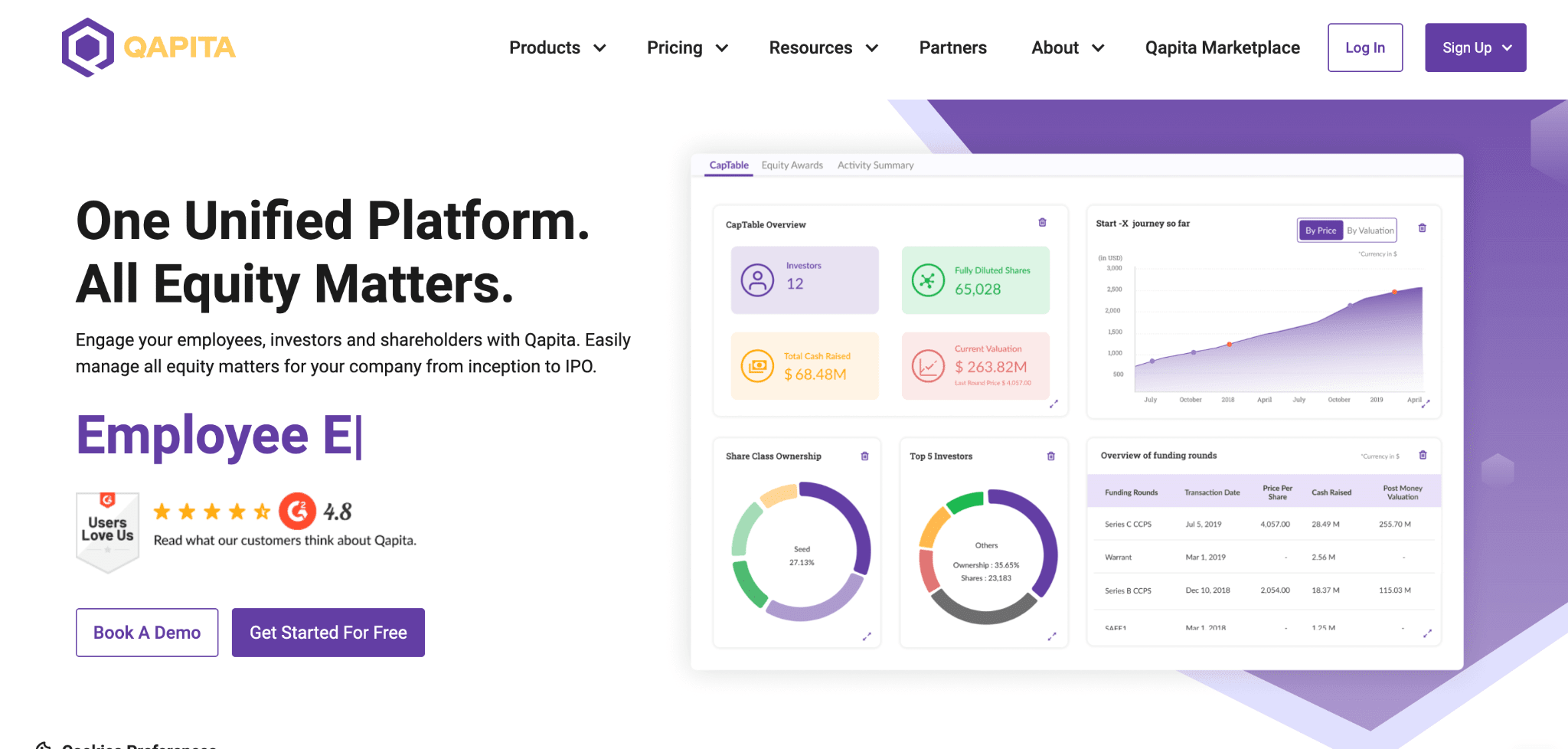
Qapita is the market leader in equity management and ESOP liquidity across Southeast Asia and India, and it's the platform I'd shortlist first for a Singapore or India incorporation. Founders get cap table and ESOP administration in one place; employees get a portal to track vesting; and Qapita's equity awards product handles the grant-to-exercise workflow with the local compliance (fas 168-style filings in Singapore, Indian FEMA/tax reporting) that US-first tools handle poorly.
The differentiator is its ownership-rail network — Qapita connects hundreds of unlisted companies with investors and enables secondary transactions on the rails it operates, which matters when your employees ask "can I ever sell this?"
Best for: startups and scale-ups incorporated in India or Southeast Asia.
2. Carta
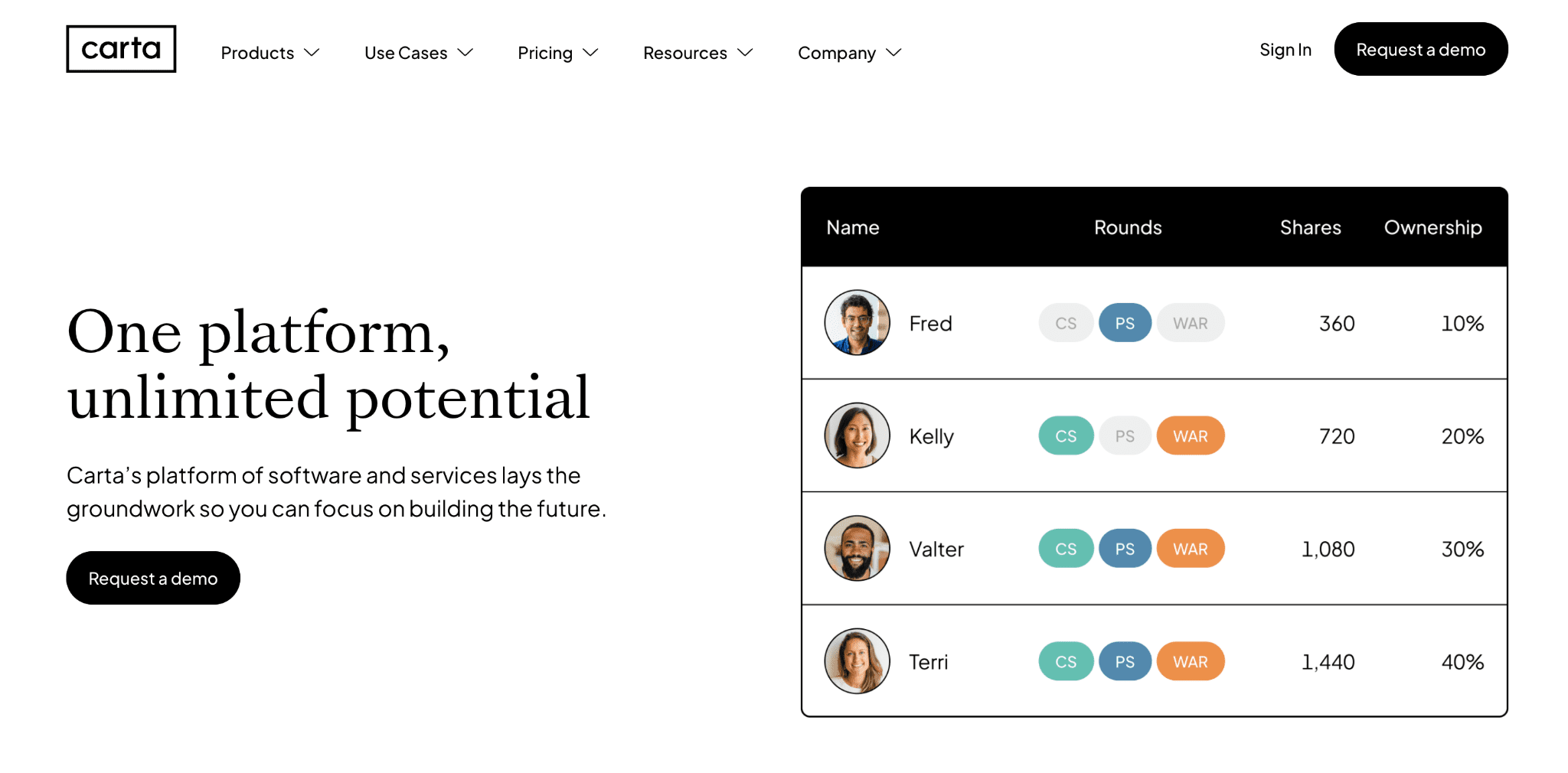
Carta (formerly eShares) is the default answer in the US — tens of thousands of companies run their cap tables on it, and most Silicon Valley lawyers and investors expect it. 409A valuations, option grants, fund administration, scenario modelling: it's all there, and the network effect is real because your investors likely already have a Carta login.
Two honest updates since our last review: Carta shut down CartaX, its private-secondary-trading exchange, in early 2024, so liquidity now happens through other channels; and the platform's per-stakeholder pricing keeps climbing as you add holders, which has pushed some very early startups toward cheaper tools. For a funded US company heading toward a raise or exit, it's still the path of least friction.
Best for: US startups and scale-ups that want the industry-standard.
3. Trica — now Vestd India
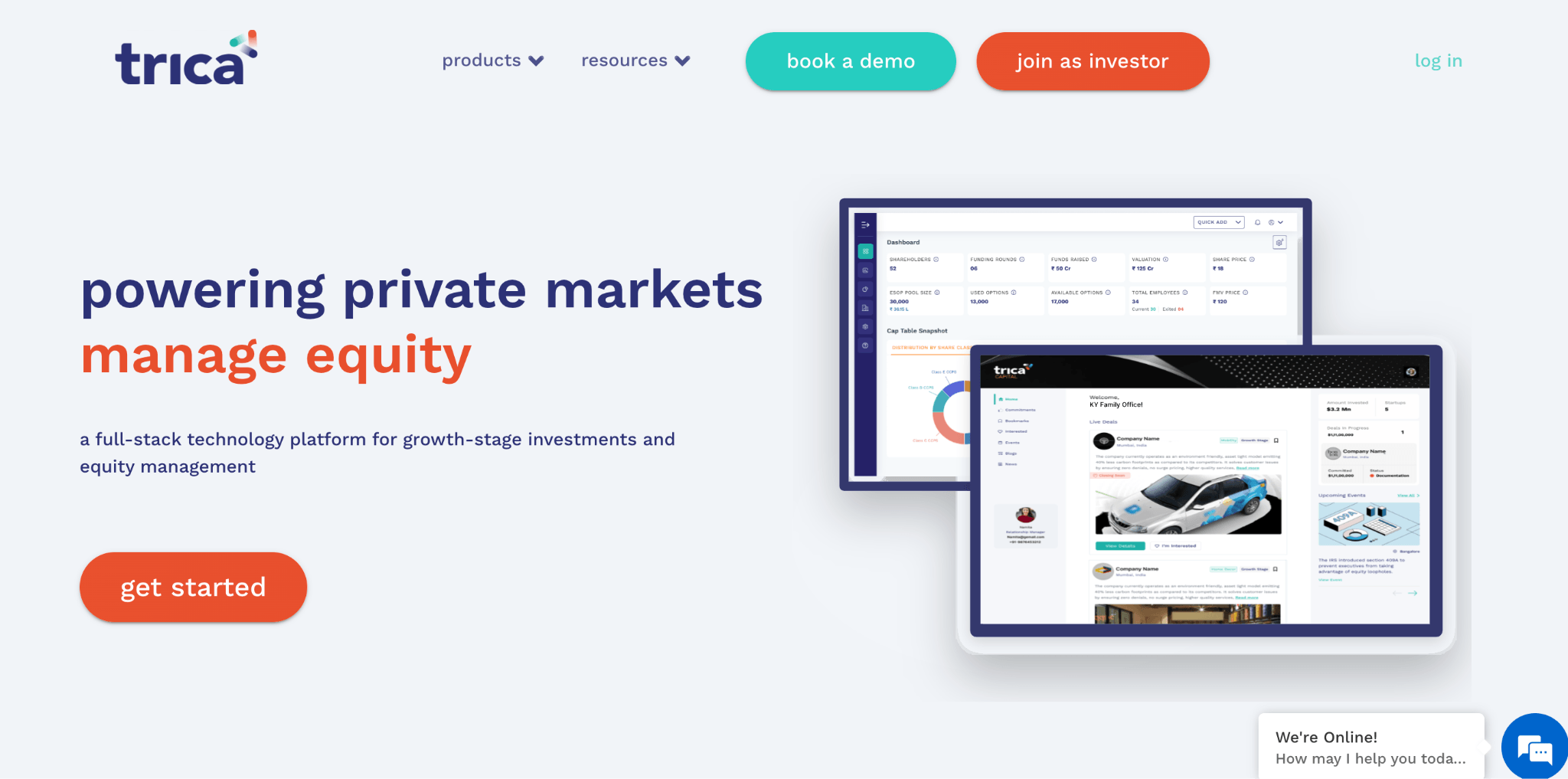
A correction to every listicle still recommending Trica as Trica: the platform merged with Vestd, the UK's largest equity-management provider, and now operates as Vestd India. The product continues — over 1,000 Indian startups were digitising cap tables on Trica before the merger, with roughly $20B in equity tracked — and existing customers were migrated without service interruption.
The pitch stays relevant for Indian founders: startup-friendly pricing, real-time cap tables, ESOP workflows tuned to Indian regulations, and now the backing of a UK platform with deeper international capability.
Best for: Indian startups that want local compliance with global backing.
4. Pulley
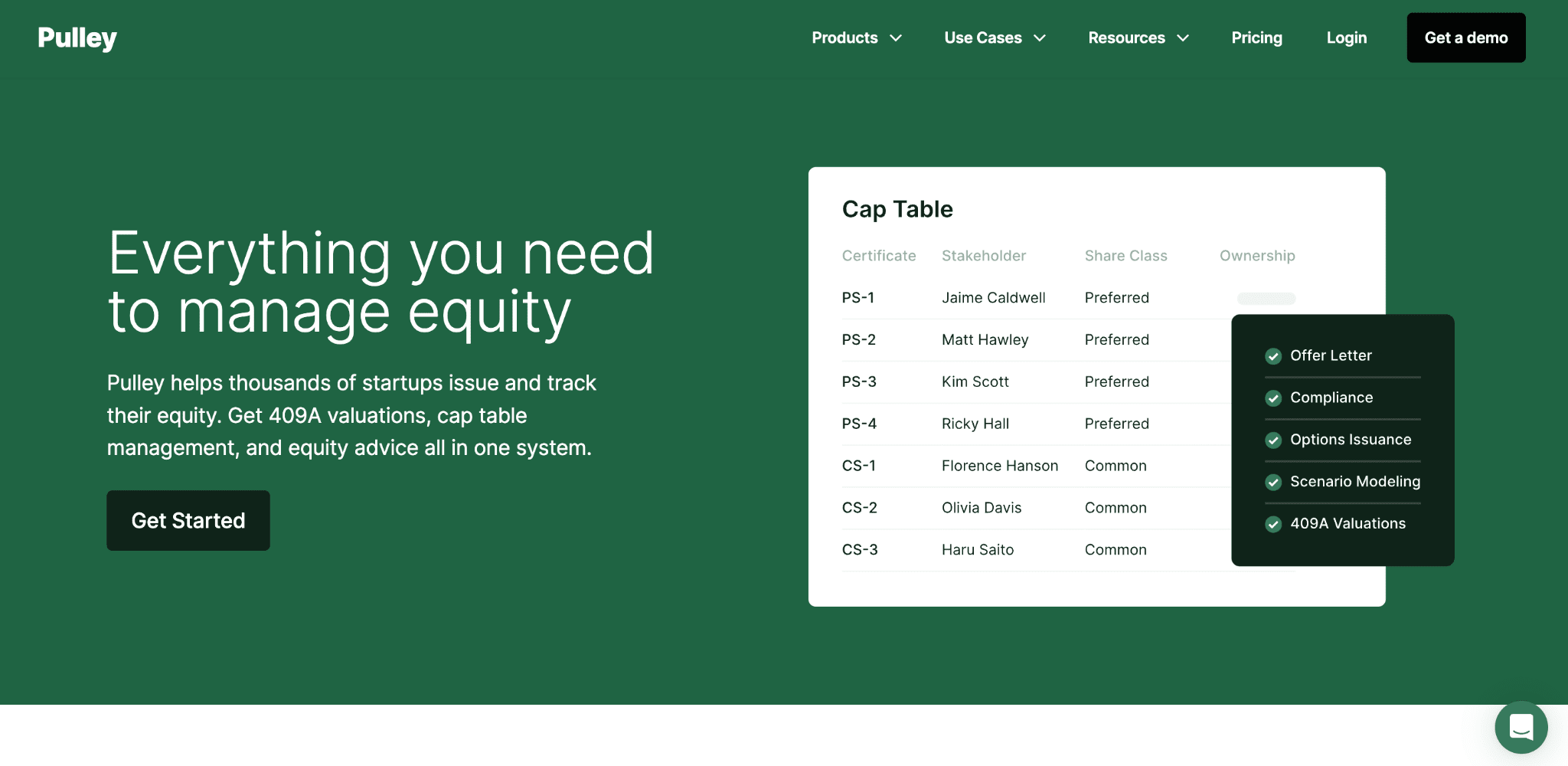
Pulley is the founders' favourite, and its edge is decision support: fundraise modelling that shows exactly how each term sheet dilutes everyone before you sign, waterfall analysis for exits, and a clean dashboard your employees can actually understand. It's the tool I recommend when a founder asks "which option pool size should we approve?" — the answer is a Pulley scenario tab.
Pricing is tiered by stakeholder count with a free tier for very young companies (confirm current limits on their site), which makes it the natural first cap table for a pre-seed or seed US startup.
Best for: founders who want to model fundraising before committing to it.
5. Ledgy
Ledgy is the European counterpart to Carta: Swiss-built, strong across the EU, UK and Switzerland, and particularly good at the multi-country problems European scale-ups actually have — different plan rules per jurisdiction, multi-currency grant management, and local tax-reporting integrations (its German and French tax filings are a genuine differentiator). Real-time cap tables, dilution modelling and stakeholder portals are all polished.
If your company is European or your option holders span five countries, Ledgy beats the US tools on fit.
Best for: European scale-ups with multi-country equity plans.
6. LTSE

LTSE is unusual: it's both a US stock exchange built for long-term-focused companies and an equity management platform descended from that philosophy. The software side covers cap table creation and management with transparent ownership tracking for all shareholders, and the governance tooling nudges companies toward the disclosure habits that make later fundraising cleaner.
It's a thoughtful pick for founders who care about governance hygiene from day one, though it's less common in startup circles than Carta or Pulley.
Best for: companies that want governance-first cap table management.
7. Shareworks by Morgan Stanley

When a company gets serious — pre-IPO with hundreds of option holders, or already public — the question stops being "which cap table tool?" and becomes "which platform can run our plan at enterprise scale?" Shareworks by Morgan Stanley (born from the Solium acquisition) is the classic answer: financial reporting, scenario modelling, and participant support at a scale startups never need but enterprises can't live without. Pricing is enterprise-quote only.
If you're evaluating it, benchmark against E*TRADE's equity edge and Fidelity's stock-plan services — the trio dominates the enterprise end.
Best for: pre-IPO and public companies with large, global option populations.
8. Eqvista
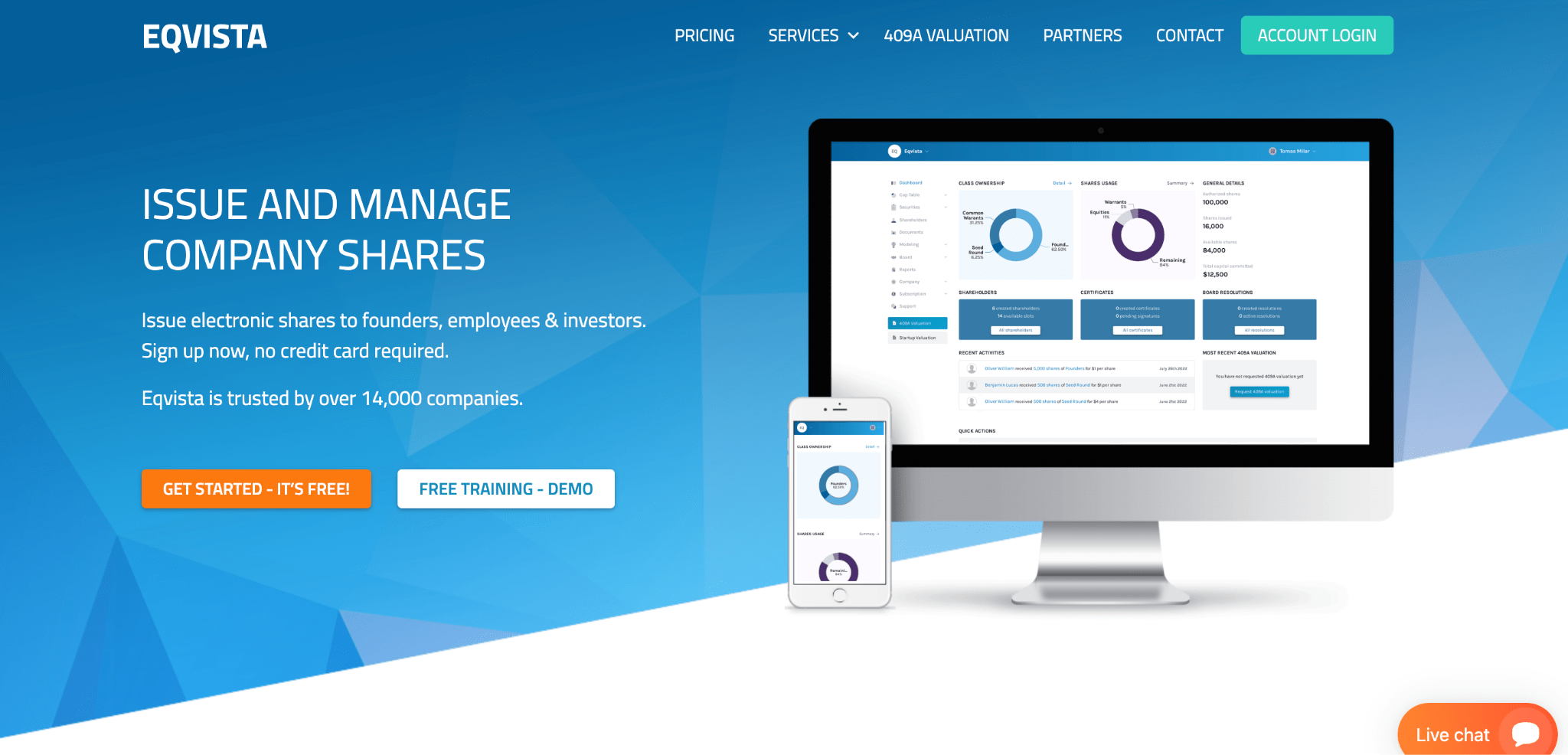
Eqvista is the budget pick that isn't junk: free cap table management at the low end (with paid tiers as you add features and stakeholders), plus 409A valuations and waterfall analysis built in. It's aimed squarely at startups and SMBs, and while the interface isn't as slick as Pulley's, the price-to-capability ratio is hard to beat when every dollar matters.
Best for: bootstrapped and early-stage startups watching costs.
9. Rule Zero — now Hissa
Another rename for the correction file: Rule Zero, the India-based cap table platform known for company-secretary-grade compliance work, now operates as Hissa (the old domain redirects). The combined platform covers cap tables, ESOP administration, and fundraising workflows with the deep Indian regulatory expertise that made Rule Zero the lawyer-recommended choice — plus Hissa's newer employee-portal and liquidity features layered on top.
Best for: Indian companies that want compliance-heavy, professionally managed equity administration.
10. Cake Equity
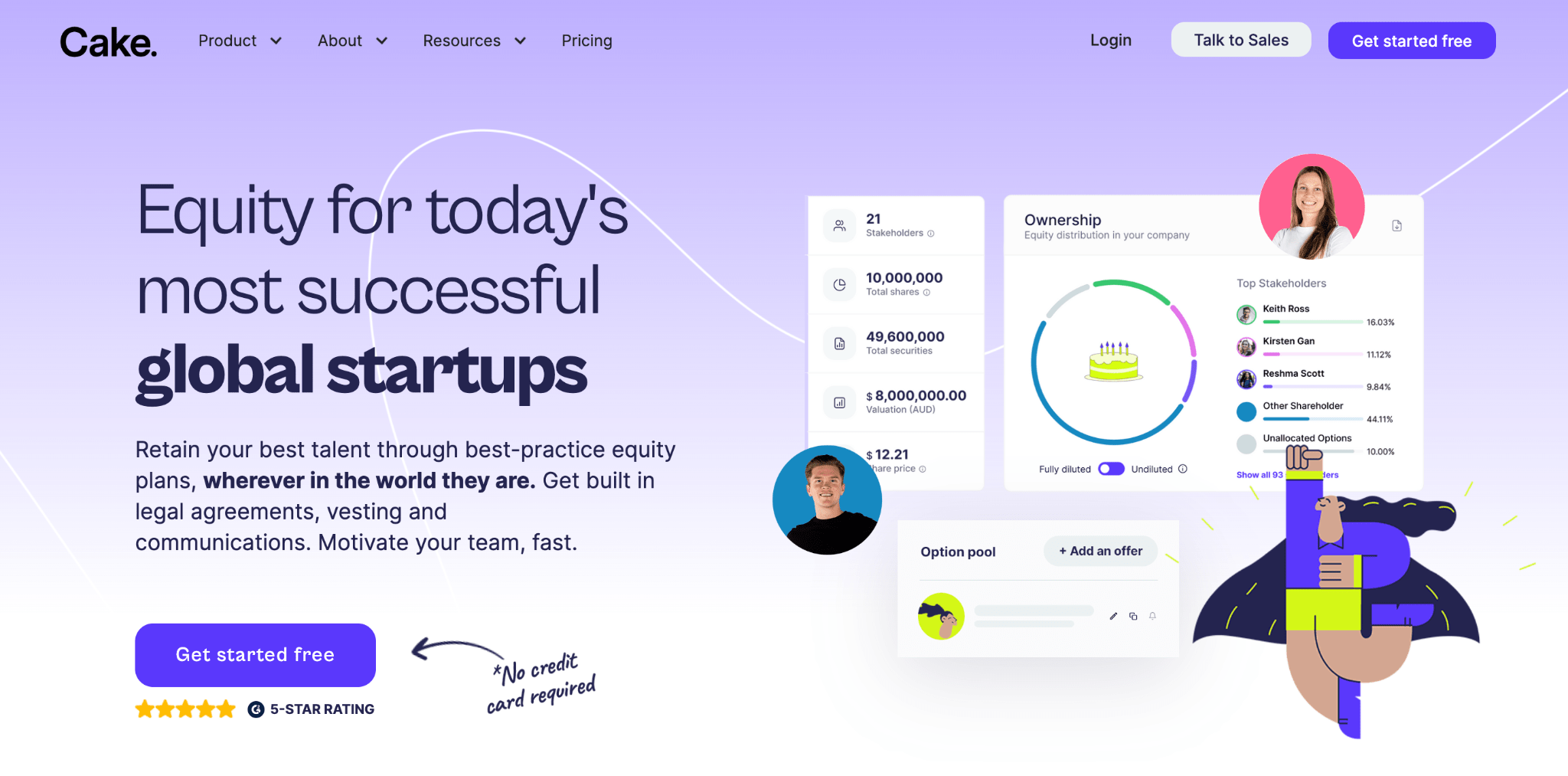
Cake Equity rounds out the list from Australia: a friendly, practical platform for setting up a cap table and running ESOPs without a finance team, with the legal, compliance and tax scaffolding handled for you. It's popular across APAC and works for global teams — you can invite participants anywhere — and its pricing stays reasonable for SMB scale. For a 10-to-100-person company that wants equity sorted in days rather than weeks, Cake is a very easy yes.
Best for: APAC startups and SMBs wanting done-for-you equity admin.
How to choose in one pass
1. India/SEA incorporation: Qapita or Hissa (ex-Rule Zero); Vestd India as the third option.
2. US, funded, headed up: Carta (standard) or Pulley (modeller's choice); Eqvista on a budget.
3. Europe: Ledgy.
4. Enterprise/pre-IPO: Shareworks by Morgan Stanley.
5. APAC SMB: Cake Equity.
Whichever you pick, the tax consequences of options are jurisdiction-specific and personal — our plain-English guide to understanding tax covers the basics, but get local advice before employees exercise anything. Analysts tracking this market (ReportLinker via GlobeNewswire) project steady double-digit growth through 2031, so expect these platforms to keep merging and rebranding — check names before you buy.
Frequently asked questions
What is ESOP management software?
It's the system of record for employee stock ownership plans: it tracks who holds what, automates grant letters and vesting schedules, handles exercise and repurchase workflows, produces the compliance and tax filings your jurisdiction requires, and gives employees a portal to see their vested value. Good platforms also model dilution for future fundraising rounds before they happen.
How much does ESOP management software cost?
It ranges from free (Eqvista's base cap table, Pulley's young-company tier) to enterprise-only pricing you must request (Shareworks by Morgan Stanley). Mid-market platforms like Carta, Ledgy and Qapita typically charge tiered subscriptions that rise with stakeholder count — a 20-person startup pays modestly, a 500-holder scale-up pays several times more. Always price against your stakeholder count, not your revenue.
What happened to Trica equity management?
Trica merged with Vestd, the UK's largest equity management platform, and now runs as Vestd India — the tricaequity.com domain confirms the rebrand, and customers were migrated without service interruption. Similarly, Rule Zero now operates as Hissa. If you're on either platform, nothing is broken; if you're evaluating them, evaluate under the new names.
Is Carta still the best cap table tool for US startups?
For funded US startups, yes — the lawyer and investor ecosystem assumes Carta, and its 409A and fund-administration depth is real. But it's no longer an automatic yes: per-stakeholder pricing has climbed, CartaX (its secondary exchange) shut down in early 2024, and Pulley or Eqvista fit very early companies better. Pick Carta when the network effect matters; pick cheaper tools when you're pre-seed and counting dollars.
Can employees sell shares through these platforms?
Sometimes. Qapita operates liquidity rails connecting companies, investors and employees for secondary transactions; several platforms integrate with third-party buyers or company-run tender offers. Carta wound down its own CartaX exchange in 2024. For most startups, liquidity still happens via company-organised events, so ask any vendor exactly how secondaries work before you promise employees an exit.
Related reading
- Top cap table management platforms
- Best HRMS for human resource management
- Things you should know about tax
- The role of technology in modern accounting practices
I've been through a Carta migration and a Pulley setup — if you tell me your incorporation country and headcount in the comments, I'll tell you which two to demo.