

Most SEO advice on the internet is either obvious ("write good content!") or selling something. This guide is neither. It explains how search actually decides what to show in 2026, then gives eight changes that move rankings — the same order I'd apply them if starting from zero. The 2024 version of this post needed a refresh because search itself changed: AI-generated answers now sit above many results, and Google rewards demonstrable first-hand experience more than ever.
- What SEO Is (and What It Isn't)
- Why Bother With SEO?
- How Search Engines Decide
- 8 SEO Tips That Still Work in 2026
- 1. Match the search intent, not just the keyword
- 2. Write from actual experience
- 3. Structure content with real headings
- 4. Use images and video deliberately
- 5. Win the featured snippet (and the AI citation)
- 6. Link internally like it matters (it does)
- 7. Fix page speed before chasing content
- 8. Measure, then iterate
- What About Hiring an SEO Professional?
- FAQ
- Related Reading
Quick Answer: SEO in 2026 means matching genuine search intent, demonstrating first-hand experience, keeping the site technically healthy, and earning citations — both from links and from AI answer engines. The eight tips below cover intent, content, structure, visuals, featured snippets, linking, speed, and measurement.
What SEO Is (and What It Isn't)
SEO — search engine optimization — is the practice of making your website the best available answer for the searches your audience performs, and making that answer easy for search engines to find and trust. It isn't keyword repetition, and it isn't tricking algorithms. Google's own SEO starter guide frames it exactly this way: help search engines understand content that genuinely helps people.
What changed by 2026: search results increasingly start with AI-generated summaries. Being quoted inside those answers — and cited beneath them — is now part of visibility. The practical consequence is that vague, generic content loses twice: it ranks lower and it never gets cited.
Why Bother With SEO?
Because search traffic compounds in a way rented channels don't. Ads stop the moment the budget does; social reach depends on an algorithm you don't control. A page that earns a top ranking sends visitors for years. Organic traffic also converts better than most paid channels because the visitor arrived with intent — they searched because they wanted something.


How Search Engines Decide
Three stages, worth understanding before touching anything:
1. Crawling — bots discover pages by following links and sitemaps.
2. Indexing — pages get analyzed and stored, mapped to the queries they answer.
3. Ranking — for each search, the index is filtered and ordered by hundreds of signals: relevance to intent, content quality and freshness, the site's backlink profile, page experience, and increasingly, whether the content shows real first-hand expertise.
If a page isn't indexed, nothing else matters — so measurement comes first, not last.
8 SEO Tips That Still Work in 2026
1. Match the search intent, not just the keyword
Type your target query into Google and study the top ten results before writing anything. If they're all how-to guides, a product page won't rank; if they're all comparison tables, an essay won't. Intent-matching is the highest-leverage decision in SEO, and it happens before a word is written.
2. Write from actual experience
Google's quality guidelines emphasize first-hand experience — the difference between "a survey says posting frequency matters" and "I posted three times a week for six months; here's what happened to my traffic." Add original photos, real numbers, and specific details nobody could copy. This is also, conveniently, what AI-generated content can't fake.
3. Structure content with real headings
Headings (H2s, H3s) are signposts for readers and crawlers alike. One H1 per page, headings that describe the section honestly, short paragraphs, and — this matters more every year — a direct answer near the top of the page, before the deep detail.
4. Use images and video deliberately
Original images with descriptive file names and alt text support rankings and get pulled into image search; a short embedded video increases time on page. But every image should earn its load time — compressed, sized correctly, and relevant. A wall of stock photos helps nobody.
5. Win the featured snippet (and the AI citation)
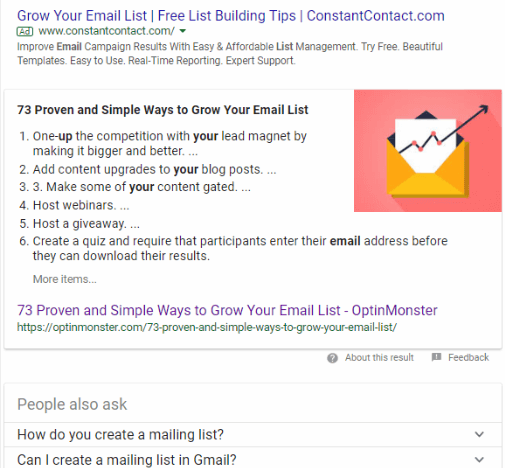
A featured snippet is the answer box Google shows above results. Winning one — by answering the target question in a tight 40–60 word block, using lists for steps and tables for comparisons — can dramatically lift clicks. The same formatting makes content quotable by AI answer engines. We've covered featured snippet tactics in depth.

6. Link internally like it matters (it does)
Internal links tell search engines what your pages are about and spread authority across your site. Every new post should link to 3–5 relevant pages with descriptive anchors, and older posts should link to it. There's a system to this — see our internal linking strategies.
7. Fix page speed before chasing content
A slow page leaks rankings and readers. Compress images, remove unused plugins and scripts, and check Core Web Vitals in Search Console. You don't need a perfect score — you need the page usable instantly on a mid-range phone over cellular.
8. Measure, then iterate
Install Google Search Console and GA4 from day one. Search Console shows which queries already see your site; those are your fastest wins. A page ranking 8th for a decent query often needs only an updated answer block or fresh section to crack the top 3 — but you'll never know which pages those are without tracking SEO results.
What About Hiring an SEO Professional?
The honest math: if your site can earn revenue from even modest ranking gains, a competent consultant pays for themselves. But the market has plenty of charlatans — anyone guaranteeing rankings is selling something Google explicitly warns about. Before hiring anyone, implement tips 1, 3, and 6 yourself; if the site has real content problems, no consultant can outsource that. Regular content updates are maintenance you can't skip, with or outside of an agency.
FAQ
Is SEO still worth it in 2026 with AI answering everything?
Yes, but the bar moved. AI answers reduce clicks on vague informational queries, yet they still cite sources — and transactional, local, and complex searches still end in website visits. Sites with genuine expertise and clear answers get quoted and clicked; thin content loses both ways.
How long does SEO take to work?
New sites typically need 6–12 months for meaningful competitive rankings; established sites can move specific pages in weeks. The variables are domain authority, content quality versus what already ranks, and technical health. Anyone promising page-one rankings in 30 days is guessing or breaking rules.
Are keywords still important?
Keywords matter as a map of intent, not as a stuffing target. Research tells you what language your audience uses and what they want; the content should cover the topic completely and naturally. Google understands synonyms and context — write for the reader who searched, not for the string they typed.
Do backlinks still matter?
Yes — links from relevant, credible sites remain one of the strongest signals of trustworthiness. But one editorial link from a respected industry site beats a hundred purchased directory links, and Google's spam systems punish the latter. Create things worth citing: original data, genuine guides, useful tools.
What's the single biggest SEO mistake small sites make?
Publishing for the site's own calendar instead of for search demand. Dozens of posts nobody searched for — with no keyword research, no intent matching, no internal links — waste the site's crawl budget and dilute authority. Ten pages that each answer a real query thoroughly will outrank a hundred scattered ones.
How do I know if my SEO is working?
Watch Search Console trends, not single rankings: impressions show visibility growing, click-through rate shows snippets working, and average position for your target pages shows movement. Compare 28-day windows month over month. Conversions — sales, signups, contacts — are the only metric that ultimately pays.
Related Reading
- 7 Effective SEO Techniques You Should Try
- How to Improve Your SEO and Rank Higher on Google
- Best Internal Linking Strategies for Boosting SEO
- Why Your Website Needs Regular Fresh Content
SEO in 2026 rewards the same fundamentals it always has — useful content, clean structure, earned trust — with higher stakes for first-hand experience and clearer formatting for machines. Work through the eight tips in order, measure honestly, and the compounding starts.