


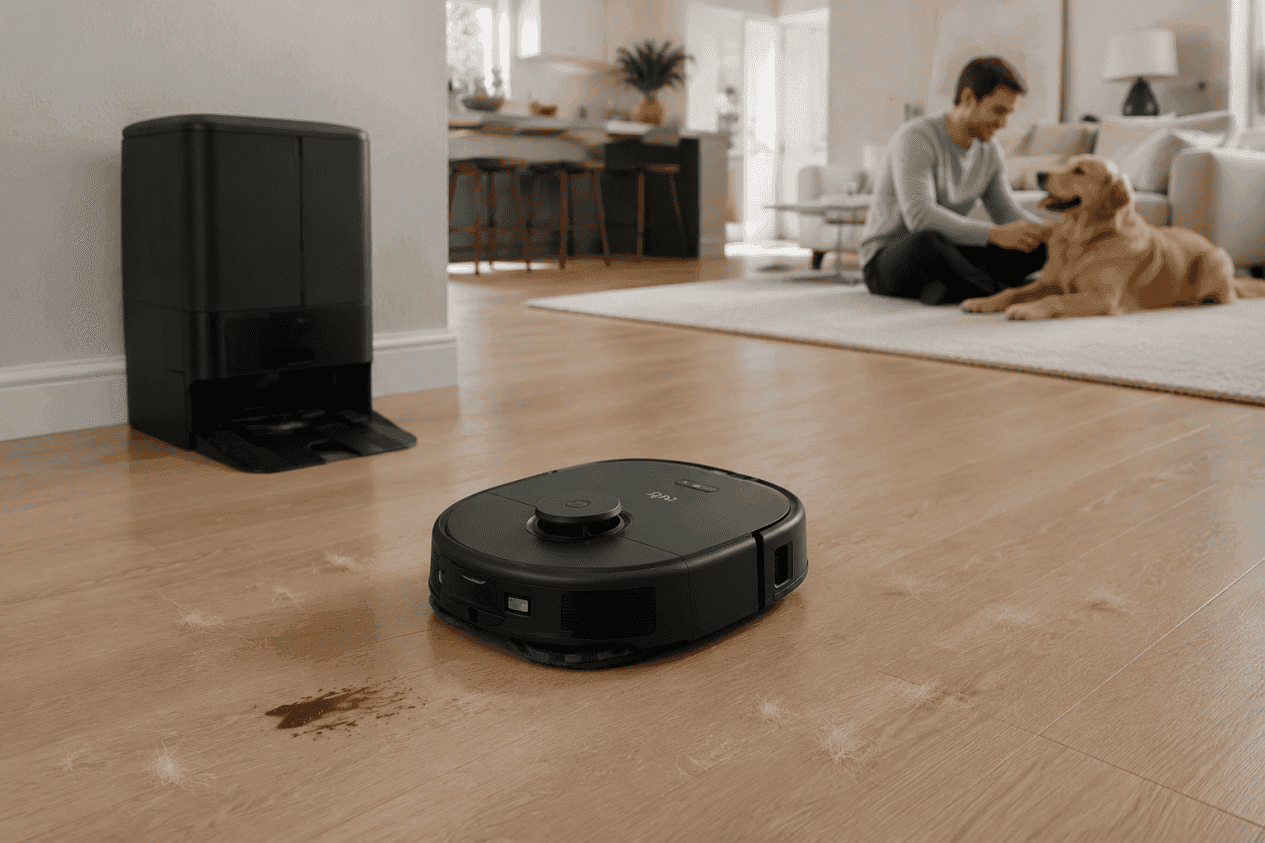
A robot vacuum for hardwood floors can be useful on sealed wood, but the mop settings need a lighter touch than tile. Most problems start with too much water, repeat passes over the same boards, or a damp pad sitting near a seam or worn edge. This guide walks through water level, no mop zones, room-based cleaning, mop drying, and safer ways to run a robot mop on wood floors in mixed layouts.
Start With the Lowest Water Setting That Still Cleans
Start by turning the water down, then work up only if the floor still looks dusty after a pass. Wood type matters, but the finish and condition usually matter more. A sealed plank in a quiet bedroom is different from a worn threshold near the back door, even if both are the same species.
For most sealed hardwood, the right setting leaves the floor barely damp and dry within a few minutes. If streaks sit on the boards after the robot leaves, or the floor still feels cool and damp later, the routine is too wet for everyday wood care.
Treat water level like a dial, not a default.
- Low water works for bedrooms, hallways, and living rooms with dust and pet hair.
- Medium water may fit sealed kitchen wood if there are light food marks.
- High water belongs on surfaces that can handle more moisture, such as tile or vinyl, not routine hardwood passes.
The National Wood Flooring Association says that wet mops and steam mops are not recommended because water and steam can damage the finish and the wood. Your robot should follow the same rule in practice. A pass can be damp enough to lift dust without leaving a wet trail behind the mop.
Use No Mop Zones to Protect Seams, Edges, and Sensitive Areas
Even a sealed hardwood floor has weak spots. Seasonal humidity opens small seams. Chairs wear down the finish near dining tables. Entryways collect grit that can scratch the surface and leave raw edges near thresholds. Those places need a different rule than the middle of a clean bedroom.
After the first map, zoom in and mark the areas where water should not go. If the app allows no mop zones, draw them around raw transition strips, damaged boards, floor vents, pet bowls, and old gaps that catch dust. The robot can still vacuum those areas if the model supports separate vacuum and mop behavior.
This is where a good map matters more than a strong cleaning mode. A low-moisture pass across a healthy plank is one thing. The same pass across a lifted seam is another.
Floor area | Safer setting | Why it helps wood |
Sealed living room planks | Low water and normal vacuum | Removes dust without leaving visible wet trails |
Kitchen hardwood near counters | Low or medium water in a room zone | Targets food marks without soaking nearby rooms |
Open seams or worn thresholds | No mop zone | Keeps moisture out of exposed edges |
Rugs beside hardwood | Mop lift or carpet avoidance | Stops damp pads from crossing onto fabric |
If you are still comparing models for wood floors, the eufy robot vacuums for hardwood floors group options around sealed hardwood, soft wheels, mop lift behavior, and room-by-room cleaning.
Set Room-Based Cleaning Instead of Whole-Home Mopping
A single whole home mop setting is usually too blunt for hardwood. The kitchen may see coffee drops, cooking residue, sticky footprints, and pet bowl splashes. A bedroom or living room is often dealing with dust, pet hair, and maybe a light footprint near the door.
Set the schedule around how each room gets dirty. A kitchen zone may run after dinner a few times a week, while bedrooms may only need vacuum passes and an occasional low-water wipe. That keeps extra moisture tied to actual mess, not to one wet routine for the whole home.
The order of the run also matters. Let the robot clean rooms with lighter soil before the kitchen if the same mop will keep moving through the home. A pad that just crossed a greasy cooking area should not be dragged across a quiet sitting room unless the robot can wash the mop during the route.
For mixed wood homes, these settings usually work better than one general schedule.
- Vacuum first in all rooms, so grit is removed before any damp pass.
- Use room zones for kitchens, mudroom edges, and breakfast areas.
- Run cleaner rooms earlier before the mop meets heavier residue.
- Skip wet cleaning on questionable boards until the finish is repaired.
This setup is not meant to feel like a deep scrub. For wood, a few light passes during the week are usually easier on the finish than one heavy wet mop.
For homes that combine sealed wood, tile, and area rugs, the eufy robot vacuum and mop works best when each surface gets its own routine instead of one wet route through the whole house.
Maintain Mop Hygiene to Avoid Moisture and Odor Issues
Hardwood risk does not end when the robot stops moving. A damp mop pad parked under the robot can leave a humid spot near the dock. If the base sits on wood and the pad stays wet for hours, that small patch gets more moisture than the rest of the room.
Watch what happens after the route finishes. Ideally, the robot returns to wash and dry the mop instead of parking with a damp pad. If your station allows drying time choices, use a full dry cycle after any mop run on wood. If your robot has a removable pad and no drying dock, take the pad off soon after the route so moisture is not trapped under the machine.
Odor is another clue. A sour mop smell usually means the pad stayed wet too long or carried dirty water back to the dock. On hardwood, that is not only unpleasant. It also tells you the maintenance routine is leaving moisture somewhere you cannot always see.
Keep the habit after each run simple. For the first few wood cleaning runs, check the pad, look under the dock for darkening or tackiness, empty dirty water before it starts to smell, and make sure the pad dries before the next scheduled mop route.
Dock placement still matters. Put the station on a flat hard surface where tanks and mop parts are easy to reach. If the dock must sit on hardwood, check the floor under it during the first week. No setting replaces a quick look at the spot where moisture and maintenance meet.
Check These Features Before You Trust a Robot Mop on Hardwood
Settings only help if the robot can actually follow them. Before trusting any robot mop on hardwood, check the app and manual as if you were setting up your own rooms, not reading a feature list. If you cannot control water, zones, rugs, and mop care separately, the system may be too blunt for wood.
Use this as a buying filter.
- Can water output be set by room? This matters when a kitchen needs more help than a hallway.
- Can the map block mopping without blocking vacuuming? That is useful for worn seams, thresholds, and rug edges.
- Does the mop lift or pause around rugs? Low rugs need a different rule than open hardwood.
- What happens to the mop after cleaning? A station that washes and dries pads reduces the chance of a damp pad sitting near the dock.
- Are small obstacles handled well enough for your home? Bowls, cords, toys, and low furniture can interrupt a route and leave wet passes in odd places.
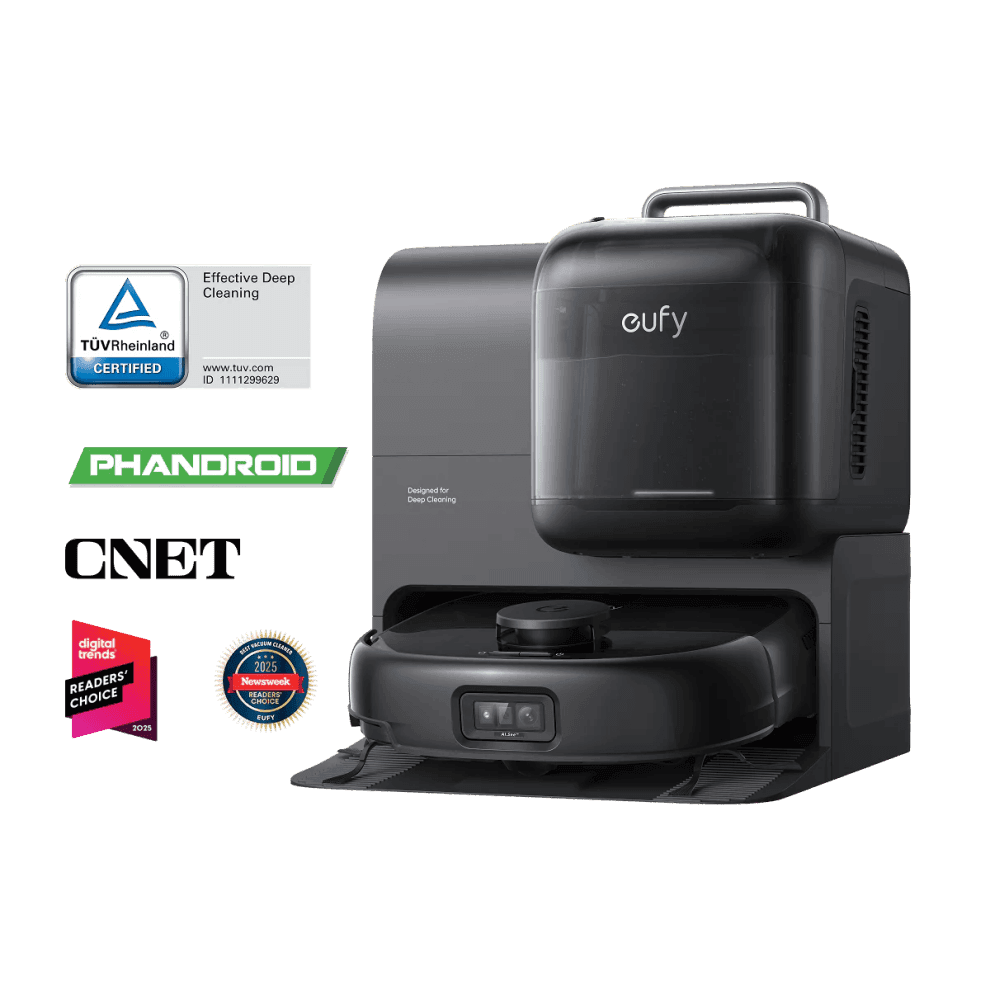
The eufy Robot Vacuum Omni E28 is an example of how these features can support a mixed-floor cleaning routine. Its HydroJet™ System uses separate clean- and dirty-water reservoirs and a dual-scraper structure to clean the rolling mop during the run. The eufy app also supports customized cleaning modes and schedules for different rooms, allowing wood areas to follow a more conservative routine. Its 20,000 Pa suction and DuoSpiral™ Brushes help collect dust, hair, and debris before mopping, while RGB camera and LED obstacle avoidance help it navigate around common household objects. After cleaning, the All-in-One Station handles self-emptying, self-refilling, self-washing, hot-air drying, wastewater collection, and automatic detergent dispensing.
The right machine should make careful settings easy to keep. If the app pushes one wet mode for the whole home, it is probably a better tile cleaner than a hardwood maintenance tool.
Test and Adjust Robot Vacuum Hardwood Floor Settings in the First Week
The first week is a test period for your robot vacuum hardwood floor settings. Do not judge the routine by whether the floor looks glossy right after one pass. Check whether it dries quickly, whether seams stay clean and dry, and whether the robot repeats the same damp path too often.
After each of the first few runs, check the dock where the mop returns and dries, the kitchen edge where the robot may use more water, and the transition zones where wood meets tile, rugs, or thresholds.
If the floor feels tacky, reduce water or run the vacuum only more often. If dust remains but the floor dries well, increase vacuum frequency before raising water. If a seam darkens, cups, or feels rough after cleaning, stop mopping that area and treat it as a no-mop zone until the finish is checked.
Schedules are useful once the settings have proven themselves. Until then, keep the route simple. One short run on a known wood area tells you more than a whole house experiment with every feature turned on.
A robot vacuum for hardwood floors should stay in conservative settings. Start with low water, vacuum before mopping, protect worn seams with no mop zones, give each room its own cleaning rule, and make sure the mop is washed and dried after the run. If the floor dries quickly and the weak spots stay untouched, automation can help maintain hardwood without turning routine cleaning into over-mopping.