

Quick Answer: Yes — a PAN card is a valid, government-issued photo ID proof in India, accepted by banks, lenders, and investment platforms. It is not an address proof, and it is not on the accepted ID list for domestic airport security, so keep Aadhaar, a passport, or a driving licence handy for those.
The PAN (Permanent Account Number) card is issued by the Income Tax Department and does two jobs at once: it identifies you to the tax system, and it doubles as one of the most widely accepted photo IDs in Indian finance. But "widely accepted" is not "accepted everywhere" — and since the Aadhaar–PAN linking rules, an unlinked PAN can stop working as ID at all. Here is exactly where the card works, where it doesn't, and what changed for 2026.
Where your PAN card works as ID proof
Banking and credit. Opening a savings account, applying for any loan, or getting a credit card all start with PAN verification. Banks run a credit check against your PAN, and large cash deposits or transactions trigger PAN quoting requirements — it's the thread the tax department follows through the financial system. If you're applying for credit, your CIBIL score and loan eligibility are both tied to this number.
Investing. A demat account, mutual fund investments, and stock trading all require PAN — SEBI mandates it, and there's no working around it. Mutual fund redemptions above ₹50,000 in cash require PAN quoting even for small investors.
Property and high-value transactions. Buying or selling property requires PAN quoting from both sides for transactions above ₹10 lakh. Jewellery purchases above ₹2 lakh and hotel bills above a threshold trigger the same rule.
Tax filing. The card's original purpose: you cannot file an income tax return without a PAN, and refunds arrive only to a PAN-linked bank account.
Mobile connections and jobs. Telecom KYC accepts PAN as identity proof (paired with an address document), and employers collect PAN details for TDS reporting when you join.
Where PAN is not enough
Two common situations catch people out:
- Airport security. PAN is not on the Bureau of Civil Aviation Security's accepted photo ID list for domestic flights. Carry Aadhaar, a passport, voter ID, or a driving licence to the airport; passengers have been turned away for relying on PAN alone.
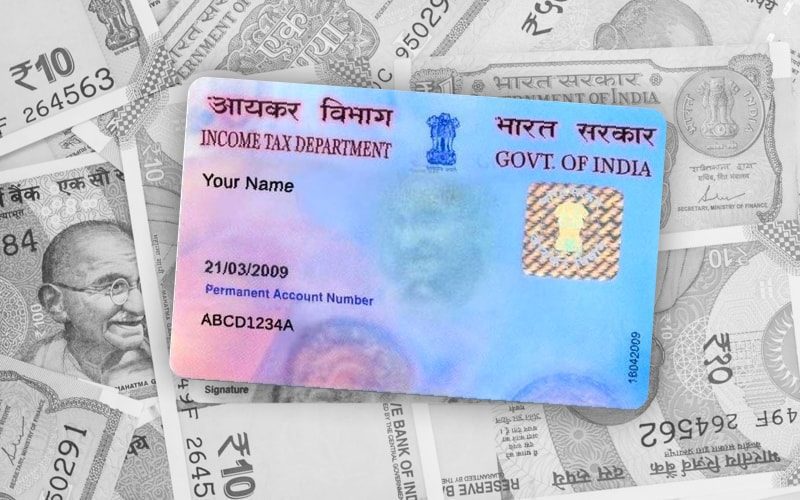
- Address proof. The PAN card carries your name, date of birth, father's name, and photo — but no address. Anywhere a "proof of address" is demanded (rental agreements, some bank branches, passport applications), PAN cannot be the document for that slot, no matter how valid it is as identity.
Some institutions also insist on a second document as a matter of policy even where PAN alone would do — private landlords and some NBFCs, for example, often want Aadhaar or a utility bill alongside.
The 2026 catch: an unlinked PAN can be inoperative
This is the biggest change since the original version of this article, and it matters more than the question of where the card is accepted.
Linking PAN with Aadhaar has been mandatory since 2017 law (Section 139AA). The free linking window closed on June 30, 2023 — PANs that stayed unlinked became inoperative from July 1, 2023. For people who had applied using an Aadhaar enrolment ID, the Income Tax Department set a final deadline of December 31, 2025; unlinked PANs became inoperative from January 1, 2026.
An inoperative PAN stops working in every section above: returns can't be e-filed, refunds are blocked, and higher TDS applies under Section 206AA. Linking is still possible after the deadlines — you pay a late fee of ₹1,000 under Section 234H on the e-filing portal (Quick Links → Link Aadhaar), and the PAN becomes operative again after processing. Some categories are exempt from linking, including NRIs, residents over 80, and residents of certain northeastern states.
If you haven't checked, do it now — it takes a minute on the e-filing portal's status page.
PAN 2.0: same number, new card
The government's PAN 2.0 project (approved with a budget of about ₹1,435 crore) is modernizing the card itself. What it means in practice:
- New and reprinted PAN cards carry a QR code that encodes your PAN details for instant digital verification.
- Your PAN number does not change. Existing cards remain fully valid — there is no need to replace a working card.
- Upgrading to a QR-code card happens free through the normal reissue flow (an address update with reprint, or a reprint request via NSDL/Protean or UTIITSL).
Ignore any message that says your old PAN "expires" — that's a phishing template that circulates every few months, now riding on PAN 2.0 confusion.
Other valid ID proofs in India
For completeness, the documents accepted alongside or instead of PAN:
- Aadhaar card — the most universally accepted ID and address proof combined
- Passport — identity plus citizenship, essential for international travel
- Voter ID (EPIC) — accepted for most government and financial KYC
- Driving licence — identity and, often, address proof at banks
- Government employee / student photo IDs — accepted situationally
- Ration card — accepted as identity and for PDS, weaker as standalone photo ID
The practical wallet for an Indian adult: Aadhaar for everything address-related, PAN for everything financial, passport or driving licence for travel. Keep scanned copies of all three — it's a five-minute job with a phone, and our guide to scanning documents to PDF shows how.
FAQ
Is an e-PAN card as valid as the physical card?
Yes. The e-PAN PDF issued by the Income Tax Department (via the instant e-PAN service with Aadhaar, or NSDL/Protean) carries the same legal validity as the printed card. Some institutions still prefer a physical copy for their files, but digitally the e-PAN is the same document.
Can I use a PAN card as proof of date of birth?
Usually yes — the card prints your date of birth, and most banks and passport authorities accept it in the DOB slot, alongside Aadhaar, a birth certificate, or a passport. Institutions that insist on a specific document list are the exception; check theirs before submitting.
What happens if my PAN is inoperative and I need to file a return?
The portal won't accept the filing until the PAN is operative again. Pay the ₹1,000 fee under Section 234H, complete the Aadhaar link request, and wait for the status to flip back to operative — the department processes most links quickly, but file early rather than on the due date.
Do children need a PAN card?
Minors can hold mutual fund folios under a guardian, whose PAN is mandatory on the application — the child's own PAN becomes necessary when they turn 18, at which point the folio is frozen for transactions until they complete their own KYC with their own PAN and bank details. Families with investments in the child's name should start the KYC update before the birthday, not after.
Related reading
- Is your CIBIL score good enough? Loan eligibility tips
- How to scan documents with your phone and save as PDF
- Emergency loans: when and how to use them wisely
Check your PAN–Aadhaar link status today if you haven't since the deadlines — it's the one piece of PAN housekeeping that can silently break everything else.