


When you continue to apply the same SEO techniques in 2023, you are basically going around a modern city with a map that was created in the eighteenth century. It is the year 2026 and search has changed so deeply that the old playbook is not just obsolete but it is even a liability.
The days of chasing blue links are over. Now we live in the time of the so-called answer engine, where Google, Bing, and even social networks such as TikTok have advanced AI to understand what a person actually requires even before typing a single word. So, to improve Google ranking results this year, you have to stop being a librarian and start being a concierge.
Professional SEO Services have pivoted from simple keyword optimization to a holistic focus on brand authority and user satisfaction. Let’s dive into the strategies that will actually move the needle this year.
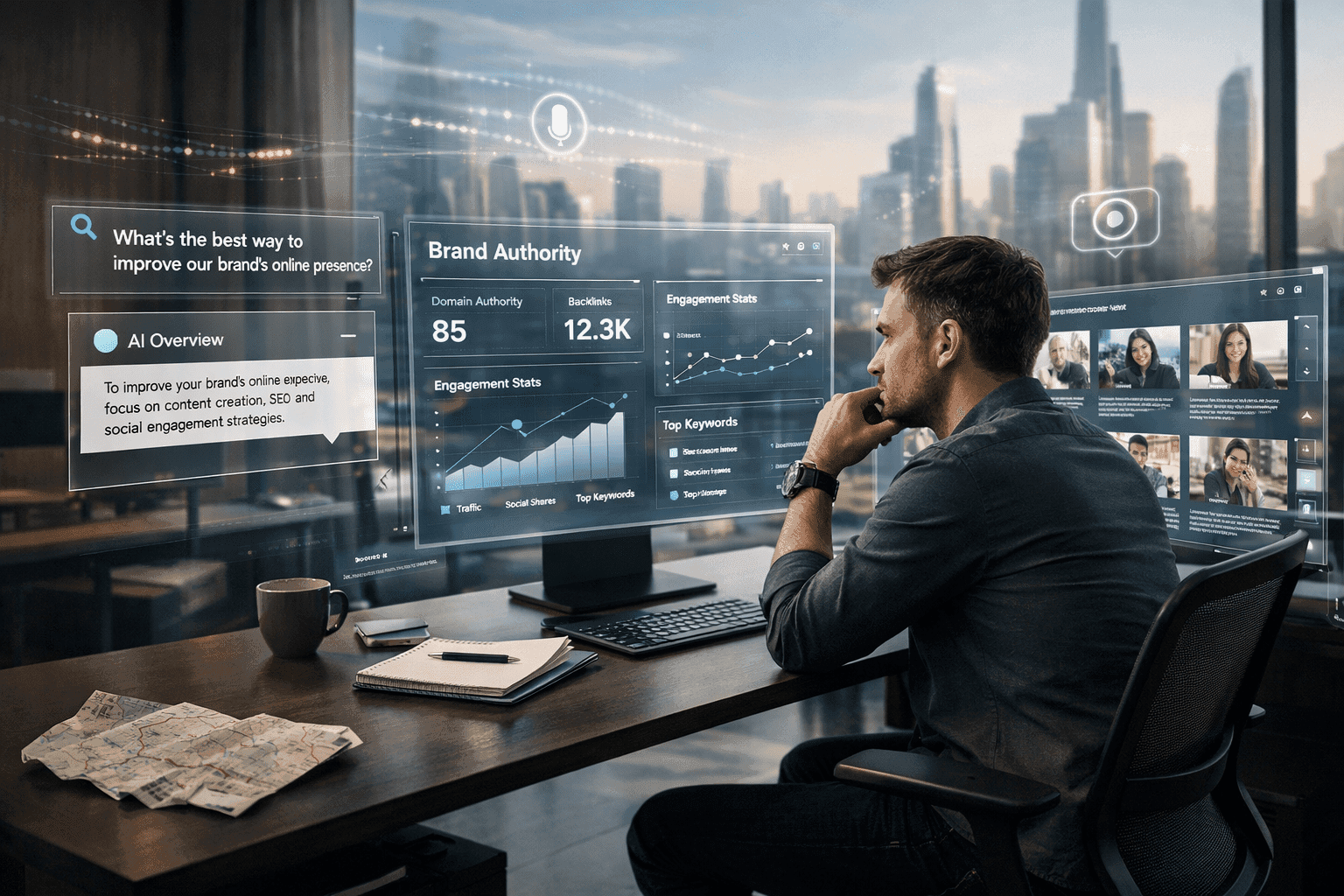
The New SEO Reality
The old-fashioned search engine result page (SERP) is a dinosaur. Nowadays, search is very personalized, conversational and fluid.
Beyond Keywords: What Search Engines Now Reward
Google does not merely seek matches of a query and a webpage as it used to. It seeks after entities and relationships. It would like to know whether your site is a reliable source within a particular area of knowledge. Reward is no longer given to the individual who is using most of the keywords, but to the individual who gives the most comprehensive and exclusive value.
The Shift Toward Intent and Experience
Search intent has become granular. Search engines are now in a position to differentiate between a person who is searching for something (a quick fact), the one who is surfing to deepen his knowledge about a specific subject and the one who is willing to make some purchase. And even in case your content does not fit into the particular stage of the user journey, you will not be seen. Moreover, the experience of your site, the way it reacts to you, is now a ranking factor.
Preparing for AI-Driven Search
Many users are able to receive their responses even before they leave the search page, as the use of AI Overviews is fully integrated. This means your goal has changed. You are no longer just trying to get a click; you are trying to be the source that the AI trusts to generate its answer.
10 Strategies to Dominate in 2026
If you want to stay at the top, these are the ten pillars your SEO Services must be built upon.
1. Optimize for AI Overviews and Featured Snippets
AI Overviews dominate the top of the screen. You must give concise, summarized, and factual summaries of your topics in order to get here. Being able to make AI models easy to read your data allows you to use bullet points and structured data to make it easier to process and read. Imagine that it is giving the search engine the executive summary.
2. Create Deep, Topic-Cluster Content
Long gone are the days of single-post blogging. You should establish power in groups. Design one large, so-called pillar page, which is extensive in nature, and then connect it with dozens of smaller, narrower, highly detailed articles. This internal connecting structure goes to prove to Google that you are not only broad but also deep.
3. Prioritize Video and Visual Search
Visual search is no longer a gimmick. As wearable devices gain popularity and improved mobile cameras are available, individuals are eye searching. Make sure that all the pictures on your site are in high resolution and that they are well-tagged. More to the point, incorporate short-form video. Google is also actively dragging video clips into the SERP in order to provide answers to how-to questions.
4. Master Brand Authority and E-E-A-T Signals
The most significant acronym in your vocabulary would be Experience, Expertise, Authoritativeness, and Trustworthiness (E-E-A-T). Google longs to have a human experience in a world where AI does all the fluff. Include the actual author bios and connection to social profiles, as well as demonstrate previous real-world experience. When you are writing about the trip, demonstrate your personal photos.
5. Leverage First-Party Data for Personalization
First-party data is the king as third-party cookies are long gone. To make your content personal, use the information on your personal subscribers and customers. Search engines are becoming more precise in identifying sites with high rates of return visitors and direct traffic, which are colossal indications of brand health.
6. Optimize for Voice and Conversational Search
Individuals do not enter such keywords in their smart glasses as best plumber Philadelphia. They will ask, Who is the most trustworthy plumber close to me that is available? Your writing should sound like natural language and the tones of conversations. Ask long-tail questions and answer directly and in spoken word format.
7. Focus on Core Web Vitals and Technical Performance
It is based on technical SEO. When the Interaction to Next Paint (INP) score of your site is large, it indicates that the site is slow to the user. Google will punish you on the same. Your site must be blazing, visually consistent, and mobile first. The minimum entry requirement in 2026 will be technical perfection.
8. Build Genuine Backlinks Through Partnerships
The era of buying links in bulk is dead. Nowadays, backlinking is concerned with digital PR and authentic relationships. A single connection with one of the most significant industry editions or a reputable local news source is more valuable than a thousand connections on minor directories. Invest in the development of “linkable properties” such as original research.
9. Use AI Tools Strategically, Not Automatically
AI is a wonderful co-pilot and a horrible driver. Complete outlines, data analysis, and brainstorming with the help of AI. However, never leave it to write the final copy. Google is able to identify low-effort AI content, and, more to the point, your users can do that. It is human editing that makes the difference and adds the flavor and soul that make it trustworthy.
10. Adapt to Zero-Click Search Trends
When individuals are not going to your site, as the AI provided the answer, you have to optimize brand impressions. Make sure that your brand name appears in the AI summary. Make sure your prices, ratings, and locations are shown on the search page with the help of Schema markup. In 2026, success is mostly about visibility, even though it is not being clicked.
Measuring What Matters in 2026
Stop looking at just “keyword rankings.” That is a vanity metric. In 2026, you should be measuring:
- Share of Voice: How often does your brand appear in AI Overviews?
- Engagement Rate: Once people land on your site, are they actually staying?
- Conversion Intent: Are you attracting buyers, or just people looking for free definitions?
- Brand Searches: How many people are typing your specific business name into the search bar?
Conclusion
SEO 2026 is not a destination, but an outcome. The search engines have received a lot of intelligence, but they all work towards the same objective: to ensure that their users are pleased. As experts at Awebstar emphasize, you will top the list provided that you match your strategy to that objective by delivering real expertise, technical perfection, and a smooth user experience.
The world is shifting rapidly. However, it is only an indication that there is an increased opportunity for the person who is ready to put in the effort. At Awebstar, we believe it’s time to move beyond chasing algorithms and instead focus on leading with value. Get out of the pursuit of the algorithm and take the lead.
Author Profile
Morris Edwards is a digital strategist and UX consultant with over 10 years of experience helping Singapore businesses build high-performing digital experiences. He specializes in UX design, website development, mobile app strategy, and conversion optimisation focused on user-centric solutions.