Online gaming spent fifty years going from a physics-lab experiment to the largest entertainment medium on Earth — bigger than film and recorded music combined, played by more than three billion people. The story explains a lot about the internet itself: every time the pipes got faster, games got social first and everything else caught up later.
Quick answer: Online gaming evolved from 1970s networked experiments (Maze War) to 1990s MMORPGs, 2000s console matchmaking, 2010s esports and streaming, and today's mobile-first, cross-platform live games. It now generates roughly $190 billion a year — and its social impact, good and bad, has become mainstream policy business.
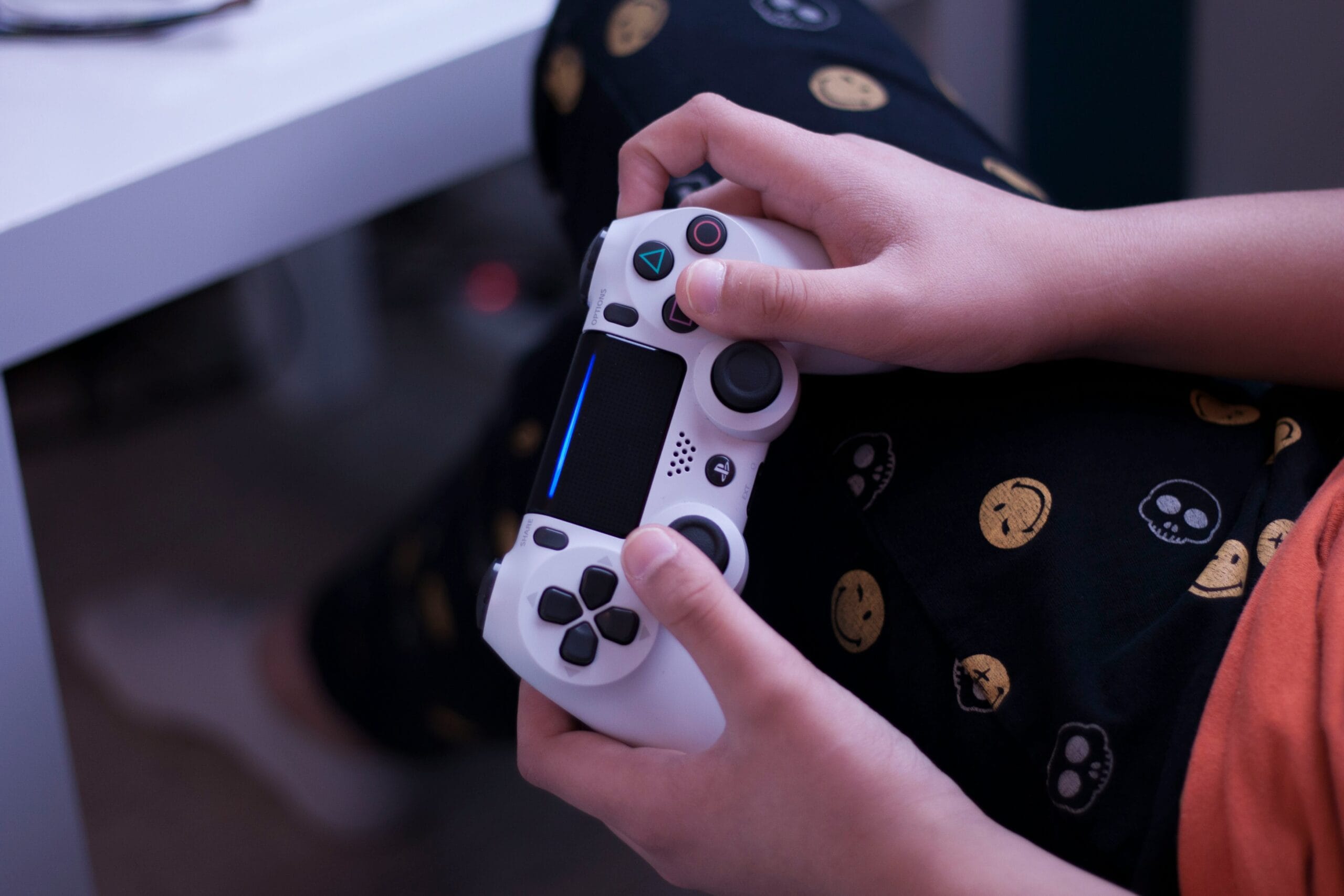
Photo by Mélanie THESE on Unsplash
From labs to living rooms (1970s-1990s)
The first online games ran on university networks: Maze War and Spasim in the early 1970s let a handful of researchers shoot at each other's wireframe avatars. The 1980s brought dial-up bulletin-board games and Multi-User Dungeons (MUDs) — text worlds where hundreds of people shared one persistent story, inventing guilds, raids and social norms that every MMO still uses. When home internet arrived in the 1990s, LAN parties and dial-up matches of Doom and Quake made multiplayer a weekend culture, and Ultima Online (1997) and EverQuest (1999) proved that thousands of strangers would pay monthly to live in the same virtual world.
Broadband changes everything (2000s)
Always-on connections moved gaming from an event to a habit. World of Warcraft (2004) turned the MMO mainstream with millions of subscribers; consoles joined in with Xbox Live's friends list and matchmaking, which quietly standardized the idea that your game has a social layer whether the campaign needs one or not. This is also when the modem-screech vocabulary died: latency, matchmaking rating and patch day became ordinary words.
Esports and the audience business (2010s)
Fast fiber plus streaming turned playing into watching. League of Legends, Dota 2 and Counter-Strike built professional circuits with prize pools in the tens of millions; Twitch made the spectator side bigger than the tournaments themselves. By the mid-2010s the global esports audience passed hundreds of millions of viewers — numbers that put it alongside traditional sports for the under-30 crowd — and a career path opened that had no 20th-century equivalent: the teenager earning more from streaming than their parents combined.
Mobile takes the majority (2010s-2026)
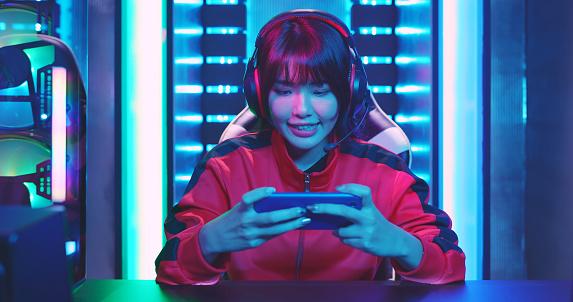
Smartphones did what no console cycle managed: they made gamers of everyone. Candy Crush, PUBG Mobile, Fortnite, Genshin Impact and Among Us blurred casual and core gaming into one market. Today mobile is the majority of the industry — most estimates put it at over half of global games revenue — and the industry crossed roughly $190 billion in annual spending. Cross-platform play finished the job: your phone, a console, and a PC can now share the same match, and the platform you play on matters less than whether your friends are online.
Two more shifts define the current era. Cloud gaming survived its false starts — Google Stadia shut down in 2023, while GeForce NOW and Xbox Cloud Gaming settled into a useful niche for people who don't want to own hardware. And Nintendo's Switch 2 (2025) showed hybrid handheld-play remains a mass-market draw rather than a gimmick.
The impact ledger
The good. Gaming is a primary social space for a generation — friendships, teamwork, even weddings begin in voice chat. The COVID-19 years made it the default third place when physical ones closed. Problem-solving, spatial reasoning and multilingual cooperation come bundled in the play. And the industry now employs millions: development, esports, streaming, content creation, and the tooling ecosystem around them.
The hard. Compulsive-play mechanics and predatory monetization (loot boxes, battle-pass FOMO) draw legitimate criticism; cyberbullying and toxicity remain unsolved at scale; and time displacement is real for a minority of players who need support rather than shame.
The regulatory era. Governments have moved from watching to acting. Belgium and the Netherlands restricted loot boxes years ago; and in India — one of the world's fastest-growing gaming markets — the Promotion and Regulation of Online Gaming Act, 2025 banned real-money online games outright while formally recognizing e-sports, wiping out a whole industry category overnight and pushing the sector toward ad-supported and esports models.
What's genuinely next
Three trends worth watching, stripped of hype:
- AI inside games. Machine learning already drives matchmaking and moderation; the 2025-26 debate is generative AI in development — studios see production speed, while players push back hard on what they read as slop content. Watch how that bargain settles.
- Portability everywhere. Handheld PCs (Steam Deck and its rivals) and cloud streaming keep eroding the desk-bound gaming PC's monopoly.
- Persistent social worlds. Fortnite's concerts, Roblox's creator economy and VRChat-style spaces are converging on the same idea: games as places you hang out, not just levels you finish. VR headsets remain a niche slice of play — impressive tech, modest adoption.
I've played online since the dial-up days, and the through-line is that the technology kept changing while the reason people showed up never did: playing something together beats playing alone.
Related reading
- 10 Must-Try Optimization Tricks for PC Gaming
- The Benefits and Excitement of Cloud Gaming Services
- The Most Common Gaming Mistakes and How to Avoid Them
Frequently asked questions
How many people play online games today?
Estimates cluster around three billion-plus players worldwide, with mobile devices accounting for the overwhelming majority of that number. Revenue tells the same story — roughly $190 billion a year, more than global box office and recorded music combined.
What was the first online game?
Maze War and Spasim, both from the early 1970s, are the usual answers — networked shooters that ran on expensive research hardware. The first persistent virtual worlds were MUDs in the late 1970s, the direct ancestors of today's MMOs.
Is esports bigger than traditional sports?
In audience, for younger demographics, it's competitive: hundreds of millions watch esports events, rivaling some traditional leagues. In money it's still far smaller — traditional sports' media and sponsorship economies dwarf esports revenue. The trajectory, not the present size, is the story.
Is online gaming bad for kids?
It depends on the game and the guardrails. Age-appropriate titles with muted chat and clear time limits are a healthy hobby that teaches teamwork; open-voice-chat games with predatory monetization deserve supervision. Parental controls on consoles and phones now cover playtime, spending and communication — using them is the difference.
Fifty years in, the constant is unchanged: the network just carries the living room to everyone you know.