

Duplicate files are the quiet space-killers on a Windows PC: the same PDF saved twice to Downloads, photos copied out of a camera folder and left in place, the "final_final_v2" document lineage. On my own machine a duplicate sweep regularly frees tens of gigabytes. The good news: Windows gives you enough tools to do this for free, and if you want it automated, dedicated finders do the whole job safely.
- Before you start
- Method 1: find and delete duplicates in File Explorer (manual, free)
- Method 2: list true duplicates with PowerShell (free, power users)
- Method 3: free duplicate finders (AllDup, dupeGuru)
- Method 4: Duplicate Files Fixer (paid, guided cleanup)
- After the cleanup
- FAQ
- Does Windows 10 have a built-in duplicate file finder?
- Is it safe to delete duplicate files automatically?
- Why do I keep getting duplicate files?
- How do I find duplicate photos specifically?
- Will deleting duplicates speed up my PC?
- Do these methods work on Windows 11?
- Related reading
This guide covers four ways — manual File Explorer cleanup, a free PowerShell method, free finder apps, and a paid tool that does everything in one click. They work the same on Windows 10 and Windows 11; if you're still on Windows 10, note it lost mainstream support in October 2025, so Windows 11 is the better long-term home.
Quick answer: Windows has no built-in duplicate finder, so either hunt copies manually in File Explorer (search, sort, compare, delete), list true duplicates for free with a PowerShell hash check, or scan with a dedicated tool — free ones like AllDup and dupeGuru, or Duplicate Files Fixer if you want guided one-click cleanup with a backup.
Before you start
Two habits save headaches: make sure important folders are backed up (File History or a cloud sync), and remember that anything you delete lands in the Recycle Bin first anyway — it only becomes permanent when you empty it. Also, never delete files inside `C:\Windows`, `Program Files`, or `PerfLogs` even if a scan flags them; those "duplicates" are usually components Windows needs.
Method 1: find and delete duplicates in File Explorer (manual, free)
File Explorer has no duplicate finder, but search plus sorting gets you most of the way for a known file type:
1. Press Win + E to open File Explorer and go to the folder you want to clean (say, Downloads or Pictures).
2. In the search box, type a name or extension — `.jpg`, `.pdf`, `invoice` — to list everything matching, including subfolders.
3. Switch the view to Large icons (View tab) so you can eyeball identical images, and open Details pane for info.
4. Sort by Name, then by Size — true duplicates cluster together with matching sizes.
5. Preview and compare; when you're sure, multi-select the copies (Ctrl+click), right-click → Delete.
This is fine for a targeted cleanup of one folder. For "find every duplicate on the drive," it's hours of clicking — use Method 2 or 3.
Method 2: list true duplicates with PowerShell (free, power users)
File names lie; file contents don't. PowerShell can hash every file in a folder tree and list only exact content matches — read-only, nothing gets deleted:
“`powershell
Get-ChildItem "C:\Users\you\Documents" -Recurse -File |
Get-FileHash -Algorithm SHA256 |
Group-Object Hash | Where-Object Count -gt 1 |
ForEach-Object { $_.Group | Select-Object -ExpandProperty Path }
“`
Swap the path for any folder (an external drive works too). You get a list of paths grouped by identical content — review it and delete what you don't need in Explorer. Hashing a huge drive takes a while, so run it per folder rather than across the whole disk.
Method 3: free duplicate finders (AllDup, dupeGuru)
If you want a proper scanner without paying, two free tools do the job well:
- AllDup (Windows, free): the most thorough free finder I've used — search by content, name, or date; preview images side by side; protect whole folders from deletion. The interface is dense but it rewards you.
- dupeGuru (Windows/Mac/Linux, open source): friendlier, with a "picture mode" that finds visually similar photos, not just byte-identical files.
Typical flow in either: pick the folder → scan → review results (never blind-trust auto-select) → move duplicates to the Recycle Bin. For more options in this category, WetheGeek maintains a roundup of duplicate finders worth skimming.
Method 4: Duplicate Files Fixer (paid, guided cleanup)
Duplicate Files Fixer (from Systweak) is the tool we originally recommended here, and it's still the polished option if you'd rather pay than fiddle: content-based matching (not just name/size), scans of internal drives, external disks and even Dropbox/Google Drive, folder exclusions, and an optional backup before deleting. If cleanup is overdue for slowing down a computer, this is the fast lane. The walkthrough:
1. Install Duplicate Files Fixer and open it. Choose your scan mode.
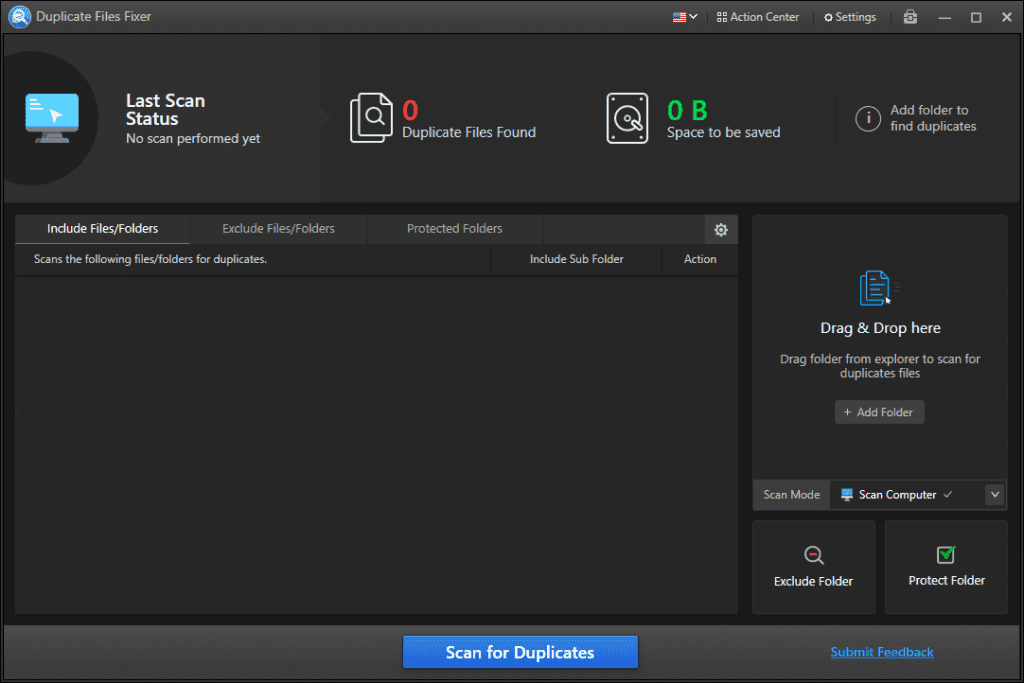

2. Select where to search — Computer, Dropbox, or Google Drive — or add a specific folder, then click Scan for Duplicates.
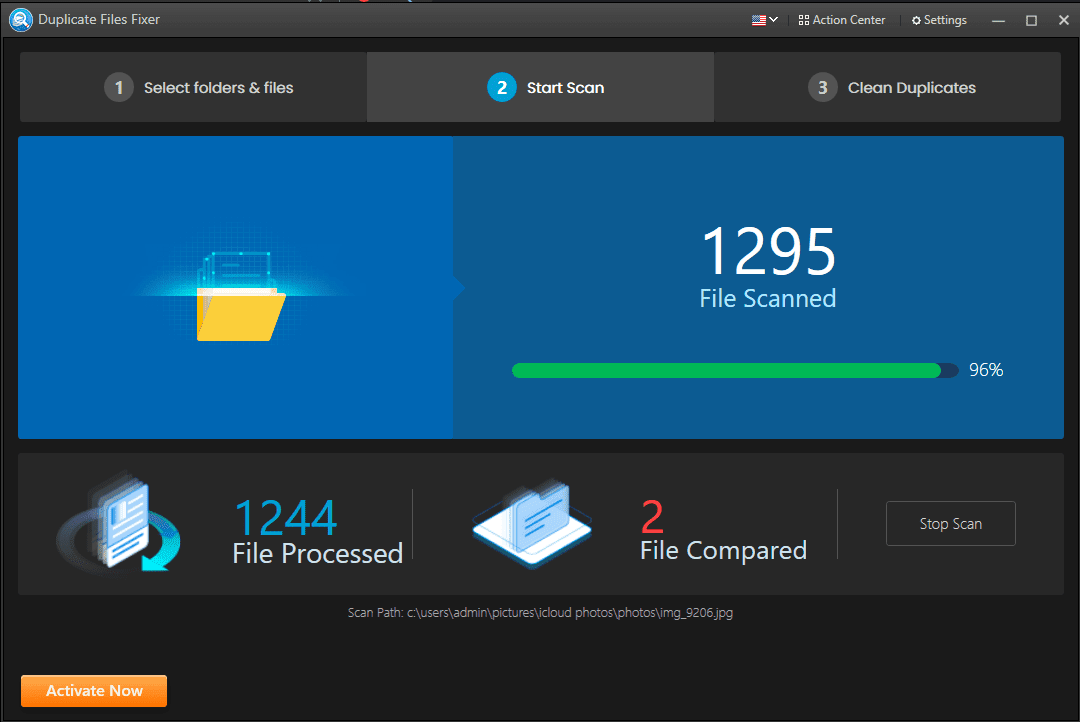

3. Wait for the scan to finish; results come back grouped by type.
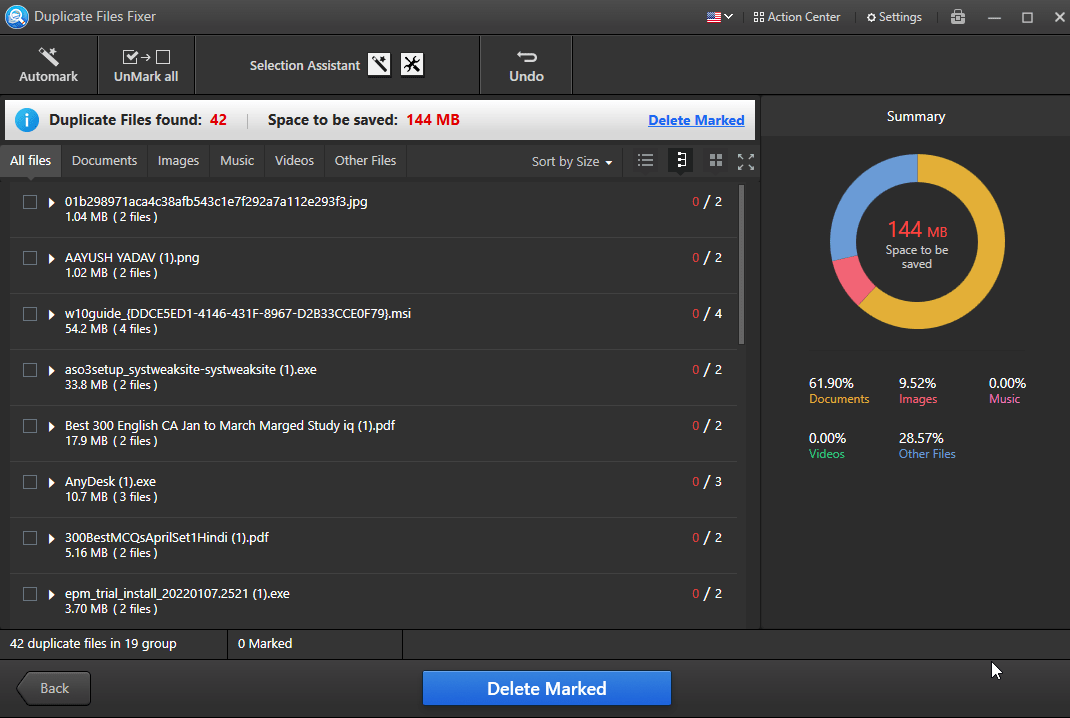

4. Double-click any group to preview the file in the right pane and confirm it really is a duplicate.
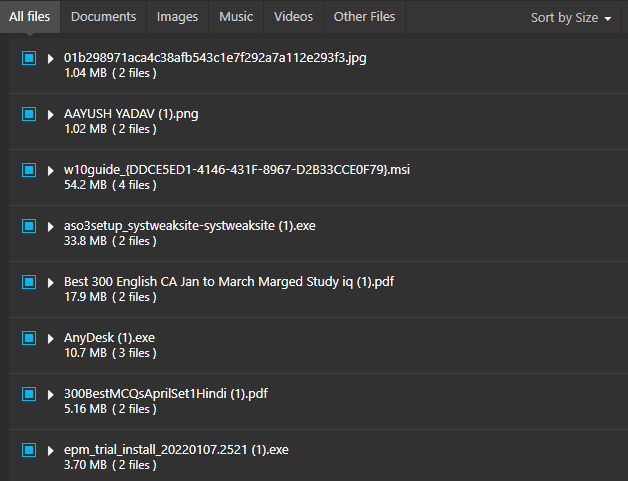

5. Mark duplicates manually, or use Automark to select them by rule — then let it create its backup if you enabled that option.
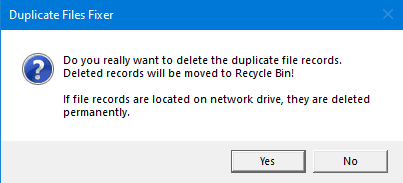

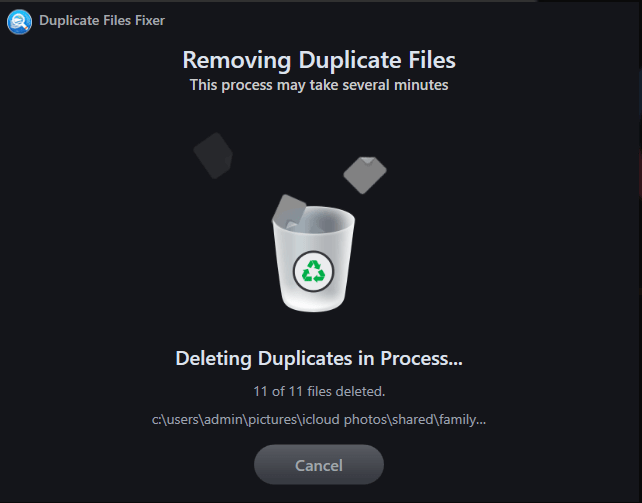
6. Click Delete Marked and confirm.

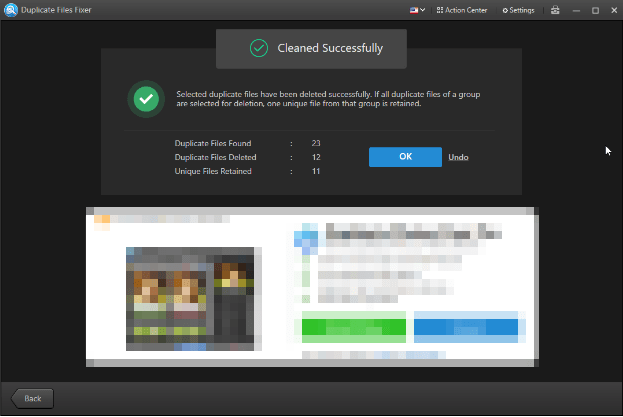
7. You'll get a summary of what was removed. Click Ok to return to results and continue cleaning other folders.

The paid license removes the free version's limits — check Systweak's pricing page for current terms, and use the trial on one folder first to see if you like the workflow.
After the cleanup
Empty the Recycle Bin to actually reclaim the space (right-click → Empty Recycle Bin), then run Storage Sense (Settings → System → Storage) to keep temp-file clutter from rebuilding. And fix the source: most duplicate floods come from re-downloading files and drag-copying photo folders — a little folder discipline prevents the next sweep.
FAQ
Does Windows 10 have a built-in duplicate file finder?
No. File Explorer can search and sort but can't detect identical content, and there's no duplicate-cleaner app bundled with Windows 10 or 11. The built-in routes are manual (Explorer search, Method 1) or the PowerShell hash trick (Method 2). For content-based scanning across a whole drive you need a third-party tool like AllDup, dupeGuru, or Duplicate Files Fixer.
Is it safe to delete duplicate files automatically?
Safe if the tool matches by content (hash or pixel data), not by name alone, and if you review the selection before deleting. Name-based matching can flag different files that share a name; review-first plus a backup option makes it a non-issue. Never let any tool touch Windows and Program Files folders.
Why do I keep getting duplicate files?
Three usual suspects: re-downloading files that are already in Downloads, syncing the same photos through more than one cloud service, and camera-import software that copies but doesn't mark originals. Also watch "copy-paste as backup" habits — a duplicate made on purpose today is the mystery clutter of next year.
How do I find duplicate photos specifically?
Use a finder with image modes: dupeGuru's picture mode and Duplicate Files Fixer both catch visually similar photos (burst shots, re-saves at different sizes), not just exact copies. AllDup handles exact-match images well. We have a separate guide to finding and removing duplicate files and photos on PC that goes deeper on the photo side.
Will deleting duplicates speed up my PC?
Indirectly. Duplicates mostly waste disk space; a nearly-full drive (above ~90%) does slow Windows down, so freeing 50 GB genuinely helps. But if your PC is slow with plenty of free space, duplicates aren't the cause — look at startup apps and storage health instead.
Do these methods work on Windows 11?
Yes, all four. File Explorer, PowerShell, and the tools behave the same on Windows 11. The method-1 interface names are identical, and Storage Sense is actually easier to reach (Settings → System → Storage). Windows 10 users should plan the move anyway, since it lost security updates in October 2025.
Related reading
- Find and remove duplicate files and photos on your PC
- How to find and remove duplicate videos and photos on Android
—
I've run duplicate sweeps on every Windows machine I've owned for years — if a scan result looks odd or you're unsure whether a file is safe to delete, describe it in the comments before you hit delete.