


If you or a family member is facing knee or shoulder surgery, a CPM machine may end up on the recovery shopping list — a motorized brace that slowly bends and straightens the joint for hours while the patient lies still. Some surgeons swear by them, some have stopped prescribing them, and the research sits somewhere in between. Here's what CPM machines do, what the evidence actually supports in 2026, and how to use one well if yours prescribes it.
Quick Answer: A continuous passive motion machine gently moves a joint (usually the knee) through a set range of motion without the patient using their muscles — typically after knee replacement, ACL or cartilage surgery. Evidence is mixed on routine use, but surgeons still prescribe it for stiffness prevention and early-range-of-motion recovery. Always treat it as a complement to physical therapy, never a substitute.
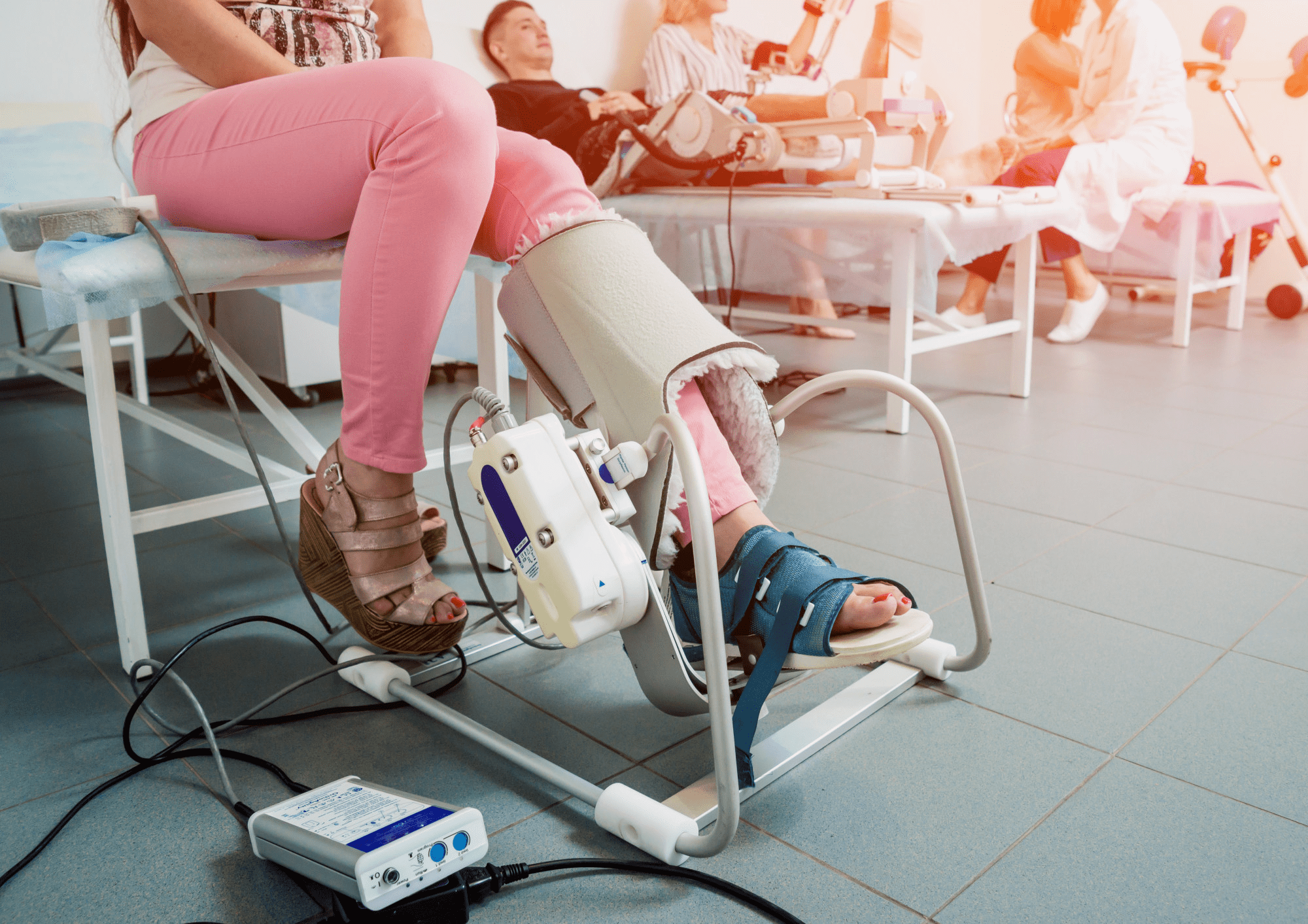

What a CPM Machine Is
A CPM device is a motorized splint — for knees, an adjustable cradle that repeatedly flexes and extends the leg through a programmed arc of motion, for example from 25° to 60°, increasing as tolerated. "Passive" is the key word: the machine does the moving, so the patient's muscles stay relaxed while the joint cycles. Sessions typically run a few hours a day in short blocks, starting within days of surgery.
The machines are prescribed, not bought off a shelf: settings — range, speed, daily duration — come from the surgeon's post-operative protocol, often adjustable at follow-up visits as the joint tolerates more.
What It's Used For
CPM machines appear most often after:
- Total knee replacement (TKR) — historically the classic use case
- ACL reconstruction and other ligament repairs
- Articular cartilage procedures (microfracture, chondrocyte implantation), where continuous motion is theorized to help cartilage nutrition
- Arthrolysis and manipulation under anesthesia — surgically freeing a stiff joint, where maintaining hard-won motion is the whole battle
- Selected shoulder and elbow procedures
After a knee replacement specifically, the recovery goal everyone chases is regaining straight-leg extension and flexion before scar tissue locks in — roughly 90% of TKR patients report good long-term outcomes, and managing early stiffness is part of getting there.
What the Evidence Says — Honestly
The cheerful version of CPM's benefits is real but conditional: early motion can ease stiffness, limit scar-tissue adhesions, maintain range of motion and support circulation. The complicating fact is that modern research — including systematic reviews of CPM after total knee replacement — has found that adding CPM to standard physical therapy shows little measurable extra benefit for most routine knee-replacement patients, which is why routine use has declined in many hospitals.
Where surgeons still see a role: patients at high risk of stiffness, cartilage-restoration procedures, and post-stiffness release surgery — cases where keeping the joint moving around the clock genuinely matters and early therapy sessions alone can't cover it. The takeaway for patients isn't "CPM is useless"; it's "CPM is a case-by-case tool." If your surgeon prescribes one, there's a reason; if they've stopped short of it, that's equally deliberate.
Using One Well: Practical Points
- Follow the prescription, not the manual. Range and duration settings come from your surgical team — cranking the dial ahead of schedule is how injuries happen.
- Pair it with PT, always. CPM maintains motion; active physical therapy builds strength and function. Machines don't replace the therapist.
- Manage swelling underneath. Ice and elevation around sessions; CPM on a hot, swollen joint is miserable and counterproductive.
- Skin and positioning care. The limb rests in the machine for hours — reposition padding, watch pressure points, and keep incision sites clean per your discharge instructions.
- Rent, don't buy. Most patients need the machine for 1–3 weeks. Medical-equipment suppliers rent CPM machines monthly — OrthoPro USA is one example of a rental provider — and many deliver and set up at home. Insurance coverage varies: it may be included under durable medical equipment with prior authorization, so ask before the surgery date, not after.
Who Shouldn't Rely on One
CPM isn't for every situation, and self-prescribing is a bad idea: unstable or unhealed fractures, certain infection concerns, deep-vein-thrombosis risk factors, and some skin conditions change the calculus — which is precisely why the machine is a prescription device. Your physiotherapist and surgeon weigh these before it lands in your living room.
Frequently Asked Questions
What does a CPM machine actually do?
It moves a joint through a controlled, programmable range of motion without the patient's muscles doing any work — typically flexing and extending a knee for prescribed hours each day in the first weeks after surgery.
Do CPM machines really speed up recovery?
The honest answer: for most routine knee replacements, studies show little extra benefit over good physical therapy alone. They retain clear value for specific cases — stiffness-prone patients, cartilage procedures, post-release surgery — where maintaining early motion is critical. Your surgeon's prescription reflects which group you're in.
How many hours a day should you use a CPM machine?
Protocols vary widely — historically 4–8 hours daily in blocks, modern ones often less. Use exactly the schedule your surgical team gives you; more is not better.
How much does it cost to rent a CPM machine?
Rentals commonly run in the low hundreds of dollars per month depending on the device and region, with insurance sometimes covering it as durable medical equipment with prior authorization. Ask the supplier and your insurer for the specific number before surgery.
Can you sleep with a CPM machine running?
Generally no — overnight unsupervised use isn't standard protocol, and most prescriptions specify waking-hours blocks. If your team does prescribe night use, they'll say so explicitly; otherwise treat the machine as a daytime therapy tool.
Related reading:
- Wearable Wellness Patches: The Future of Health Tracking
- How User-Focused Fitness Apps Rewire Daily Behavior
This article is general information, not medical advice — your surgeon and physiotherapist's protocol always wins. Has a CPM machine been part of a recovery you've been through? Tell us in the comments.







![Import PST to Zoho Account Directly [Best Approach!]](https://techbii.com/wp-content/uploads/2025/02/https-lh7-rt-googleusercontent-com-docsz-ad_4nxd-330x220.png)