

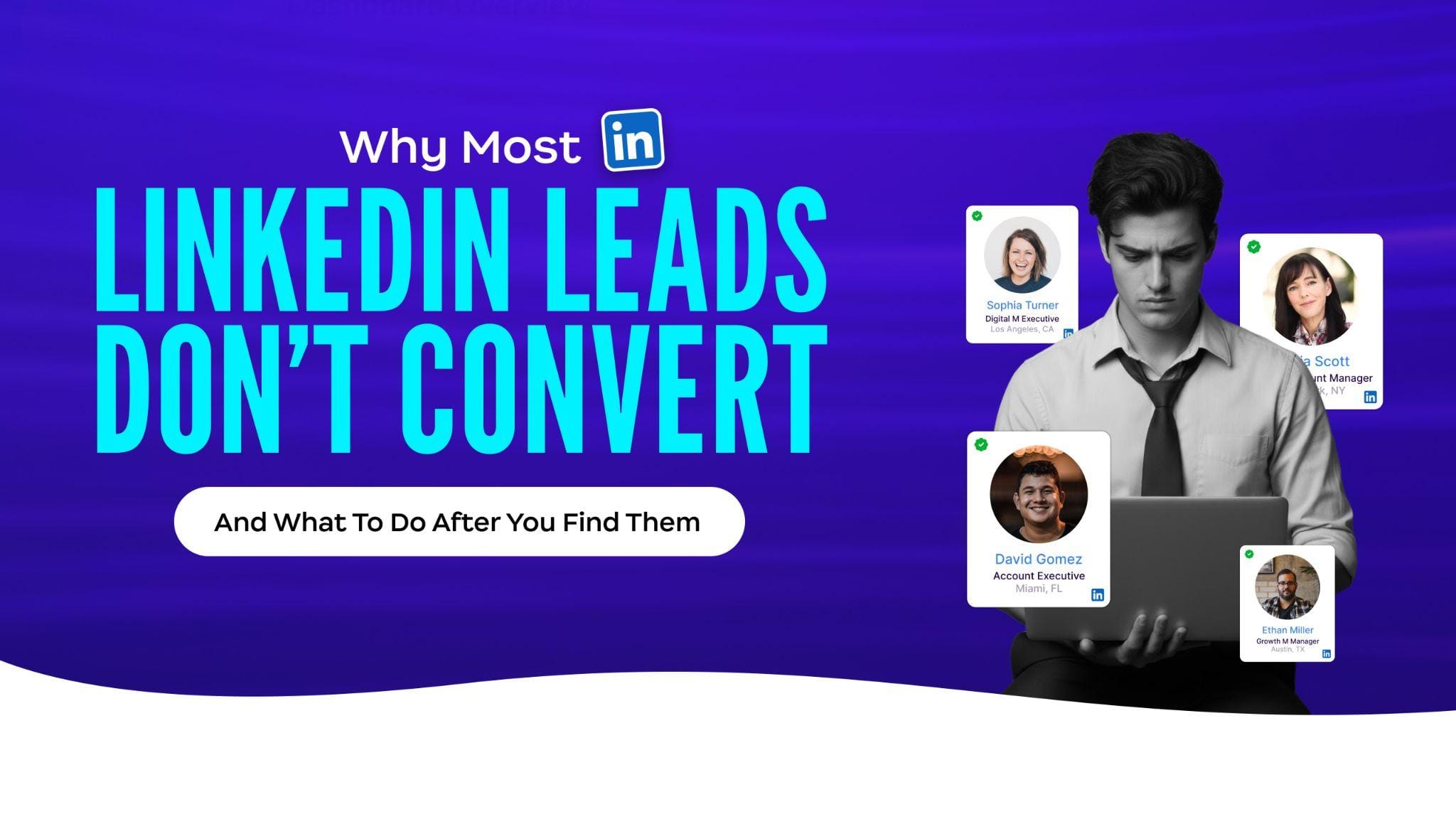
LinkedIn has become the default starting point for B2B prospecting. Sales teams spend hours optimizing profiles, sending connection requests, and building lead lists. On paper, everything looks right: steady inbound interest, profile views, and new connections.
- The Real Conversion Gap in LinkedIn Prospecting
- Why Most LinkedIn Leads Fail to Convert
- What to Do After You Find a LinkedIn Lead
- Turning Raw Leads Into Sales-Ready Conversations
- 1. Build Context Before Contact
- 2. Personalization That Goes Beyond First Names
- 3. Design Follow-Ups as Value Touches
- Where LinkedIn and AI Work Best Together
- Common Mistakes to Avoid
- Leads Don’t Convert — Conversations Do
Yet when it comes to actual conversions, replies, meetings, and pipeline, most LinkedIn leads quietly go cold.
The problem isn’t LinkedIn. It’s what happens after the lead is found.
The Real Conversion Gap in LinkedIn Prospecting
Many teams assume that once they generate B2B leads on LinkedIn, conversions will follow naturally. In reality, lead generation and lead conversion are two very different skills.
LinkedIn is excellent at discovery:
- Identifying relevant roles
- Filtering by industry, company size, and seniority
- Surfacing people who might be a fit
What it doesn’t solve is intent, context, or timing.
According to LinkedIn’s own research, most buyers are not actively looking to purchase when first contacted. That means your job isn’t to pitch; it’s to stay relevant until the timing is right.
Why Most LinkedIn Leads Fail to Convert
1. Leads Are Collected, Not Understood
Many prospecting workflows stop at exporting a list:
- Name
- Job title
- Company
- LinkedIn URL
What’s missing is understanding why this person should care.
Without context — recent activity, business priorities, or challenges — outreach becomes generic. And generic messages are easy to ignore.
HubSpot research shows that buyers are far more likely to engage when outreach reflects their current situation rather than a broad value proposition.
2. Messaging Feels Premature
A common mistake is jumping straight from connection to pitch.
LinkedIn leads often:
- Haven’t shown buying intent
- Don’t know your brand
- Haven’t acknowledged a problem yet
When the first message sounds like a sales email, trust breaks instantly.
This is why connection acceptance rates don’t correlate with reply rates.
3. No Follow-Up System Exists
Most leads don’t convert on the first message — or the second.
But many teams:
- Send one follow-up
- Forget the lead
- Move on to the next list
Without a structured follow-up process, even interested prospects slip away.
What to Do After You Find a LinkedIn Lead
The moment a lead is identified is where real prospecting should begin — not end.
Shift From “Outreach” to “Preparation”
Before sending a single message, teams should focus on:
- Understanding the prospect’s role and responsibilities
- Identifying signals (posts, comments, company updates)
- Framing outreach around relevance, not features
This is where many modern teams now use ChatGPT for sales prospecting — not to send automated messages, but to accelerate research, summarize context, and shape better first-touch communication.
Instead of replacing thinking, it supports it.\
Turning Raw Leads Into Sales-Ready Conversations
1. Build Context Before Contact
Strong outreach starts with clarity:
- What problem might this person care about?
- Why now?
- What makes this message worth replying to?
Using structured prompts, ChatGPT can help:
- Summarize a prospect’s company positioning
- Translate industry language into clear talking points
- Draft first messages that sound human, not templated
This reduces preparation time without sacrificing quality.
2. Personalization That Goes Beyond First Names
True personalization isn’t inserting a job title — it’s relevant.
Examples of high-signal personalization:
- Referencing a recent company announcement
- Acknowledging a known challenge in their industry
- Connecting your message to a shared business outcome
3. Design Follow-Ups as Value Touches
Instead of “Just following up,” effective follow-ups:
- Add insight
- Share a relevant observation
- Reframe the problem differently
ChatGPT can assist in generating alternative follow-up angles while keeping tone consistent and non-pushy.
Where LinkedIn and AI Work Best Together
LinkedIn excels at who to contact.
AI helps clarify how and when to engage.
A modern prospecting system looks like this:
- Identify and qualify leads on LinkedIn
- Research context and intent signals
- Craft thoughtful, relevant outreach
- Follow up with structure and purpose
When teams combine LinkedIn sourcing with AI-assisted preparation, conversion rates improve not because of automation, but because conversations get better.
For broader perspectives on how technology and digital platforms influence business outreach and growth.
Common Mistakes to Avoid
- Treating LinkedIn leads as “ready to buy”
- Sending identical messages to different roles
- Relying on automation without strategy
- Giving up after one unanswered follow-up
Each of these creates friction that quietly kills conversions.
Leads Don’t Convert — Conversations Do
Most LinkedIn leads don’t convert because teams confuse access with readiness.
Finding leads is only the first step. What matters is what you do next:
- How well you understand the person
- How relevant your message feels
- How consistently you follow up with value
When LinkedIn lead generation is paired with thoughtful preparation and smarter prospecting workflows, conversations start to happen — and conversions follow.
The gap isn’t effort.
Its execution.