

Understanding human behavior is one of the most important aspects of personal and professional success. Whether in the workplace, leadership roles, or everyday interactions, knowing how people think, communicate, and respond to situations can significantly improve relationships and productivity. This is why many organizations and individuals turn to the DISC Profile Test as a practical tool for gaining valuable insights into personality styles and behavioral tendencies.
- Understanding the DISC Profile Test
- The Four DISC Personality Styles
- How Does the DISC Profile Test Work?
- Why Organizations Use the DISC Profile Test
- Improving Communication
- Strengthening Team Collaboration
- Enhancing Leadership Development
- Supporting Conflict Resolution
- Benefits of Taking a DISC Profile Test
- Increased Self-Awareness
- Better Communication Skills
- Improved Team Performance
- Enhanced Leadership Effectiveness
- Greater Workplace Engagement
- Is the DISC Profile Test Accurate?
- How to Use DISC Results Effectively
- DISC Profile Test vs Other Personality Assessments
- Conclusion
A DISC Profile Test is a behavioral assessment that measures four personality styles—Dominance, Influence, Steadiness, and Conscientiousness—to help individuals understand communication, leadership, and workplace behaviors.
The DISC Profile Test is one of the most widely used personality assessments in the world. It helps individuals understand their strengths, communication preferences, work habits, and interactions with others. Businesses use it for leadership development, team building, employee engagement, and improving workplace communication. But what exactly is the DISC Profile Test, and how does it work? Let’s explore.
Understanding the DISC Profile Test
The DISC Profile Test is a behavioral assessment based on the DISC theory developed from the work of psychologist William Moulton Marston. Rather than measuring intelligence, skills, or qualifications, the assessment focuses on observable behaviors and personality traits.
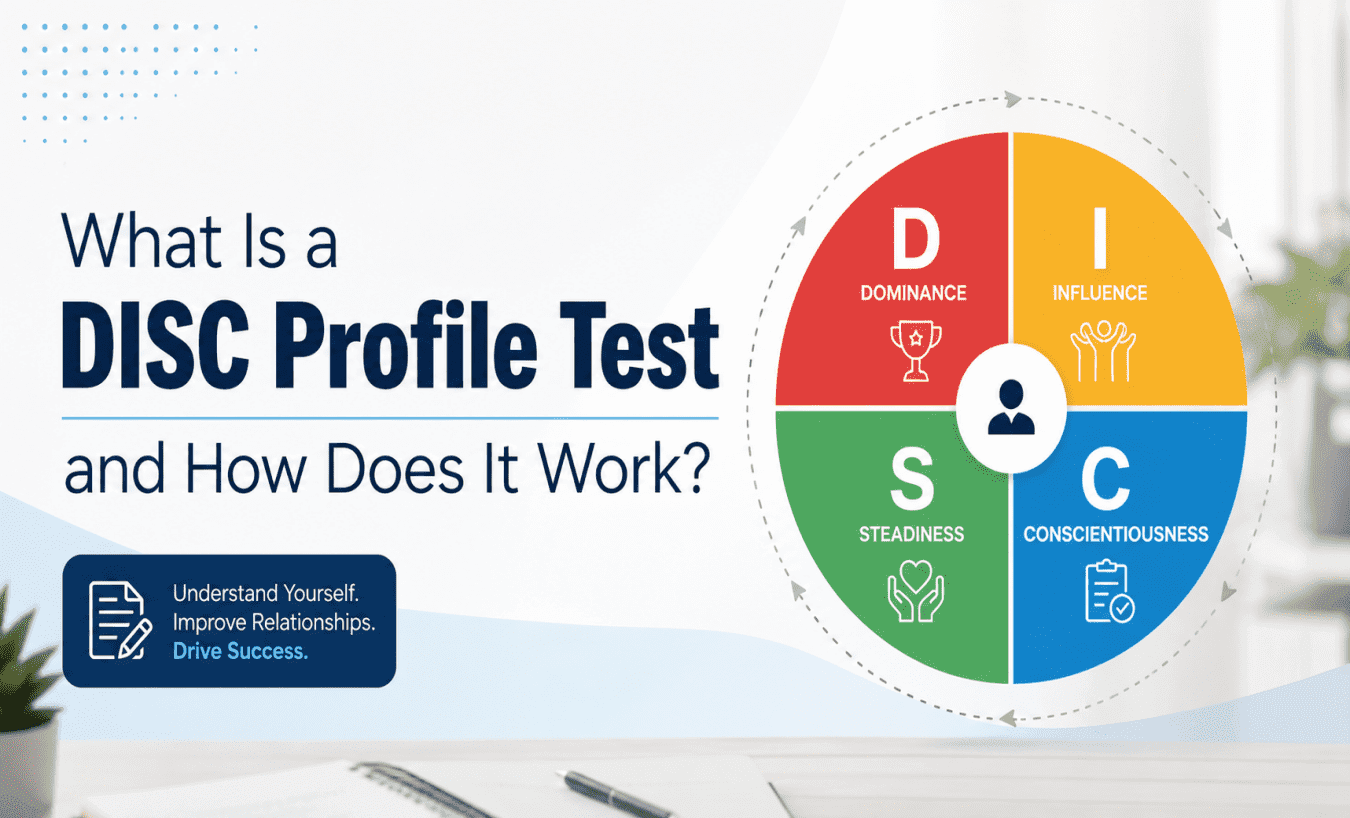
The word DISC represents four primary behavioral styles:
D – Dominance
I – Influence
S – Steadiness
C – Conscientiousness
Every individual possesses a combination of these four styles, although some traits are typically more dominant than others. The assessment identifies these tendencies and provides a detailed report explaining how they influence communication, decision-making, teamwork, and leadership.
Unlike many personality tests that place people into rigid categories, the DISC Profile Test recognizes that personality exists on a spectrum. Most individuals display a blend of multiple DISC styles, creating a unique behavioral profile.
The Four DISC Personality Styles
To understand how the DISC Profile Test works, it’s important to become familiar with the four personality dimensions it measures.

1. Dominance (D)
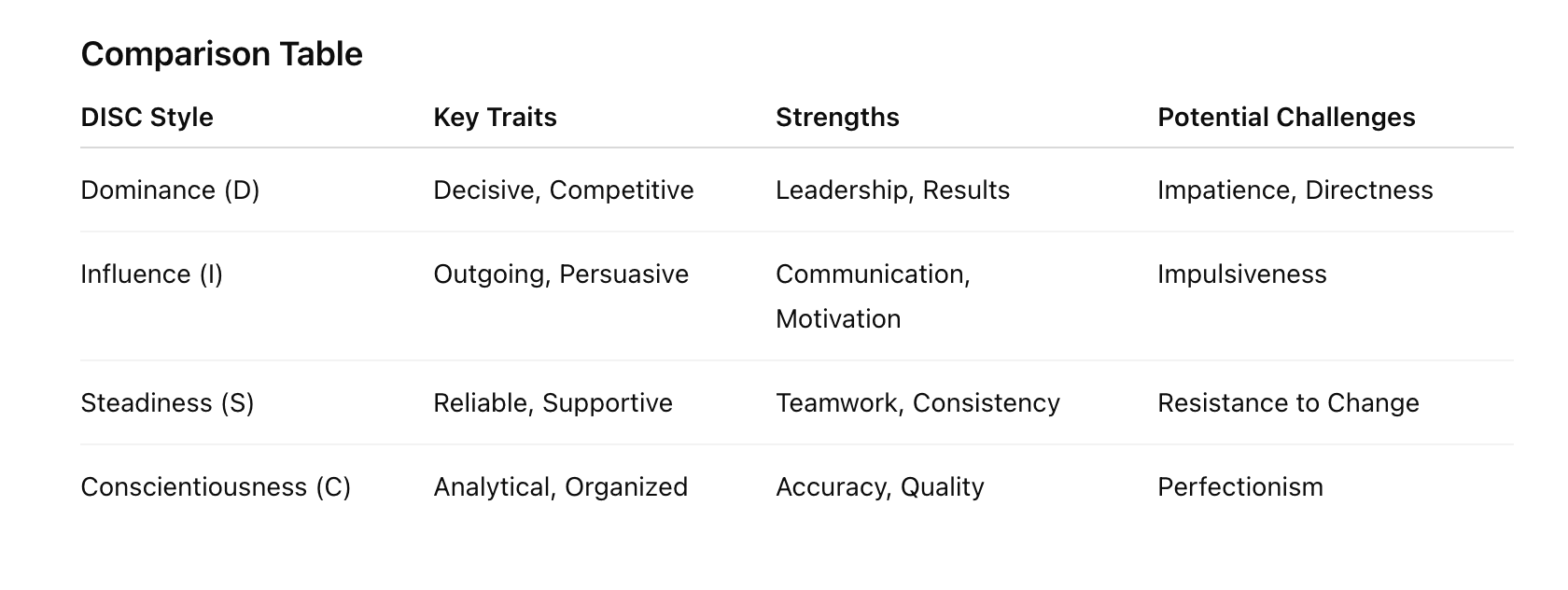
People with a high Dominance style tend to be:
- Goal-oriented
- Decisive
- Competitive
- Confident
- Results-driven
They enjoy challenges and often take charge in situations that require leadership and quick decision-making. However, they may sometimes come across as impatient or overly direct.
2. Influence (I)
Individuals with a strong Influence style are often:
- Enthusiastic
- Outgoing
- Optimistic
- Persuasive
- Relationship-focused
They enjoy interacting with people and are typically skilled at motivating others. Their positive energy often makes them effective communicators and team builders.
3. Steadiness (S)
People who score highly in Steadiness are generally:
- Reliable
- Patient
- Supportive
- Cooperative
- Consistent
They value stability and teamwork and are often the individuals who help maintain harmony within a group. They prefer predictable environments and strong interpersonal relationships.
4. Conscientiousness (C)
Those with a dominant Conscientiousness style are usually:
- Analytical
- Detail-oriented
- Organized
- Accurate
- Logical
They prioritize quality and precision, often excelling in roles that require careful planning and problem-solving.
Each DISC style contributes unique strengths and perspectives that can benefit teams and organizations.
How Does the DISC Profile Test Work?
The DISC Profile Test typically consists of a series of questions designed to evaluate behavioral preferences. Participants are asked to select statements that best describe how they usually behave in different situations.
The assessment focuses on factors such as:
- Communication style
- Decision-making preferences
- Work habits
- Problem-solving approaches
- Response to challenges
- Interpersonal interactions
After completing the questionnaire, participants receive a personalized report outlining their DISC style and behavioral tendencies.
The results often include:
- Primary DISC style
- Secondary personality traits
- Communication preferences
- Strengths and potential challenges
- Workplace behavior insights
- Leadership tendencies
- Recommendations for personal development
These reports provide practical information that individuals can apply immediately in both professional and personal settings.
Why Organizations Use the DISC Profile Test
Businesses across various industries use the DISC Profile Test because it provides actionable insights into employee behavior and workplace dynamics.
Improving Communication
Communication issues are among the most common causes of workplace misunderstandings. Employees often communicate based on their own preferences without realizing that others may process information differently.
The DISC Profile Test helps individuals understand how their communication style affects others. By learning how colleagues prefer to receive information, employees can adapt their approach and improve workplace interactions.
Strengthening Team Collaboration
Every team includes individuals with different strengths, personalities, and working styles. While diversity can enhance creativity and problem-solving, it can also create misunderstandings if team members do not understand one another.
DISC assessments help teams appreciate behavioral differences and leverage individual strengths. This understanding promotes cooperation, trust, and more effective collaboration.
Enhancing Leadership Development
Successful leaders understand that managing people requires flexibility and self-awareness. The DISC Profile Test helps leaders recognize their own behavioral tendencies while learning how to motivate and communicate with diverse team members.
This knowledge allows leaders to adapt their management style and build stronger relationships with employees.
Supporting Conflict Resolution
Conflict often occurs when people misunderstand each other’s intentions or communication styles. DISC insights help individuals recognize these differences and approach disagreements more constructively.
As a result, teams can resolve conflicts more efficiently and maintain healthier working relationships.
Benefits of Taking a DISC Profile Test
The DISC Profile Test offers numerous benefits for both individuals and organizations.
Increased Self-Awareness
The assessment helps individuals gain a deeper understanding of their natural behaviors, strengths, and areas for improvement.
Better Communication Skills
Participants learn how to communicate more effectively with different personality types, improving both workplace and personal relationships.
Improved Team Performance
When team members understand each other’s behavioral styles, collaboration becomes more efficient and productive.
Enhanced Leadership Effectiveness
Leaders can use DISC insights to motivate employees, delegate responsibilities effectively, and create positive work environments.
Greater Workplace Engagement
Employees who feel understood and valued are often more engaged, motivated, and committed to organizational success.
Is the DISC Profile Test Accurate?
The effectiveness of the DISC Profile Test depends on how honestly participants answer the assessment questions. Since the test measures behavioral preferences rather than abilities or intelligence, there are no right or wrong answers.
When completed accurately, the assessment provides meaningful insights into how individuals typically behave and interact with others.
However, it is important to remember that DISC is not designed to predict job performance or determine a person’s potential. Instead, it serves as a tool for understanding behavior, communication, and workplace dynamics.
Organizations often use DISC alongside other development and assessment tools to gain a more comprehensive understanding of employees and teams.
How to Use DISC Results Effectively
Taking the DISC Profile Test is only the first step. The true value comes from applying the insights gained from the assessment.
Individuals can use their results to:
- Improve communication skills
- Develop leadership abilities
- Strengthen professional relationships
- Increase emotional intelligence
- Enhance teamwork and collaboration
Organizations can use DISC insights to:
- Build stronger teams
- Improve employee engagement
- Develop future leaders
- Enhance workplace culture
- Support professional development initiatives
The more actively people apply DISC principles, the greater the long-term benefits.
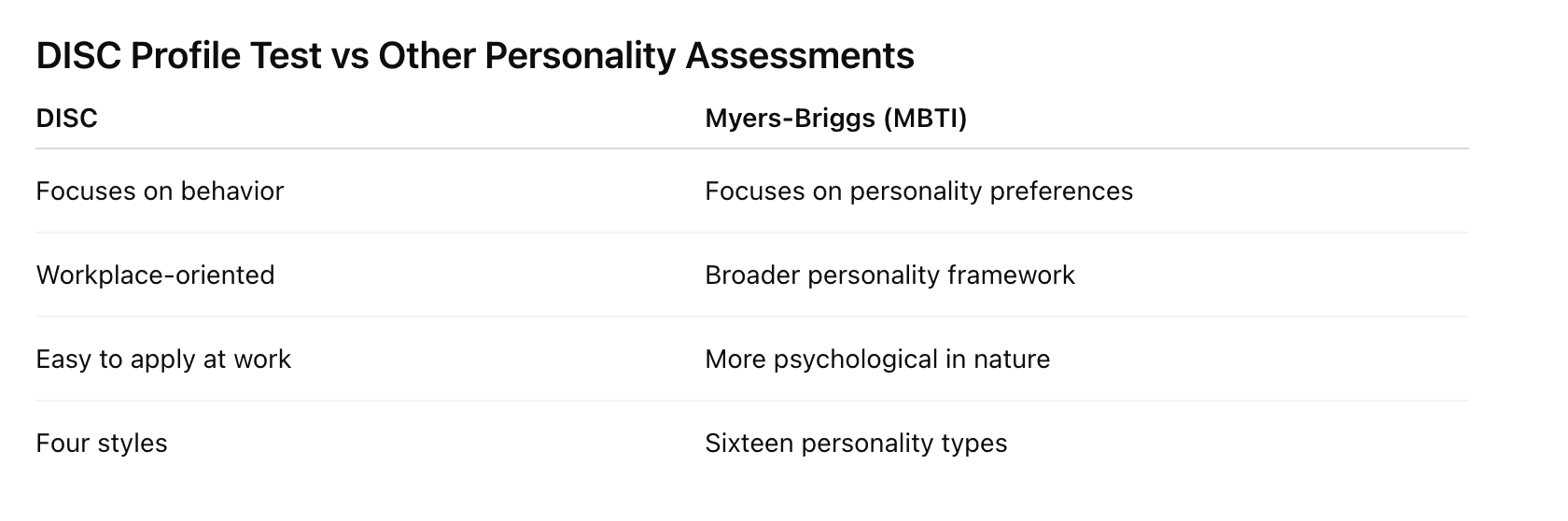
DISC Profile Test vs Other Personality Assessments

Conclusion
The DISC Profile Test is a powerful behavioral assessment that helps individuals and organizations better understand personality styles, communication preferences, and workplace behaviors. By identifying patterns related to Dominance, Influence, Steadiness, and Conscientiousness, the assessment provides valuable insights that can improve teamwork, leadership, communication, and personal development.
Whether you’re a business leader looking to strengthen your team, an HR professional focused on employee engagement, or an individual seeking greater self-awareness, the DISC Profile Test offers practical tools for building stronger relationships and achieving greater success. In today’s collaborative workplace, understanding people is often the key to unlocking performance, and DISC provides a proven framework for doing exactly that.