

Are you aware that users close the website just by looking at the poor website condition? It happens when your website doesn’t look as innovative and creative as they expected it to be. A good-looking website is more than just a pretty face, or at least it should be. Your site should be created to boost brand loyalty, build trust, and drive conversions.
- Top 10 Key Features for an e-commerce website
- 1. Responsive Design
- 2. Quick Loading Times
- 3. Intuitive Design
- 4. Appealing aesthetics
- 5. Comprehensive Product Sections
- 6. Secure Payment Gateways
- 7. Clear calls to action (CTAs)
- 8. Personalization
- 9. Search Engine Optimization
- 10. Data-driven Design
- Step-by-Step Guide To Find The Best Agency For E-commerce Website Development
- Step 1: Define Goals and Requirements
- Step 2: Research Potential Agencies
- Step 3: Assess their expertise and portfolio
- Step 4: Check Reviews and Feedback
- Step 5: Assess Their Process and Communication
- Step 6: Compare Proposals and Pricing
- Step 7: Discuss Post-Launch Support
- Step 8: Avoid Red Flags
- Conclusion
Pretty websites are always surrounded by a lot of traffic, which affects lots of conversion rates and builds trust in users’ minds. Businesses that invest in high-performing eCommerce websites engage customers more effectively and streamline the buyers’ journeys.
For small startups that have been looking for digital success, the challenge is even bigger. These companies need websites that manage their store like inventory management platforms, customer relationship tools, order tracking, and secure payment systems.
For successful e-commerce website development, you need the right web design partner and expert e-commerce web designers; you risk investing in a design that looks good but fails to deliver. Are you looking for an e-commerce website development expert? Don’t just wait to hire the best e-commerce developers, who specialize in secure, compliant solutions that protect your customers and businesses.
Top 10 Key Features for an e-commerce website
Before moving to find the best e-commerce development agency, first know the prioritized features that deliver results for enterprises.
1. Responsive Design
According to a data research web design survey, over a million respondents said lack of responsiveness was their top reason for leaving a website. Responsive design improves accessibility and traffic across multiple browsers and devices, including desktops, mobile devices, and tablets.
2. Quick Loading Times
Optimizing lots of images, code, and server performance can significantly affect loading times. So, for boosting online sales, it’s important to prioritize speed and quicker loading times.
3. Intuitive Design
Clear menus, structured categories, a chat support system, and a robust search function all simplify the shopping feature and the gratifying journey of the shopping experience for users. Be more focused on designing it for mobile devices.
4. Appealing aesthetics
A creative website design, with high-quality images, an on-trend layout, and consistently upgrading brand design will bring more engaging users.
5. Comprehensive Product Sections
Detailed descriptions about the product, customer reviews, and clear product images support customers in making informed purchase decisions.
6. Secure Payment Gateways
Whether you’re owning a small startup or thinking of redesigning the website, ensure to integrate secure payment options into the purchase journey, which helps in building customer trust.
7. Clear calls to action (CTAs)
CTAs are crucial add-on buttons, which encourage more conversions. Almost 75% of websites don’t include CTA buttons, such as Buy Now and Add to cart.
8. Personalization
AI-enhanced technologies and design can help tailor the shopping experience by analyzing user behaviour, preferences, and real-time interactions.
9. Search Engine Optimization
SEO should be your number 1 online market priority. Using keyword-rich content, meta tags, and structured URLs improves search engine rankings, discoverability, and organic traffic.
10. Data-driven Design
Identifying parts of the user journey that are causing problems, drop-offs offs or reduced website traffic can reduce friction and improve creative performance and UX.
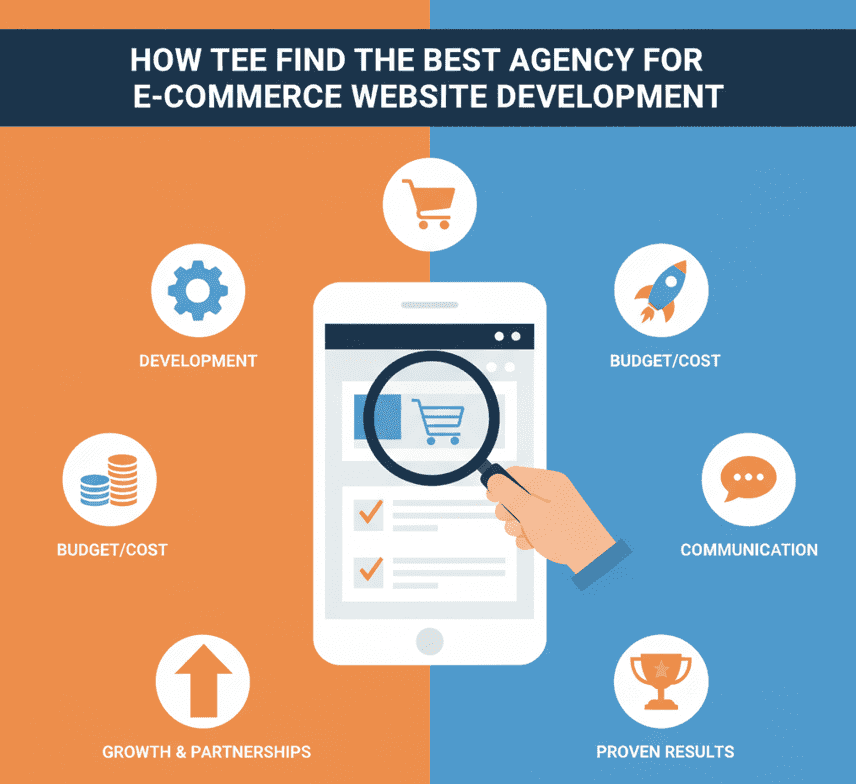
Step-by-Step Guide To Find The Best Agency For E-commerce Website Development
Starting an e-commerce company is one of the most thrilling and demanding things you can do. Your site is not merely an online store; it’s your digital headquarters, sales machine, and first impression all combined. That’s why selecting the optimum agency for e-commerce website design is a key move towards lasting success.
But with so many hundreds of agencies saying they’re the best, how do you differentiate the experts from the rest? Here’s a step-by-step guide to assist you in finding the ideal partner for your e-commerce project.
Step 1: Define Goals and Requirements
First and foremost, understand your needs, vision, and objectives in depth, then research different agencies; be crystal clear about your needs: for example, what platform you want to use-Shopify, Woocommerce, Magento, Bigcommerce, or custom-developed; what features are most critical; what’s the budget and timeline; do you want to have ongoing maintenance, SEO, or marketing services after launching?
Clearing your mind would make it easy to construct a plan of action for your website creation, and it will also be useful in long-term success.
Step 2: Research Potential Agencies
Begin with a strategic search, seek specialized e-commerce agencies, browse through platform directories and trusted review sites, and make it a point to ask referrals from entrepreneurs or LinkedIn connections who have had a successful e-commerce store launch.
Step 3: Assess their expertise and portfolio
Experience matters, especially in e-commerce.
- Start reviewing their profiles. Are they fast, mobile optimized, and conversion-focused?
- Do they share measurable results like sales growth or improved user engagement
- Does their design style align with your brand identity
- Check if they use modern technologies like headless commerce, such as React or Next.js, for advanced setups.
Step 4: Check Reviews and Feedback
Good reviews show the level of agency, which reveals more than glossy portfolios:
- Read verified reviews on Google or Trustpilot
- Ask agencies for references from past clients and connect with them directly
- Pay attention to feedback about communication, reliability, and post-launch support
Step 5: Assess Their Process and Communication
It is important to have transparency in communication with your team, which clearly outlines the in-depth understanding of your project, aligning with modern technologies.
Step 6: Compare Proposals and Pricing
When you are comparing, compare with the outcome, not just price. Ensure the proposal includes a detailed scope of work, timeline, and deliverables, and confirm that you own the website code and content after the competition.
Step 7: Discuss Post-Launch Support
An excellent website always comes with looking after the launch in the market, which means you continuously keep upgrading the features and functions according to modern technologies, and you can also resolve the weak points in a minimum time, which also avoids websites from cyberattacks and fraud.
Step 8: Avoid Red Flags
Do avoid red flags, because it’s a great investment you’re putting into time and money. Avoid agencies that promise unrealistic results or guaranteed sales, have unclear communication or vague contracts, or refuse to discuss timelines or budgets upfront.
Because a trustworthy agency will be more honest about what’s possible, even if it’s not what you want to hear.
Conclusion
Looking for the best agency for e-commerce website development isn’t always about looking for beautiful and creative portfolios; it’s all about choosing the right and strategic partner who clearly understands your objectives and vision for offering long-term growth and success.