

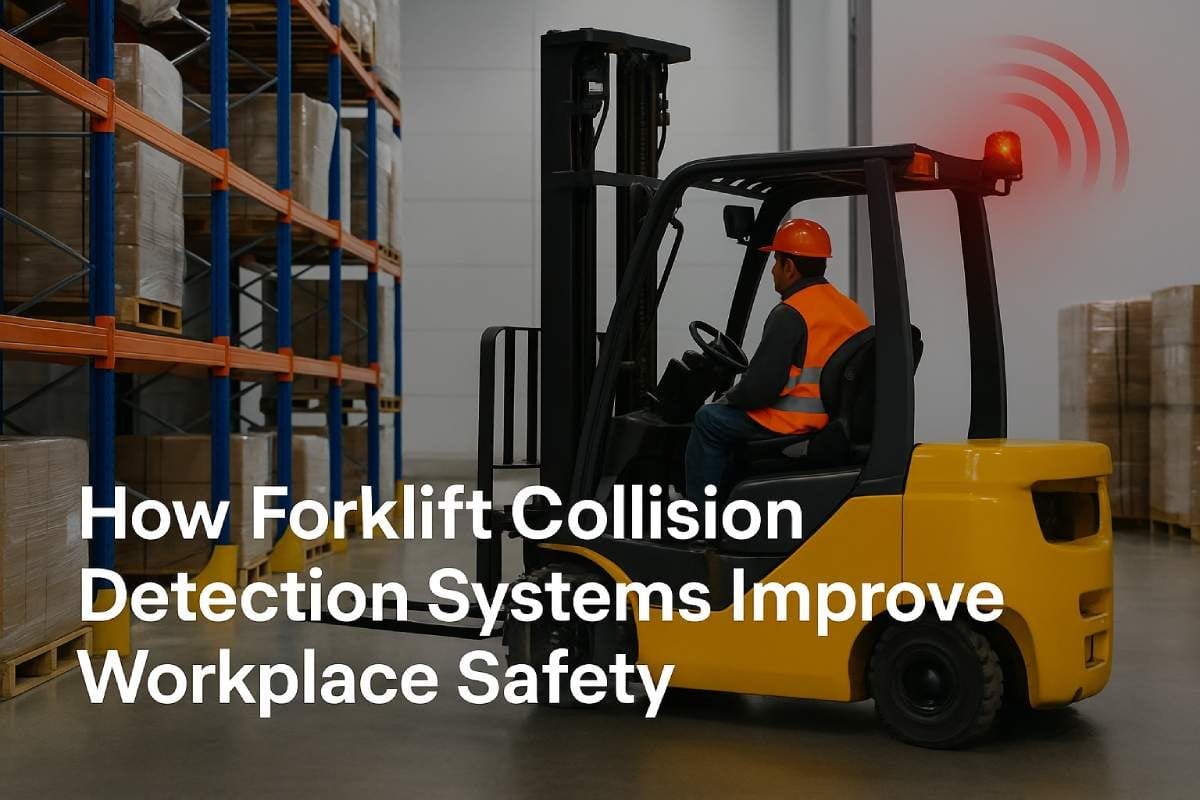
In warehouses, logistics centers, and manufacturing plants, forklifts are essential for moving goods, loading materials, and keeping daily operations on track. However, due to their frequent movement among workers, shelves, and narrow aisles, forklifts are also among the most common sources of workplace accidents. To reduce risks, businesses increasingly rely on forklift collision detection systems, smart technologies that monitor forklift movements, alert operators, and help prevent costly incidents. In this article, we’ll explore what a forklift collision detection system is, how it operates, and why it matters for workplace safety.

What Is a Forklift Collision Detection System?
A forklift collision detection system is a safety-focused solution designed to recognize potential collision risks and warn operators in real time. The system uses sensors, proximity detection tools, and data analysis to monitor forklift movements and detect nearby objects, other forklifts, and pedestrians. Its goal is not only to prevent accidents but also to improve overall safety culture in the facility.
These systems can identify unsafe driving behavior, detect high-speed approaches, and warn operators when they are too close to shelves, machinery, or other forklifts. As a result, companies can reduce accident frequency, minimize repair costs, and protect workers.
How Does a Forklift Collision Detection System Work?
The system functions through a combination of smart hardware and intelligent software. Let’s break down the core steps:
Proximity and Sensor Technology
The first component of collision detection is the hardware installed on forklifts:
- Proximity sensors measure distance between forklifts and surrounding objects or vehicles.
- Speed detectors track forklift movement and provide data when speeds exceed safe thresholds.
- Pedestrian detection sensors identify workers within hazardous proximity.
These sensors work continuously, calculating hundreds of measurements per second.
Real-Time Alerts
When a forklift gets too close to an obstacle, the system instantly warns the operator:
- Audible alerts notify the driver of potential danger.
- Visual warnings, often displayed on a dashboard or screen, reinforce awareness.
- Optional automatic speed-limiting may activate in restricted zones.
These warnings allow operators to react before an accident occurs.
Data Logging and Incident Recording
When warning events occur frequently, the system stores the information. This data helps safety managers identify patterns such as:
- Frequent speeding areas
- Blind-spot problem zones
- High-traffic intersections
- Operators requiring additional training
By learning from near misses, not only actual collisions, companies can improve traffic flow and prevent future incidents.
Integration With Safety Policies
Collision detection systems support overall safety strategies:
- They encourage operators to drive cautiously.
- They reduce the likelihood of damage to racks, machinery, or products.
- They help organizations comply with workplace safety regulations.
By combining good operator practices with real-time detection, facilities significantly reduce risks.
Why Collision Detection Matters
Forklift-related incidents result in operational delays, expensive repairs, and in severe cases, injuries. Investing in preventative systems not only protects the workforce but also saves time and money. A well-implemented forklift collision detection system creates a safer environment by providing visibility into unsafe behaviors and equipment movement patterns.
Collision detection technology plays a vital role in preventing forklift accidents, guiding operators toward safer practices, and protecting both workers and infrastructure. When integrated into a broader forklift tracking system, these solutions help companies gain deeper insights into safety performance, facility traffic, and operator habits. Advanced providers like Trio Mobil offer solutions that combine real-time detection, data analytics, and monitoring to support safer forklift management and reduce risks across the facility.