

Most customers will judge your entire business on one phone call. BenchmarkPortal's call-center benchmarking research has repeatedly linked poor phone experiences directly to customer churn — unhappy callers rarely complain first; they just don't come back. The good news: the skills that separate a good call from a lost customer are teachable, and they have not changed as much as the technology around them has.
- Why Phone Skills Still Decide Outcomes in 2026
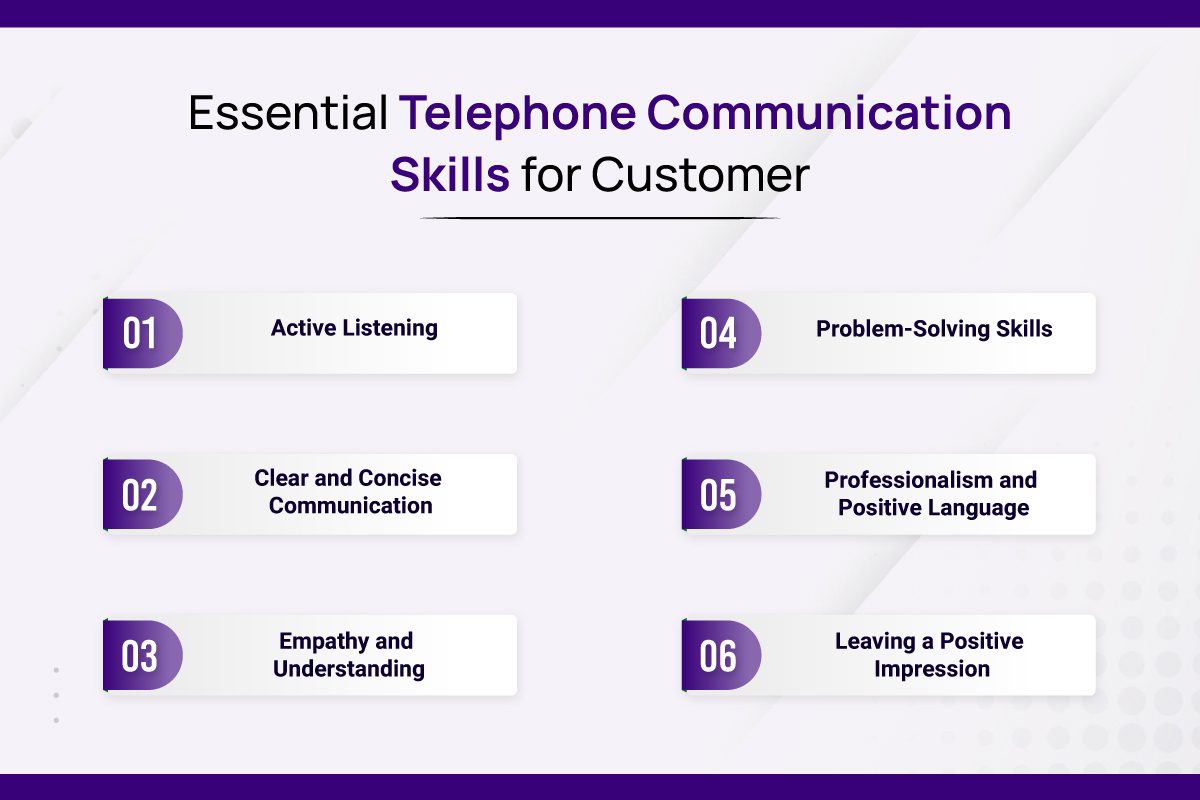
- The 6 Essential Telephone Communication Skills
- 1. Active Listening
- 2. Clear and Concise Communication
- 3. Empathy and Understanding
- 4. Problem-Solving Skills
- 5. Professionalism and Positive Language
- 6. Leaving a Positive Final Impression
- Frequently Asked Questions
Quick Answer: The 6 essential telephone communication skills for customer service are active listening, clear and concise speech, empathy, problem-solving, professionalism with positive language, and closing the call with a strong final impression. Mastering these turns routine support calls into loyalty-building moments.


Why Phone Skills Still Decide Outcomes in 2026
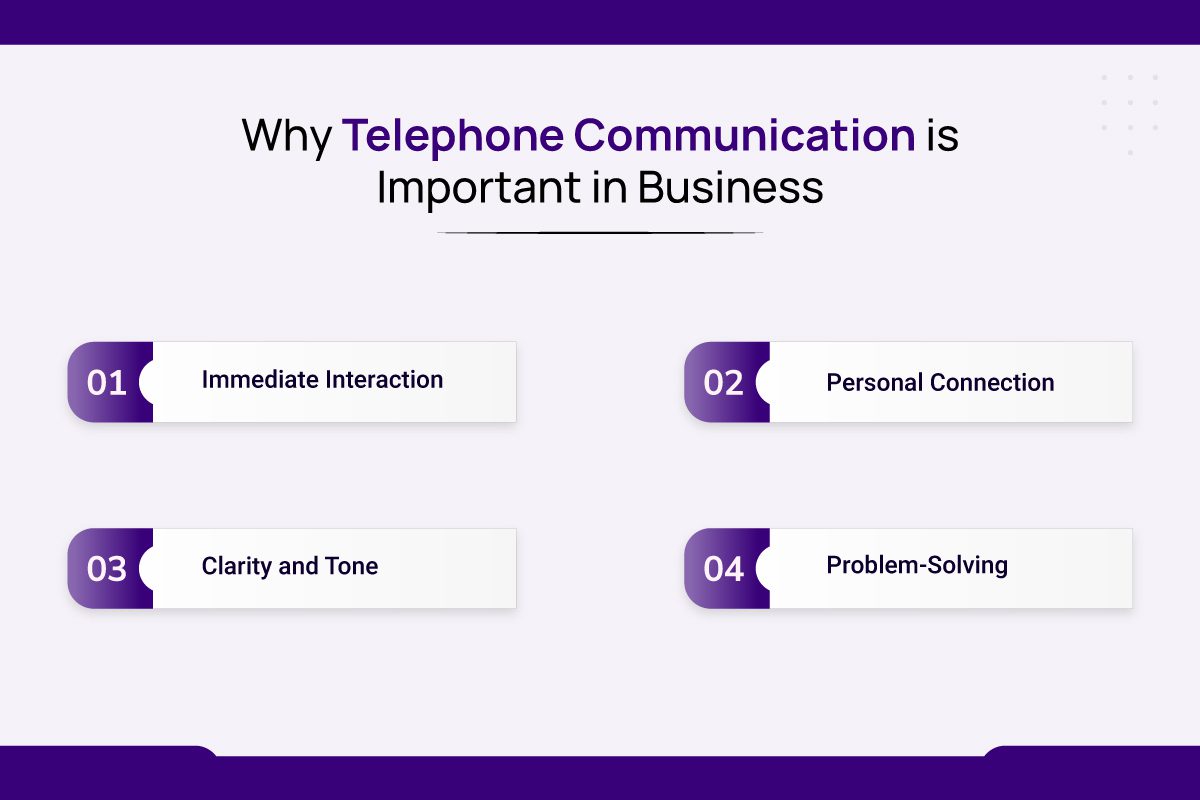
Chatbots, live chat and social DMs absorb a lot of support volume now, which is exactly why the calls that still reach a human matter more, not less. When a customer picks up the phone, it is usually because the automated routes failed — the issue is urgent, confusing, or emotionally loaded. Four things make the phone channel uniquely powerful in those moments:
- Immediate interaction. No queue-of-tomorrow. Problems get diagnosed and often solved in one conversation, and quick resolutions signal that you take the customer seriously.
- Personal connection. Tone, hesitation and sincerity come through in a way text never manages. Two minutes of genuine conversation builds more trust than a perfectly formatted email.
- Clarity through voice. Emails get misread; vocal emphasis rarely does. You can hear when a customer is confused and adjust on the spot instead of finding out three replies later.
- Faster problem-solving. Interactive back-and-forth lets you ask, clarify and confirm in seconds. It is also the best channel for defusing frustration, because empathy is audible.

The 6 Essential Telephone Communication Skills
1. Active Listening
Active listening means listening to understand, not listening to reply. On a call you cannot rely on body language, so tune into word choice, pace and tone — a flat "it's fine" usually means the opposite.
In practice: give the caller your full attention (no typing their account details mid-sentence if it means missing what they say next), acknowledge emotions out loud ("That sounds frustrating"), and ask clarifying questions before proposing a fix. Close the loop by paraphrasing: "So the payment went through twice, and the second charge still hasn't refunded — is that right?" That one sentence prevents the most common support failure: solving the wrong problem.
2. Clear and Concise Communication
Jargon that is second nature to your team is noise to the caller. Strip the technical terms, speak at a moderate pace, and break complicated answers into short steps with a pause between each — give people time to absorb, or to grab a pen.
Respect the caller's time above all. Get to the point, answer what was actually asked, and don't pad the call with upsells while someone has an unresolved issue. If the honest answer needs five steps, say so upfront: "There are a few things to check — I'll walk you through them one at a time."
3. Empathy and Understanding
Empathy on the phone starts with perspective-taking: this person may have been bounced between departments, or this may be their third attempt to reach you. Acknowledge the feeling before you address the problem — "I can hear how annoying that's been, let's get it sorted" changes the entire direction of a call.
Two habits help. First, normalize the reaction: "You're not the first person this has caught out" removes embarrassment and lowers the temperature. Second, match your tone to theirs — calm and steady with an anxious caller, brisk and efficient with an impatient one. Empathy is not a script; it is attention.
4. Problem-Solving Skills
Phone-based problem-solving is harder than in person because you cannot see what the customer sees. Start with probing questions to establish scope: what happened, when, on which device, and what they already tried. Check the history — reviewing previous interactions before offering a fix avoids making the customer repeat themselves, which is the fastest way to inflame an already sore situation.
Then work the problem in a visible order: identify the likely root cause, explain it in one sentence, and offer the fix with a realistic timeline. When the standard playbook fails, stay flexible — escalating early with an honest explanation beats improvising a fix you cannot deliver.
5. Professionalism and Positive Language
Professionalism on a call is a set of small, repeatable behaviours: a proper greeting that names you and the company, polite forms of address, and absolute confidentiality with anything sensitive the caller shares — account numbers, addresses, payment details. If your team works remotely, calling from a dedicated business line rather than a personal mobile both protects that privacy and reinforces the professional frame.
Positive language is the other half. It is not about fake cheerfulness; it is about framing what you can do. "I can't get you a refund, but I can issue store credit today" lands entirely differently from a flat refusal. Swap "I don't know" for "Let me find out — give me two minutes." Same facts, opposite impression.
6. Leaving a Positive Final Impression
The last thirty seconds are what the customer remembers — psychology calls it the peak-end rule, and call centers live by it. Warmth at the start (a genuine greeting, and yes, smiling — it is audible) and a deliberate close matter as much as the fix itself.
A strong close has three parts: confirm the issue is actually resolved to the customer's satisfaction, summarize what happens next and when, and offer a clear path back — "If anything else comes up, ask for me directly." Callers hang up feeling looked after rather than processed.
Frequently Asked Questions
How do you handle an angry customer on the phone?
Stay calm and let them finish — interruption restarts the anger. Acknowledge the frustration explicitly, apologize sincerely for the experience (even if the fault is elsewhere), then move quickly to one concrete action you can take. A caller who feels heard usually de-escalates; a caller who feels processed escalates.
How can a team measure its phone communication skills?
Combine call scoring on recorded or live-monitored calls (greeting, listening, resolution, close), first-call resolution rate, and post-call CSAT surveys. Review a sample weekly and coach against specific behaviours rather than vague scores. Trend lines matter more than any single call.
Do these skills still matter with AI answering so many calls?
Yes — for the calls AI doesn't take. Automation is absorbing routine queries, which means the calls that reach a human are the complex or emotional ones. That raises the bar for the six skills above rather than lowering it.
How long does it take to train these skills?
The basics — greeting, positive language, structure — take a week or two of shadowing and role-play. Listening and de-escalation mature over months of real calls with coaching. Build a short call-review routine and skills compound quickly.
Related reading: